
Part 7: The Silence of Mark and John, and the Rest of the New Testament

Regarding the gospels in particular, we need to remember that they were never meant to be complete biographies of Jesus. Each gospel writer selected from among the teachings and deeds of Jesus, and the events of his life, only those things that were pertinent to the particular didactic purpose the writer had in mind for the particular audience for which he was writing.
Part 7: The Silence of Mark and John, and the Rest of the New Testament
By Robert Stackpole, STD
In this weekly web series, Dr. Robert Stackpole, emeritus director of the John Paul II Institute of Divine Mercy, leads us step-by-step through the life of the Founder of Christianity, from Bethlehem to Galilee to Jerusalem. Along the way, we pause to consider in-depth the historical debate over the gospel stories of the virginal conception and nativity of Jesus, his message of the Kingdom, his embrace of persecution and death on the Cross, and his glorious bodily resurrection from the dead. Finally, we plunge into the great mystery of the Incarnation, and show how it actually shines through the whole gospel story from beginning to end.
Read the series from the beginning.
One final of critique of the historical reliability of the story of Christ’s virginal conception: Some critics point out that the gospels according to St. Mark and St. John seem to know nothing about Christ’s virginal conception. But Mark does not say that he was sired by Joseph — in fact, Mark does not mention St. Joseph at all (in St. John’s gospel there are two mentions of Jesus as the son of Joseph, 1:45 and 6:42, but in both cases by those who were in no position at that time to know the truth about our Lord’s conception).
In Mark, Jesus is even called “son of Mary,” in violation of the normal Jewish practice of calling a man the son of his father (this does not necessarily mean that his contemporaries believed that he had no human father — there are several reasons why a Jewish male might have been called the son of his mother, for example, that his human father was unknown, or that his father was a widower who had remarried, and people wanted to distinguish the sons of his first wife from the sons of his second wife).
Thus, the “silence” of these gospels cuts both ways: no mention of the virginal conception of Jesus, but no claim of any earthly father of Jesus by an informed source either.
Incomplete biography
In any case, even the silence of the rest of the New Testament regarding the conception and birth of Jesus need not be a cause for historical skepticism, for it does not necessarily imply that the other writers were unaware of the virgin birth. Regarding the gospels in particular, we need to remember that they were never meant to be complete biographies of Jesus. Each gospel writer selected from among the teachings and deeds of Jesus, and the events of his life, only those things that were pertinent to the particular didactic purpose the writer had in mind for the particular audience for which he was writing.
For example, given his intention to demonstrate to a largely Jewish-Christian audience that Jesus was the long-awaited Messiah, Matthew focused on those aspects of the Nativity of Christ that, according to his research, fulfilled Old Testament prophecy. Since he believed he had found an Old Testament prophecy in Is 7:14 that foreshadowed the virginal conception, he was happy to include in his gospel account the story, already circulating in the early Christian community, of the miraculous birth of Jesus.
Meanwhile, St. Peter and St. Paul were evangelists: their primary concern in their epistles was with those aspects of the Christian message that had been publicly witnessed, and therefore could be persuasively preached to the uncommitted: above all the saving death and resurrection of Christ.
The virginal conception was a mystery cherished by those who were already Christians; it was not something that could be presented to potential converts in order to win them over, or even to new converts struggling to grasp the most basic aspects of the faith.
Known and revered
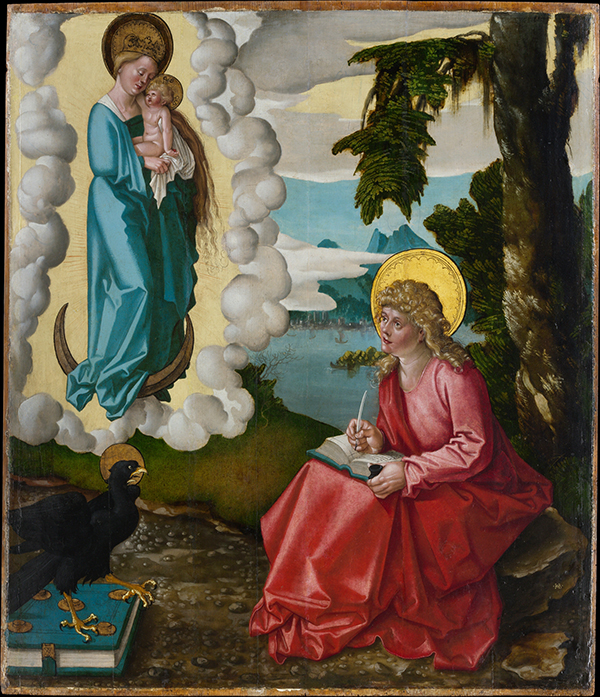
In fact, we know from the letters of St. Ignatius of Antioch (who was martyred about 110 AD), letters written to Christian churches throughout the Mediterranean world, that the virginal conception of Jesus Christ was known and revered everywhere in the early Church. He wrote to the Church in Ephesus (19:1) that “three eloquent mysteries were wrought in the silence of God: the virginity of Mary, her giving birth, and the death of the Lord.”
In the end, of course, the historian cannot “prove” beyond any reasonable doubt that Jesus was conceived in the womb of the Virgin Mary simply by appealing to the limited evidence available. After all, only one person was in a position to know the full truth of the matter, and she did not write a tell-all book about it (and even if she did, skeptics would still claim she was lying or fantasizing)!
Still, what the historian can do is show that Christian belief in the real, virginal conception of Jesus Christ fits the known facts better than any alternative explanations on offer for the origins of this story. [1]
All this raises one final question: if Jesus really was conceived miraculously, without human fatherhood, did He know this Himself? Surely He did; Mary and Joseph must have told Him of the extraordinary events of His conception and birth at some point, when they felt the time was right. And these facts must have corroborated for Him what He had experienced in His human Heart from the beginning: a supreme intimacy with one whom he could only refer to as Abba, “my Father” (Lk 2:49).
In that light, and in the light of the voice of his heavenly Father speaking in His Heart at His Baptism, He came to know humanly His true identity as the Father’s only Son.
Next: Part 8: Why the Virginal Conception of Jesus Matters.
Previous article.
Note
[1] I assume here that such an historical judgment is made in the light of a prior philosophical conviction that there exists a transcendent God of infinite power, knowledge and goodness who could act within the space-time-matter-energy continuum in a miraculous way, and might very well do so to further his loving purposes for both individuals, and for humanity as a whole. This contra Hume’s famous argument that a supernatural/miraculous explanation for an historical event always would be the most improbable, compared with any naturalistic explanation. More on this later in this web series.
{shopmercy-ad}
You might also like...
What is the connection between Pope Leo XIV and one of the great holy wonder-workers or miracle workers in the history of our faith, St. Nicholas of Tolentino? He was was an Augustinian friar (like Pope Leo) and considered the patron of the Holy Souls in Purgatory.
On the feast day of St. James, Apostle, July 25, we share another example of how Jesus keeps His promises.
In the early 19th century, high in the mountains of Lebanon, Youssef Makhlouf dreamed of giving his life to Christ in a radical way. He became St. Charbel Makhlouf, OLM, whose feast we celebrate on July 24.