
Poem: “Herodias Speaks to the Head of John the Baptist”

On the feast of the Passion of St. John the Baptist, we present this original poem by Br. Stephen Camara, MIC.
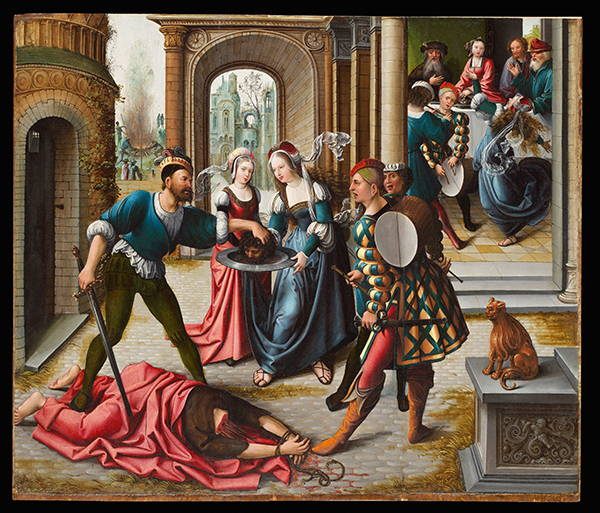
Herodias was the sister-in-law of King Herod and instigator of the execution of St. John the Baptist. We read in the Gospel of Matthew, "At a birthday celebration for Herod, the daughter of Herodias performed a dance before the guests and delighted Herod so much that he swore to give her whatever she might ask for. Prompted by her mother, she said, 'Give me here on a platter the head of John the Baptist'" (Mt 14:6-8).
“Herodias Speaks to the Head of John the Baptist”
Aha! You there, you gnarled and shriveled face,
Wizened with sand, wild crickets, and camel’s hair,
Your lanky locks still dank with prison grime,
Your beard, awry, still bears the axe’s mark.
You died far from the freedom that you loved,
In a lonely cell, on an old king’s caprice,
And for what? Oh, you hated me, I know,
Crowed over me in triumph and in judgment
Pressed on my lord “observance of the Law”
(Forgetting we were Edomites, not Jews),
Crooning “You cannot have your brother’s wife.”
Those hateful words resounded through this house,
Condemned the very union at its heart
Till stones should cry repeat from sounding walls—
And yet my husband listened! And my grip
Upon his heart, which I thought firmly held,
Seemed yielding in a massed perplexity,
And yet he liked to listen! What disgrace,
What rush of curiosity or conscience
Then moved him, I will never dare to ask,
Lest it awake.
He thinks you're still alive,
Risen again to waste your time and his
On speeches bathed in water for the foolish,
Prattling about repentance and new life.
He shall not ever know your head is here,
Though its stench fill the rooms with fumes of death:
My maids will draw the curtain but for me.
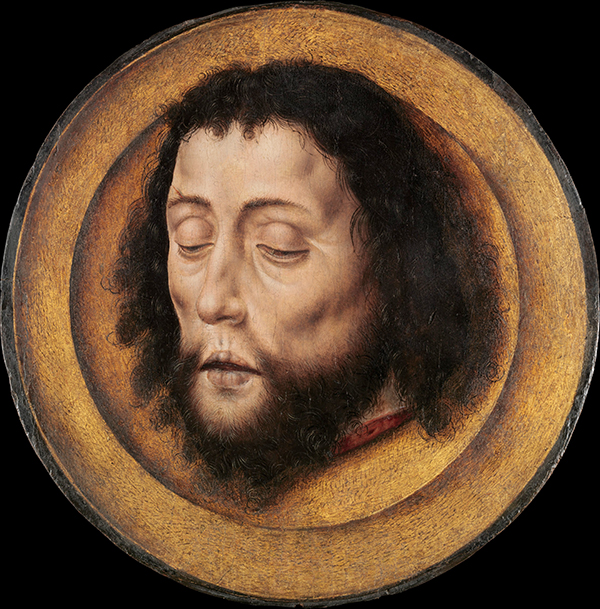
So I still see your head safe on its platter,
Your eyes agape (for none, by my command,
Will ever close them), straining vainly upward
As if to ask your God “How can this be?”
Many a time you must have walked your cell thus,
Pleading for mercy and for sweet release.
So let your spirit walk now blindly on:
I will not close your eyes in death’s sweet rest.
What of your followers now, those “baptized” fools?
Where are the dupes who stole your corpse away?
Following some new preacher in the north
Who looks like you—perhaps not quite as mad:
He will not open his lips in our palace.
He keeps his distance, aims his words elsewhere.
Your people have forgotten you, O prophet!
Cut off the head, the body steals away,
Seeking new wonders, newer words and signs.
The prophets rise and fall; the kings remain.
And I, a princess from a kingly line,
Hold in my hands the king of my desires.
‘Twas I who wooed him, I who sought his gaze;
My husband, living still, would not oppose
The will of His Majesty Antipas,
Son of my own grandsire, Herod the Great.
When love of king and princess flames so fiercely,
Then ought it not to burn all other bonds
Which, yielding, pledge obedience to the king?
So even I obeyed his least desire,
Yet knowing how to mold and shape his lusts:
His sudden anger, and his violent laugh,
His sullen pouts, his fits, his love of news,
His drinking parties with housefuls of guests
Whom Herod wished to please, nor count the cost
Since their hypocrisy so leavened his own—
But you! Oh, you would pierce his soul with truth.
So when I saw that you had caught his ear
To pour your poisoned message in his mind,
I secretly determined what to do.
My Salome was training in the dance,
To win men’s admiration and their hearts.
I’d kept her firm and close through all these years,
Nor let the curious see her grace and skill
Until she should be fit to fleece a king,
Distracting him from war or worldly care
And win due praise desired and well-deserved.
She was a little young yet, not full-ripe,
But ferreting far, I found no fitter trick
Or finer trap to spring upon the king.
And so I chose a day of great rejoicing
When drink and mirth must overflow all bounds:
The birthday of the king, on which proud feast
His self-esteem, bolstered by applause and wine,
Might snare his tongue in some rash word or other
That served my purpose well, though he regret it.
Not long in coming were my wished results:
Salome swayed among the hilarious guests,
And that first debut lent her soul such charm,
She danced with greater skill than e’er before.
Though not full-trained, she showed her potency,
While Herod, his restraint made impotent,
A sheep dragged by the wolves of his desires,
Mouthed out, not one, but many mighty oaths,
Promising her all impossible things:
All dresses, rings, and bangles to delight,
All suitors, servants, anything she pleased
Ev’n to the half part of his own kingdom.
Her mind was overcome; she knew not what
To ask, and fled—to me! That was a triumph,
She fled to me, who watched and wiled his ways,
And as she poured her tale out in confusion,
I clearly saw my plans come to fruition.
I spoke, she made request, the king, perforce,
Though little he did like it, must consent.
And now your head will speak no more to men,
Your tongue begins to rot inside your skull,
No one can see you, none remembers you
Save me; my eyes can mock you every day.
Your fame reduces to another’s glory,
Your face is but a death-mask now, or less,
Your eyes still staring up as if to taunt me,
You will not deign to meet my glaring glance
And say again, “Your marriage is not lawful.”
Perhaps you paced your cell thus, eyes upraised
To heaven beyond the burgeoning blue sky,
As if your freedom never had been lost,
But stayed in the empyrean stored for you
Who were fore-named “prophet of the Most High,”
All this—if you believed you did His will.
Your voice of virtue caught my husband’s ear,
And yet it could be silenced at a stroke
—a glass of wine, a dancing girl, an oath—
And there you rot, hidden behind my curtain.
Your head, I swear, will never leave this house
Until its stones collapse and break your jaws.
Would you claim victory even in your death?
My husband thinks that you did rise again:
He seeks to see you—I, obsessed with seeing,
Fear victory eludes my grasp ev’n as
I wait here day by day to watch you rot.
I thought such fears would cease when you, the one
Who spoke for God, was dead, and yet they linger
As if the walls which echoed your wild clamor
Were tensed, holding their breath with mouths tight shut,
Ready to burst again with those cold words,
“You are not lawfully husband and wife.”
Who gave the Law? Who would impose his will
Upon the king, but I? I? Is it God?
If God Himself were dead, perhaps I’d find
A moment’s peace in house, husband, and bed.
The stilled lips of the Law would haunt my days
No more. But victory is not so sweet
Nor hatred sated by His prophet’s fall:
Shall I yet—
But, here, what are all these words?
Force me not to say more. Maid! Draw the curtain.
{shopmercy-ad}
You might also like...
What is the connection between Pope Leo XIV and one of the great holy wonder-workers or miracle workers in the history of our faith, St. Nicholas of Tolentino? He was was an Augustinian friar (like Pope Leo) and considered the patron of the Holy Souls in Purgatory.
On the feast day of St. James, Apostle, July 25, we share another example of how Jesus keeps His promises.
In the early 19th century, high in the mountains of Lebanon, Youssef Makhlouf dreamed of giving his life to Christ in a radical way. He became St. Charbel Makhlouf, OLM, whose feast we celebrate on July 24.