












The ultimate answer to neo-Nazism and to Nazism is Catholic Christianity. The answer to error is the truth. Our evangelical efforts contribute to the peaceful harmony of folks of different races, ethnicities, and backgrounds living side by side.
By Chris Sparks
Every time I see another neo-Nazi attack on some part of America, I am reminded once again of the urgency of both evangelization and the New Evangelization.
The tragic shooting on August 26 in Jacksonville, Florida is just the latest in far too many attacks by neo-Nazis, or those who show signs of having been “inspired” by Adolf Hitler and Nazism in their heinous actions.
There was the assault on the Emanuel African Methodist Episcopal church on June 17, 2015.
There was the August 3, 2019, mass shooting at a Walmart store in El Paso, Texas.
There was the May 14, 2022, mass shooting in Buffalo, New York, at a Tops Grocery store.
There have been more. There have also been some unknown number of such attacks thwarted by law enforcement.
Papal condemnation
It’s worth recalling that Pope Pius XI (1857-1939) clearly saw the evils of Nazism. He laid them out and condemned them in the March 14, 1937 encyclical letter Mit Brennender Sorge (With Burning Anxiety). Note the language of the title. It’s rare for a papal encyclical to be officially promulgated in any language other than Latin, and yet that’s exactly what Pius did. The official text of the encyclical was written in German, and then was smuggled into Nazi Germany and read from every Catholic pulpit in the country on Palm Sunday.
His successor, Pius XII, served as a go-between for the Allies and those Germans planning to assassinate Hitler, as well as overseeing massive efforts to shelter Jewish people, POWs, and other targets of the Nazis. Those efforts are recounted in works such as Ronald Rychlak’s Hitler, the War, and the Pope.
In his encyclicals “On the Unity of Human Society” (Summi Pontificatus, 1939) and “On the Mystical Body of Christ” (Mystici Corporis, 1943), Pius XII taught that God is a God of all nations, not of one, and so all nations, races, and peoples may equally find their home in the Church. Why? Because all come from the common family that goes back to Adam and Eve, as Humani Generis (1950) authoritatively taught.
It’s also worth recalling that the Catholic philosopher and critic of Vatican II Dietrich von Hildebrand (1889-1977) was a famous opponent of the Nazis. His anti-Nazi writing and publications were so influential, in fact, that he was forced to flee the Nazis several times, leaving Munich during the Beer Hall Putsch, fleeing Germany ahead of Hitler’s rise to power, and fleeing Austria when the Anschluss happened. He recounts the reasons for his anti-Nazi activism in his memoir My Battle Against Hitler: Defiance in the Shadow of the Third Reich; among them, his Catholic faith.
Truth answers error
The ultimate answer to neo-Nazism and to Nazism is Catholic Christianity. The answer to error is the truth. Our evangelical efforts contribute to the peaceful harmony of folks of different races, ethnicities, and backgrounds living side by side, as Scripture prophesied repeatedly:
In days to come,
The mountain of the Lord’s house
shall be established as the highest mountain
and raised above the hills.
All nations shall stream toward it (Is 2:2).
… my house shall be called
a house of prayer for all peoples (Is 56:7).
Jesus came to save the whole human race. His Mystical Body, the Church, for thousands of years has included members of all races, nations, and backgrounds, high born and low, rich and poor, educated and not educated.
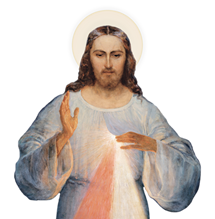
The College of Cardinals today hails from all across the world, from a remarkable diversity of nations and races, as do the bishops, priests, deacons, and consecrated religious, let alone the lay faithful. As we continue to proclaim Jesus, the Divine Mercy Incarnate, to the nations, that human diversity in the supernatural unity of the Catholic faith shall only continue to grow.
The Catholic answer to Nazism
That’s the big picture. But how do we put it into practice in the near term?
The answer, the Catholic Christian answer, to these evil actions and the ugly ideologies that inspire them was laid out well by the Most Rev. Charles Chaput, then Archbishop of Philadelphia, in response to the shooting at the Emanuel AME Church in Charleston, South Carolina:
As Reverend Martin Luther King said, “Darkness cannot drive out darkness, only light can do that. Hate cannot drive out hate, only love can do that.” May love be our mission and give us the strength to drive out hate today and always.
That love looks like sound catechesis; spiritual reading and study of Scripture, Tradition, and the Magisterium; prayer for ourselves, our communities, and our enemies; works of mercy for those most in need of Divine Mercy; and all the ordinary ways we love God and neighbor.
Poison of the soul
Archbishop Chaput expanded on that in his response to the infamous Aug. 11-12, 2017, Unite the Right rally:
Racism is a poison of the soul. It’s the ugly, original sin of our country, an illness that has never fully healed. Blending it with the Nazi salute, the relic of a regime that murdered millions, compounds the obscenity. Thus the wave of public anger about white nationalist events in Charlottesville this weekend is well warranted. We especially need to pray for those injured in the violence.
But we need more than pious public statements. If our anger today is just another mental virus displaced tomorrow by the next distraction or outrage we find in the media, nothing will change. Charlottesville matters. It’s a snapshot of our public unraveling into real hatreds brutally expressed; a collapse of restraint and mutual respect now taking place across the country. We need to keep the images of Charlottesville alive in our memories. If we want a different kind of country in the future, we need to start today with a conversion in our own hearts, and an insistence on the same in others. That may sound simple. But the history of our nation and its tortured attitudes toward race proves exactly the opposite.
That path of conversion has been laid out by popes, saints, and scholars across the centuries. That path is rooted in the Incarnation, where God, by taking on one instance of human nature, took on all human nature.
That’s why when Jesus or Mary appear to folks across the world, our Lord and Our Lady usually appear to the visionaries to be their same ethnicity. Think of Our Lady of Guadalupe, for instance, appearing to St. Juan Diego as a mestiza, a mixed Spanish and Aztec person.
Patriotism, yes; nationalism, no
One notable contribution to describing the path towards peace came from Pope St. John Paul II, when he addressed the United Nations in 2005:
[W]e can see that, transcending all the differences which distinguish individuals and peoples, there is a fundamental commonality. For different cultures are but different ways of facing the question of the meaning of personal existence. And it is precisely here that we find one source of the respect which is due to every culture and every nation: every culture is an effort to ponder the mystery of the world and in particular of the human person: it is a way of giving expression to the transcendent dimension of human life. The heart of every culture is its approach to the greatest of all mysteries: the mystery of God. …
[W]e need to clarify the essential difference between an unhealthy form of nationalism, which teaches contempt for other nations or cultures, and patriotism, which is a proper love of one's country. True patriotism never seeks to advance the well-being of one's own nation at the expense of others. For in the end this would harm one's own nation as well: doing wrong damages both aggressor and victim. Nationalism, particularly in its most radical forms, is thus the antithesis of true patriotism, and today we must ensure that extreme nationalism does not continue to give rise to new forms of the aberrations of totalitarianism. This is a commitment which also holds true, obviously, in cases where religion itself is made the basis of nationalism, as unfortunately happens in certain manifestations of so-called "fundamentalism".
So let us choose Catholicism instead of nationalism. Let us study the history of the Church, especially as she confronted the Nazi menace, and learn from such great teachers as Pius XI, Pius XII, and St. John Paul II. Let us love God and neighbor as our faith commands. And let us never waver in our condemnation of racism and injustice.
Photo by Sixteen Miles Out on Unsplash
{shopmercy-ad}
