














By Cynthia Brewer
The celebration of International Women’s Day on Mar. 8 began in 1908 when 15,000 women marched in New York City demanding better pay, better working hours, and the right to vote. This day, recognized by the United Nations since 1975, applauds the social, economic, cultural, and political achievements of women.
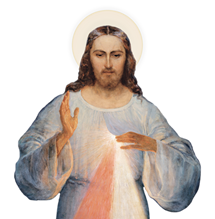
When we reflect on St. Faustina Kowalska, we often think of how her life affected us in the spiritual realm rather than in these secular terms. Although the Church was familiar with God’s mercy, Jesus’ messages to St. Faustina in 1930s Poland reawakened the world to Christ’s extravagant love and Divine Mercy for us and His desire that we, too, become merciful.
On International Women's Day, we should honor St. Faustina.
"Secretary of Mercy"
Saint Faustina suffered greatly from her fellow religious sisters and superiors after she began receiving messages from Jesus. Her superiors and first confessors did not believe her. Because she had poor health and was often exhausted from spiritual combat, the sisters thought she was faking illness. She also struggled to put the heavenly visions into human language. But she remained faithful as Christ’s “Secretary of Mercy” (Diary of St. Faustina Kowalska, 1605).
Saint Faustina not only heard from Christ in her visions but also from another woman the International Women’s Day should recognize: Mary, Our Lady of Mercy, whom she often turned to in times of distress. Mary told her, “My daughter, at God’s command I am to be, in a special and exclusive way your Mother; but I desire that you, too, in a special way, be My child” (Diary, 1414).
Mary asked her to practice the three virtues dearest to her and most pleasing to God. The three were humility; purity; and love of God. As a child of the Blessed Mother, St. Faustina was to radiate these virtues. After this vision, it was as though they were engraved in her heart (Diary, 1415).
In an early vision, as if to help prepare her for upcoming trials, St. Faustina saw that there would be a period in which it would seem as though all of her work and that of her spiritual director, Bl. Michael Sopocko, would be undone. Because of a poor translation of the Diary into Italian that led to an errant interpretation of it, a 20-year ban was enacted by the Vatican.
Prophecy fulfilled
However, the vision continued. She was told that God would act with great power and give evidence of the messages’ authenticity. This followed with a prophecy, “It will be a new splendor for the Church, although it has been dormant in it from long ago” (Diary, 378). This prophecy has been seen to be fulfilled six months after the ban was lifted when Poland’s Cardinal Karol Wojtyla was elected to the papacy.
The Divine Mercy message has now spread worldwide thanks for Pope St. John Paul II and the Marian Fathers. John Paul fulfilled Christ’s request for the Feast of Divine Mercy Sunday which offers complete remission from sins and the punishment they deserve. Moreover, salvation can be gained at one’s deathbed by the recitation of the Chaplet of Divine Mercy. Hopefully, we’ve become more merciful toward others as a result.
Let’s not forget that the Great Mercy Pope also influenced the fall of Communism, which has transformed Poland into a thriving economy with great social, economic, cultural, and political advantages for Polish women. Look how Poland, with her women at the forefront, is now opening her borders – and hearts – to one million refugees from the war in Ukraine.
Connect the dots, and Poland is firmly in St. Faustina’s debt, not to mention Mary, Our Lady of Mercy. This International Women’s Day, let’s honor both with our prayers.
{shopmercy-ad}
