













Deeper and deeper, or rather higher and higher, I should say, the connections and providential coincidences goes. This looks like a tremendous work of God, an enormous blessing for the Church, for the Marian Fathers, for the Church in Lithuania, the USA, and around the world.
By Chris Sparks
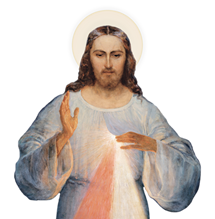
[Jesus said:] Souls who spread the honor of My mercy I shield through their entire life as a tender mother her infant, and at the hour of death I will not be a Judge for them, but the Merciful Savior (Diary of Saint Maria Faustina Kowalska, 1075).
Do whatever is within your power to spread devotion to My mercy. I will make up for what you lack. Tell aching mankind to snuggle close to My merciful Heart, and I will fill it with peace (Diary, 1074).
The Sixth World Apostolic Congress on Mercy (WACOM6) has just concluded in Vilnius, Lithuania. As I’ve been covering it for the Marian Fathers, I’ve also been struck by the dense, thickly layered web of connections and meaning to it in this particular year, in that particular place. Please be patient with me, but I really want to count the ways with you.
Let’s go!
Liturgical
First of all, WACOM opened on Corpus Christi Sunday, which in Lithuania is also Father’s Day this year. I could write columns about this alone!
Consider that the Eucharistic Miracles regularly consist of heart tissue. Devotion to the Eucharist is devotion to the Sacred Heart of Jesus (to which the USA was consecrated on June 11. Jesus is the Divine Mercy Incarnate, the mercy of the Father who is rich in mercy, as St. John Paul II spotlighted with his great encyclical Dives in Misericordia. Indeed, Lithuania was one of the suffering countries severely scourged by World War II, enduring both Soviet and Nazi occupations, and left trapped in the Soviet bloc for too many years. The ministry of St. John Paul II was crucial to Lithuania’s eventual freedom, and to the liberation of the entire Soviet bloc. The saint himself described his papal ministry as follows:
Right from the beginning of my ministry in St. Peter’s See in Rome, I consider this message [of Divine Mercy] my special task. Providence has assigned it to me in the present situation of man, the Church and the world. It could be said that precisely this situation assigned that message to me as my task before God. —November 22, 1981 at the Shrine of Merciful Love in Collevalenza, Italy.
He also said, “The Message of Divine Mercy has always been near and dear to me… which I took with me to the See of Peter and which it in a sense forms the image of this Pontificate.”
1926 International Eucharistic Congress, Chicago
Next, this year (2026) is the 100th anniversary of Marian Renovator Bl. George Matulaitis-Matulewicz’s final visit to America in 1926 to attend the Eucharistic Congress in Chicago. “Since 1881, the Catholic Church has held more than 50 international Eucharistic Congresses,” says the Chicago Catholic. “The congress was hosted by Cardinal George Mundelein and was attended by dignitaries such as papal legate Cardinal John Bonzano and bishops from as far away as China and New Zealand.“
Held June 20-24, 1926, the 28th International Eucharistic Congress also welcomed then-Apostolic Visitator to Lithuania Archbishop George, the former bishop of Vilnius.
Now, I’m sure you’ve spotted some of the significance of all this, but let me take it one bit at a time, because it’s a lot!
You see, one of the responsibilities of Bl. George in the 1920s was enormous:
In 1925, he asked the Holy Father to relieve him of his responsibilities in Vilnius. Pope Pius XI agreed, and, as a mark of respect and affection, named him Archbishop.
When Archbishop George returned to Rome, he expected to be able to take up his work of guiding the Marians. But the Pope sent him on a new mission: to organize the Church hierarchy in Lithuania. Archbishop George worked out a plan to establish new dioceses, appoint new bishops, and establish relations between the Holy See and Lithuania.
Now, there’s been a lot of history since then, and a terrible quantity of persecution and suffering for the Church and people of Lithuania. But in some measure, the Church in Lithuania today — alive, vibrant, including amongst its number Catholics in most every vocation — hosts WACOM6 because of the work of the Marian Renovator. It also is able to welcome the world to WACOM because of that very same Divine Mercy, the image and special task of St. John Paul II’s pontificate, a pontificate that certainly helped bring to an end the Soviet Communist oppression.
But there’s much, much more!
For Vilnius, and for Faustina
When he was bishop of Vilnius, Bl. George summoned the priests of the diocese who were serving outside the diocese. He needed every priest he had available to him as he was reforming the diocese after World War I. But this meant that Now-Blessed Fr. Michael Sopoćko came home, and so was in the diocese, available to become spiritual director to a Polish nun named Faustina Kowalska.
And as we all know, or should know, it was a Marian Father, Fr. Joseph Jarzebowski, MIC, who brought Divine Mercy materials from Fr. Sopocko out of Nazi-occupied and Communist-occupied Europe to the New World, to America, to the Marian Fathers’ house in Washington, D.C.
It was from there that Fr. Walter Pelczynski, MIC, raised in the St. Stanislaus Kostka Parish in North Adams, Massachusetts, was sent north to acquire property. He acquired Eden Hill in Stockbridge, Massachusetts, which would go on to become an internationally known place of pilgrimage (the National Shrine of The Divine Mercy) and promulgation of the Divine Mercy message and devotion (the Mercy of God apostolate, the Association of Marian Helpers, and Marian Press) -- thanks in large part to another son of North Adams, Fr. Seraphim Michalenko, MIC, who translated the Diary, helped establish WACOM, and assisted another Massachusetts native, Maureen Digan (who died on June 1), recipient of St. Faustina's beatification miracle.
God blessed America
And more: the host of WACOM6, Archbishop Gintaras Grusas, is Bishop George’s successor as the episcopal ordinary for Vilnius. Further, Abp. Grusas was born and raised in the United States, first in Washington, D.C. In America 250, it is a son of the USA and of Lithuania who welcomes the world to Vilnius for WACOM6, and it is Pope Leo XIV, an American pope from Chicago, who sent a video message to mark the occasion.
Indeed, that American pope from Chicago, Illinois has approved the beatification of another son of Illinois this year in America 250: Archbishop Fulton Sheen, one of the greatest evangelists and catechists the Church has ever seen.
And more: This year, this 100th year from the International Eucharistic Congress that brought Bl. George and so many others to Chicago— this Thursday, June 18, the National Shrine of The Divine Mercy will welcome a stop by the 2026 National Eucharistic Pilgrimage. That, of course, is a week after June 11, the Vigil of the Solemnity of the Sacred Heart of Jesus, when the USCCB gathered for their spring meeting to consecrate the USA to the Sacred Heart of Jesus in the 250th anniversary of our country’s existence.
Discern God’s grace
Deeper and deeper, or rather higher and higher, I should say, the connections and providential coincidences goes. This looks like a tremendous work of God, an enormous blessing for the Church, for the Marian Fathers, for the Church in Lithuania, the USA, and around the world.
So let us thank God for the past, set to work in the present to practice and promote the Divine Mercy message and devotion, and pray for the grace we need to make the next 250 years of the USA’s life just as animated by fruitful, world-changing Catholicism as we are realizing the past has been.
Let us practice the devotions this country has been outstanding in spreading, such as the Divine Mercy, the Rosary, and more, welcoming God’s grace into the hardest, most difficult, most necessary situations. Let us make atonement for sin, offering spiritual reparation for the evils of the past, and set a limit on evil now and in the future through the power of prayer, especially those prayers to which Christ and His Church have attached so many graces.
And let us be outstanding in both worship and works of mercy, both love of God and love of neighbor, both recognizing Jesus in the Eucharist and recognizing Jesus in the poor.
God bless America!
Photo by Vardan Papikyan on Unsplash.
{shopmercy-ad}
