












Jun
20
2007
0
By Anonymous (not verified)
The Divine Mercy message is not a new message; rather, it is a recounting of what we already know from Divine Revelation, communicated to us through Sacred Scripture and Sacred Tradition. It is a message of the merciful love of God towards mankind calling us to a profound, personal conversion and renewal of our very life.
The word mercy comes from the Latin, misericordia - meaning "miserable heart." The definition of mercy describes one's ability to have compassion or empathy for another. It points to a personal disposition to be kind and forgiving, to alleviate distress and provide relief. Pope John Paul II said mercy is love's second name (Dives in Misericordia, n. 7).
It is unfortunate that too many people have grown up with a poor image of God, often perceiving Him as distant, cold, or even vengeful. The image of God that Sacred Scriptures and Sacred Tradition reveal is totally different. God is Love, and Mercy is His greatest attribute.
Scriptures offer countless examples of this truth. The story of the Prodigal Son in Luke's Gospel is but one such example. In the image of the Father of the Prodigal Son, who "while the son was still a long way off ... caught sight of him ... was filled with compassion ... ran to him and embraced him (Lk 15:20)" we are offered a simple yet powerful description of God's tender and merciful love for his unfaithful children. If we approach Him with a sorrowful heart and seek forgiveness, He will never reject us or forsake us. "Can a mother forget her infant, be without tenderness for the child of her womb? Even should she forget, I will never forget you." This is God the Father's promise made to us through the prophet Isaiah (Is 49:15).
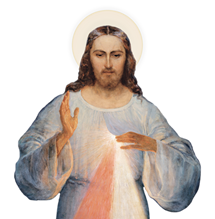
God the Father has demonstrated this great love and mercy for us in a superabundant way through His Son, especially through His suffering and death. Christ took upon Himself the punishment our sins deserved and was crucified on our behalf so that we may live in eternal glory and experience his happiness. Jesus reminds us of this truth through St. Faustina. "My Heart overflows with great mercy for souls, and especially for poor sinners ... it is for them that the Blood and Water flowed from my Heart, as from a fount, overflowing with mercy (367*). Let no soul fear to draw near to me, even though its sins be as scarlet (699). My mercy is greater than your sins, and those of the entire world (1485). I let my Sacred Heart be pierced with a lance, thus opening wide the source of mercy for you. Come then with trust to draw graces from this fountain (1485).
God wants us to draw near to Him, to trust Him, to seek and find His mercy and forgiveness. And as we receive His mercy, we cannot be ungrateful and forget to be merciful to others.
1. Is it possible to know God? How did Jesus reveal Himself to St. Faustina?
In His divine nature, God is incomprehensible. Yet out of love for us He unveiled Himself, first, in a fragmentary way through the Prophets, and then, in its fullness through His only-Begotten Son, who became flesh and was born of the Virgin Mary. That is why John the Evangelist, who had seen the Lord and heard His words can bear witness and proclaim with such certitude that "God is love and he who abides in love abides in God and God in him" (1 Jn 4:16). Saint John had seen God in the person of Jesus. He believed when Jesus said "I am in the Father and the Father is in me ... and whoever has seen Me has seen the Father" (Jn 14:9-10).
Saint Faustina quoting Jesus wrote that we should "get to know God by contemplating His attributes." (30). Since God's love and mercy are His greatest attributes, we can best comprehend God by contemplating the love and mercy manifested in His Son, especially in His suffering, death, and resurrection.
God's merciful love is unfathomable and we will never be able to comprehend it. Yet, we must accept it in trust and find forgiveness, peace, and healing.
2. Is it really possible to trust God and place confidence in His mercy?
Frequently we find ourselves lacking in trust in God's mercy. Knowing this, the Lord reaches out to assure us: "Let the sinner not be afraid to approach Me. The flames of mercy are burning Me - clamoring to be spent; I want to pour them out upon these souls" (50).
3. Do we really believe that God forgives us?
John Paul II said, "The present day mentality, more perhaps than that of people in the past, seems opposed to a God of mercy, and in fact tends to exclude from life and to remove from the human heart the very idea of mercy." For many people, God's mercy is something distant and unknown. They have not had the opportunity to experience His mercy in its richness. Is it possible to overcome this inability to believe in God's mercy and forgiveness? Of course it is. With God all things are possible. The journey to God begins with prayer and trust that He can work through our brokenness.
4. What will God do for those who trust Him?
Trust is the hallmark of living the message of mercy. The Lord told St. Faustina, "The graces of My mercy are drawn by means of one vessel only, and that is - trust. The more a soul trusts, the more a soul will receive" (1578).
5. Does God love and forgive us in spite of our sinfulness?
God's mercy is unfathomable, and there is no limit to His forgiveness. The Lord forgave the penitent woman who expressed sorrow and love. He forgave the murderer and the thief on the cross. He forgave Zaccahaeus. He also forgave Peter for denying him three times. Many feel that their sins are so grievious that God could never forgive them. Yet, Jesus told St. Faustina, "The greater the sinner, the greater the right he has to My mercy" (723).
* References without a source listed with the number are taken from the Dairy of Saint Maria Faustina.
The word mercy comes from the Latin, misericordia - meaning "miserable heart." The definition of mercy describes one's ability to have compassion or empathy for another. It points to a personal disposition to be kind and forgiving, to alleviate distress and provide relief. Pope John Paul II said mercy is love's second name (Dives in Misericordia, n. 7).
It is unfortunate that too many people have grown up with a poor image of God, often perceiving Him as distant, cold, or even vengeful. The image of God that Sacred Scriptures and Sacred Tradition reveal is totally different. God is Love, and Mercy is His greatest attribute.
Scriptures offer countless examples of this truth. The story of the Prodigal Son in Luke's Gospel is but one such example. In the image of the Father of the Prodigal Son, who "while the son was still a long way off ... caught sight of him ... was filled with compassion ... ran to him and embraced him (Lk 15:20)" we are offered a simple yet powerful description of God's tender and merciful love for his unfaithful children. If we approach Him with a sorrowful heart and seek forgiveness, He will never reject us or forsake us. "Can a mother forget her infant, be without tenderness for the child of her womb? Even should she forget, I will never forget you." This is God the Father's promise made to us through the prophet Isaiah (Is 49:15).
God the Father has demonstrated this great love and mercy for us in a superabundant way through His Son, especially through His suffering and death. Christ took upon Himself the punishment our sins deserved and was crucified on our behalf so that we may live in eternal glory and experience his happiness. Jesus reminds us of this truth through St. Faustina. "My Heart overflows with great mercy for souls, and especially for poor sinners ... it is for them that the Blood and Water flowed from my Heart, as from a fount, overflowing with mercy (367*). Let no soul fear to draw near to me, even though its sins be as scarlet (699). My mercy is greater than your sins, and those of the entire world (1485). I let my Sacred Heart be pierced with a lance, thus opening wide the source of mercy for you. Come then with trust to draw graces from this fountain (1485).
God wants us to draw near to Him, to trust Him, to seek and find His mercy and forgiveness. And as we receive His mercy, we cannot be ungrateful and forget to be merciful to others.
1. Is it possible to know God? How did Jesus reveal Himself to St. Faustina?
In His divine nature, God is incomprehensible. Yet out of love for us He unveiled Himself, first, in a fragmentary way through the Prophets, and then, in its fullness through His only-Begotten Son, who became flesh and was born of the Virgin Mary. That is why John the Evangelist, who had seen the Lord and heard His words can bear witness and proclaim with such certitude that "God is love and he who abides in love abides in God and God in him" (1 Jn 4:16). Saint John had seen God in the person of Jesus. He believed when Jesus said "I am in the Father and the Father is in me ... and whoever has seen Me has seen the Father" (Jn 14:9-10).
Saint Faustina quoting Jesus wrote that we should "get to know God by contemplating His attributes." (30). Since God's love and mercy are His greatest attributes, we can best comprehend God by contemplating the love and mercy manifested in His Son, especially in His suffering, death, and resurrection.
God's merciful love is unfathomable and we will never be able to comprehend it. Yet, we must accept it in trust and find forgiveness, peace, and healing.
2. Is it really possible to trust God and place confidence in His mercy?
Frequently we find ourselves lacking in trust in God's mercy. Knowing this, the Lord reaches out to assure us: "Let the sinner not be afraid to approach Me. The flames of mercy are burning Me - clamoring to be spent; I want to pour them out upon these souls" (50).
3. Do we really believe that God forgives us?
John Paul II said, "The present day mentality, more perhaps than that of people in the past, seems opposed to a God of mercy, and in fact tends to exclude from life and to remove from the human heart the very idea of mercy." For many people, God's mercy is something distant and unknown. They have not had the opportunity to experience His mercy in its richness. Is it possible to overcome this inability to believe in God's mercy and forgiveness? Of course it is. With God all things are possible. The journey to God begins with prayer and trust that He can work through our brokenness.
4. What will God do for those who trust Him?
Trust is the hallmark of living the message of mercy. The Lord told St. Faustina, "The graces of My mercy are drawn by means of one vessel only, and that is - trust. The more a soul trusts, the more a soul will receive" (1578).
5. Does God love and forgive us in spite of our sinfulness?
God's mercy is unfathomable, and there is no limit to His forgiveness. The Lord forgave the penitent woman who expressed sorrow and love. He forgave the murderer and the thief on the cross. He forgave Zaccahaeus. He also forgave Peter for denying him three times. Many feel that their sins are so grievious that God could never forgive them. Yet, Jesus told St. Faustina, "The greater the sinner, the greater the right he has to My mercy" (723).
* References without a source listed with the number are taken from the Dairy of Saint Maria Faustina.
