
















There certainly were such things as “grave robbers” in ancient times. But why would thieves have bothered to break into the grave of someone known to be penniless and disgraced? Perhaps they expected that the grave would include devotional offerings paid for by its rich owner, Joseph of Arimathea. The fine linens that the Body of Jesus was wrapped in surely would have been worth a tidy sum. But in this case, inexplicably, they left behind those expensive grave cloths, and ran off instead with a naked corpse!
Part 33: More Questions about The Empty Tomb
By Robert Stackpole, STD
In this weekly web series, Dr. Robert Stackpole, emeritus director of the John Paul II Institute of Divine Mercy, leads us step-by-step through the life of the Founder of Christianity, from Bethlehem to Galilee to Jerusalem. Along the way, we pause to consider in-depth the historical debate over the gospel stories of the virginal conception and nativity of Jesus, his message of the Kingdom, his embrace of persecution and death on the Cross, and his glorious bodily resurrection from the dead. Finally, we plunge into the great mystery of the Incarnation, and show how it actually shines through the whole gospel story from beginning to end. Read the series from the beginning.
Some scholars have suggested that the Jewish and Roman authorities could not produce the Body of Jesus to counter Christian claims that He had risen from the dead because His Body had been tossed into a common grave with the other executed criminals by the Roman soldiers. This, of course, contradicts all of the evidence we have from the Gospels about the use of the grave provided by Joseph of Arimathea.
Besides, as Gary Habermas puts it: “If the Roman soldiers were the ones who buried his body, they could hardly have forgotten where anyone at all was buried in the space of just a few days.” [1]
Moreover, as Israeli archaeologist Shimon Gibson wrote:
The idea that an executed Jew would have been chucked into a common burial pit after being removed from the cross is unlikely. It may have been the normal practice for criminals of the lower classes and for slaves elsewhere in the Roman Empire, but it is unlikely to have been practiced in Jerusalem because of Jewish religious sensibilities. The truth is the Roman authorities would have wanted to keep the Sanhedrin and the locals agreeable. [2]
This would be true especially of the body of a Jewish religious figure executed during the Passover festival, when the city was filled with religious pilgrims. In fact, there was a general Roman law throughout the Empire at the time called the Pandectae that stated that “The bodies of persons who have been punished should be given to whoever requests them for the purpose of burial” (and that is precisely what Joseph of Arimathea did when he asked Pontius Pilate for the body of Jesus).
In any case, no one at the time claimed that the Body of Jesus could not be produced because it simply had been thrown into a common burial pit. There is no actual evidence to support the claim.
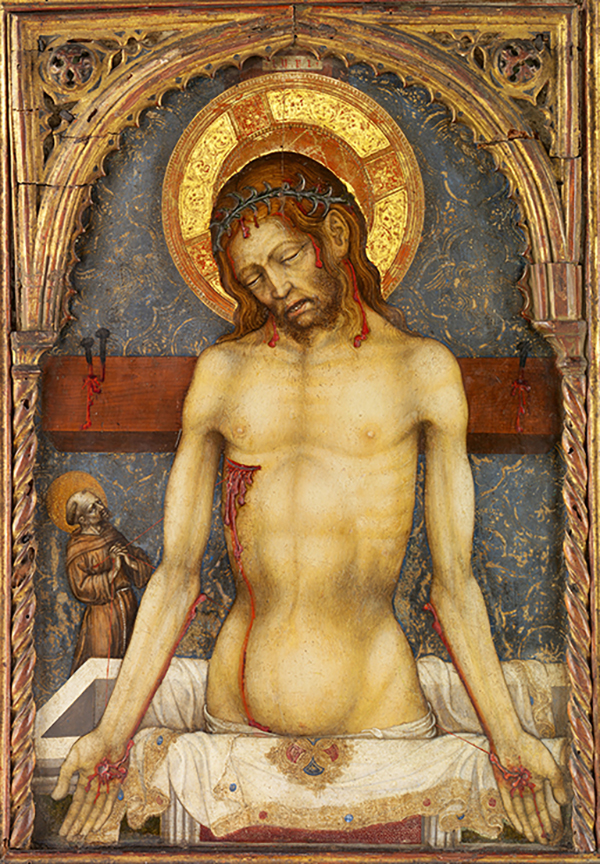
Bodily remains?
Other scholars have conjectured that the Roman and Jewish authorities never produced the Body of Jesus to squash the Christian movement in its infancy, simply because the Body of Christ would have been so thoroughly decomposed by the time they needed to exhume it that it would have been unrecognizable. Putting such remains on display would have proven nothing, and convinced no one that they were truly the bodily remains of Jesus of Nazareth.
Gary Habermas and Michael Licona, however, have successfully disputed this theory:
[I]n the arid climate of Jerusalem, a corpse’s hair, stature, and distinctive wounds would have been identifiable, even after 50 days. [From footnote 32: This information was obtained from the Medical Examiner’s Office for the Commonwealth of Virginia. The physician in charge said that even in Virginia, which has a climate warm and damp enough to promote quick decomposition, an unprepared corpse undergoing a normal rate of decomposition should still after 50 days have its hair and identifying stature. The wounds would “definitely” be identifiable. Thus, a corpse in a much worse state than what would be expected for arid Jerusalem would still be identifiable after 50 days]. [3]
Another possibility is that the tomb really was empty — and the Body of Jesus could never be produced — only because it had been stolen by thieves on Saturday night. There certainly were such things as “grave robbers” in ancient times. But why would thieves have bothered to break into the grave of someone known to be penniless and disgraced? Perhaps they expected that the grave would include devotional offerings paid for by its rich owner, Joseph of Arimathea. The fine linens that the Body of Jesus was wrapped in surely would have been worth a tidy sum.
But in this case, inexplicably, they left behind those expensive grave cloths, and ran off instead with a naked corpse! That is doubly bizarre: besides being the most valuable item in that grave, the linens would have been carefully wound and secured all around the dead Body of Jesus, in the traditional Jewish manner. In order to (inexplicably) leave behind those valuable cloths, the thieves would have had to take the time to unwind and unravel them. Is that the kind of thing thieves do? Surely they would be acting fast to avoid discovery, and would more likely have carried off the Body of Jesus, grave cloths and all, and only worried about unwinding the linens later! Or, alternatively, if the main thing they wanted was the cloths, they would have unwound them and left the corpse behind. The last thing they would have done would have been to unwind the valuable grave cloths, leave them behind, and take the naked corpse instead!
Bizarre twist
There is another bizarre “twist” to this as well (excuse the pun), which again makes the “thieves stole the body” theory highly unlikely. Apparently they not only unwound the grave cloths from the body, they also rewound them and set them down on the rock shelf of the tomb just the way they would have been as if they still encompassed the dead Body of Jesus!
John Stott points this out for us, and reminds us of some important things about the mystery of the Resurrection:
Now, supposing we had been present in the sepulcher when the resurrection of Jesus actually took place. What should we have seen? Should we have seen Jesus begin to move, and then yawn and stretch and get up? No. We do not believe that he returned to this life. He did not recover from a swoon. He had died, and rose again. His was a resurrection, not a resuscitation. We believe that he passed miraculously from death into an altogether new sphere of existence.
What then should we have seen had we been there? We should suddenly have noticed that the body had disappeared. It would have “vaporized,” being transmuted into something new and different and wonderful. It would have passed through the grave clothes, as it was later to pass through closed doors, leaving them untouched and almost undisturbed. Almost, but not quite. For the body cloths, under the weight of 100 pounds of spices, once the support of the body had been removed, would have subsided or collapsed, and would now be lying flat. A gap would have appeared between the body cloths and the head napkin, where his face and neck had been. And the napkin itself, because of the complicated crisscross pattern of the bandages, might well have retained its concave shape, a crumpled turban, but with no head inside it.
A careful study of the text of John’s narrative suggests that it is just these characteristics of the discarded grave clothes which he saw. First, he saw the cloths “lying.” The word is repeated twice, and the first time it is placed in an emphatic position in the Greek sentence. We might translate, “He saw, as they were lying (or “collapsed”), the linen cloths.” Next, the head napkin was “not … with the linen cloths but … in a place by itself.” This is unlikely to mean that it had been bundled up and tossed into a corner. It lay still on the stone slab, but was separated from the body cloths by a noticeable space. Third, this same napkin was “not lying … but wrapped together.” This last word has been translated “twirled.” (The Authorized Version “wrapped together” and the Revised Standard Version “rolled up” are both unfortunate translations.) The word aptly describes the rounded shape which the empty napkin still preserved.
It is not hard to imagine the sight which greeted the eyes of the apostles when they reached the tomb: the stone slab, the collapsed grave clothes, the shell of the head-cloth and the gap between the two. No wonder they “saw and believed.” A glance at these grave clothes proved the reality, and indicated the nature, of the resurrection. They had been neither touched nor folded nor manipulated by any human being. They were like a discarded chrysalis from which a butterfly has emerged. [4}
Next: Part 34: The Strength of the Evidence for Easter.
Previous article.
Notes
[1] Quoted in Robert Hutchinson, Searching for Jesus (Nelson Books, 2019), p. 234.
[2] Ibid., p. 232.
[3] Gary R. Habermas and Michael R. Licona, The Case for the Resurrection of Jesus (Grand Rapids: Kregel, 2004), p. 70 and 287.
[4] John Stott, Basic Christianity (Downer’s Grove: IVP, 2006 edition), p. 65-67.
{shopmercy-ad}
