













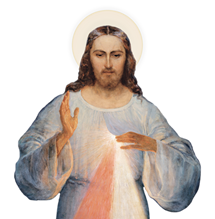


Every Thursday evening, "Penitents of Love" join online to pray a Rosary of reparation. Once a month a priest joins them in prayer and gives a talk highlighting God’s mercy but also the need for reparation. And during the penitential season of Lent, they will be praying a Chaplet of Divine Mercy each day.
By Theresa Bonopartis
It’s 1 a.m. on Friday morning when Ann logs on to Zoom. The Ireland native stays up well past her bedtime so she can join a group of women and men, ”Penitents of Love,” who meet weekly online in the United States to pray the Rosary together.
The thing they have in common: They’ve all experienced the profound mercy of God through healing from the devastation of abortion. Together, they seek to do penance and reparation for this sin.
Solidarity
“Since joining the weekly Penitents of Love Rosary, I can see more clearly the importance of repentance and reparation for the sin of abortion,” Ann says. “Praying with others who carry the same indelible scars as me and who are willing to stand in repentance rather than resentment, strengthens me. There is no judgment, just a feeling of solidarity as we humbly pray together accompanied by the gentle presence of the Blessed Mother in the Rosary.”
Penitents of Love is a new initiative of the Entering Canaan post-abortion ministry under its lay apostolate. Father Francis Mary Roaldi, CFR, one of the priests involved in the ministry, gives this definition of a penitent: “A penitent is a lover who personally moves back into loving relationship with God and moves others to do the same.”
Prayers such as the Rosary or the Divine Mercy Chaplet; fasts such as giving up social media or observing the Church’s days of fast and abstinence (especially during Lent) when we cut back on how much we eat and what sort of things we eat; or works of mercy, such as almsgiving or the other corporal and spiritual works of mercy — all of these can be beautiful, grace-giving acts of penance and reparation.
Penance
This penance is done not as a punishment, but out of love and gratitude to God, and is offered for specific intentions:
• In reparation for their own sin of abortion.
• For those silently suffering and away from God to come forward for healing.
• For grace in their final battle for those post-abortive people who will die today.
• For the conversion of abortionists and those involved in abortions.
• For an end to abortion
Although acts of reparation are encouraged for penitents each day, every Thursday evening they join online to pray a Rosary of reparation. Once a month a priest joins them in prayer and gives a talk highlighting God’s mercy but also the need for reparation.
Participating in the weekly Rosary “gives me the courage to be visible in my brokenness and unite with others as we pray for God's mercy for ourselves and for others and for an end to abortion,” Ann says.
Theology and history
The Catechism of the Catholic Church (1491) teaches us: “The penitent’s acts are repentance, confession, or disclosure of sins to the priest, and the intention to make reparation and do works of reparation.”
The Church gives us many examples of penitents. We are told that St. Mary Magdalene lived out her life in prayer and penance in a cave formed by natural erosion called La Sainte-Baume in France. Saint Mary of Egypt, another penitent, went into the desert to live in silence and solitude in reparation for her many sins. Those penitents and many others, like St. Francis of Assis and St. Margaret of Cortona, were touched by the love and mercy of God which radically changed them, leaving them to lives of penance in gratitude to God and in reparation for their sins and the sins of others.
Chances are none of us will be called to live in a cave or wander into the desert to live in solitude and silence, but we are all called to make reparation for our sins, either in this world or the next.
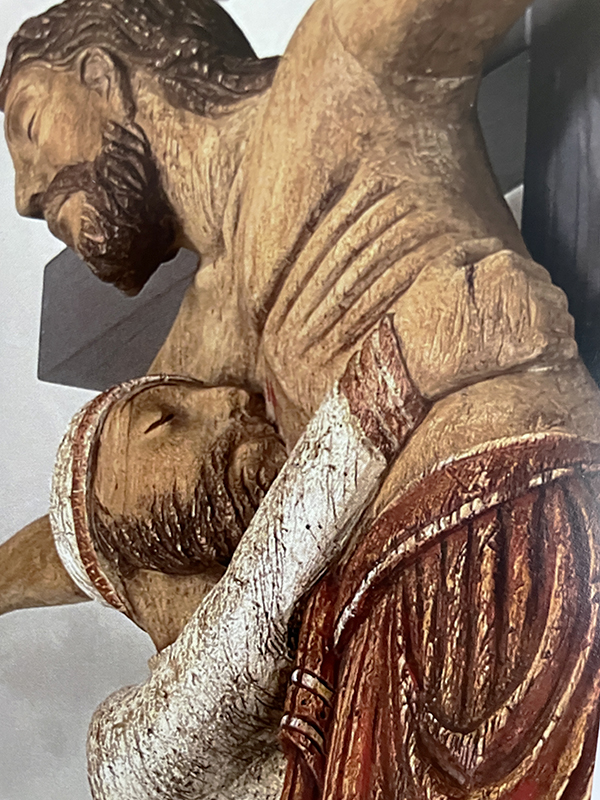
The grievous sin of abortion, taking the life of our own children, calls for acts of reparation. Joining with Christ and the Blessed Mother at the foot of the Cross, we intercede not only for our own sins, but the millions of other souls lost to God because of abortion, imploring His mercy on our world.
As a priest once said after participating: “You can sense how pleasing this to God, both the making reparation but also offering the prayers for others who have committed the sin of abortion. There is something very beautiful about it knowing they acknowledge their sin and are not only filled with contrition and gratitude but want to help others.”
Divine Mercy Chaplet
In the Diary of Saint Maria Faustina Kowalska (1276, 39), Faustina speaks of suffering the pains of abortion. “Jesus had me realize that in this way I took part in His agony in the garden,” Faustina wrote, “and that He Himself allowed these sufferings in order to offer reparation to God for the souls murdered in the wombs of mothers.”
During her beatification process, her confessor, Fr. Michael Sopoćko, testified that Jesus gave us the Chaplet to stop the sin of abortion, “the most grievous sin of all.”
Jesus told St. Faustina: “Every time you enter the chapel, immediately say the prayer which I taught you" (Diary, 476).
During the penitential season of Lent, Penitents of Love will be praying a Chaplet of Divine Mercy each day. The daily Chaplet, up to Good Friday, will have specific intentions relating to abortion. From Good Friday to Divine Mercy Sunday, we will join in the general intentions for the faithful.
If you are someone who has had an abortion, gone through healing and would like to join Penitents of Love, contact us at enteringcanaan17@gmail.com. All contact is confidential.
Trust Jesus
As Jesus told Faustina:
Let the greatest sinners place their trust in My mercy. They have the right before others to trust in the abyss of My mercy. My daughter, write about My mercy towards tormented souls. Souls that make an appeal to My mercy delight Me. To such souls I grant even more grace than they ask. I cannot punish even the greatest sinner if he makes an appeal to My compassion, but on the contrary, I justify him in My unfathomable and inscrutable mercy. (Diary, 1146).
The call to God’s mercy is there for each one of us no matter how great the sin. May we, in humility and trust, unite in gratitude and love for the immense gift of the sacrifice of Christ, who died on the Cross for us, the act of the ultimate love that conquers even the sin of abortion.
Jesus, I Trust in You!
Theresa Bonopartis is the author of A Journey to Healing through Divine Mercy (Marian Press).
{shopmercy-ad}
