












By Chris Sparks
On Dec. 8, 2021, the Solemnity of the Immaculate Conception, the Year of St. Joseph came to a close — but the challenge of living like St. Joseph has only just begun.
After all, St. Joseph’s role was not one of self-satisfaction, of ease and plenty, of comfort and luxury. He wasn’t even center stage. Saint Joseph is famously silent in the Gospels. He’s not the star of the show; that would be his adopted Son, the Babe welcomed by Joseph when the angel comes to reassure him that to marry Mary is to do the will of God, and to raise this Son, the Son of God, is to do the will of God.
And so Joseph, quietly, did exactly that. He did all of that, in fact — that whole, staggering, impossible task. He raised God.
He was father on earth to the Son whose Father is in Heaven, from whom He came and to whom He returned. On earth, that Son called Joseph “father.”
Pause before this mystery. The eternal Second Person of the Blessed Trinity recognized this silent workman, this quietly righteous Jewish man of the first century Middle East, as His father.
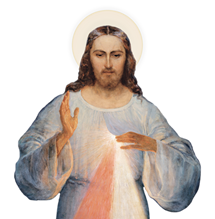
And Jesus didn’t mean that in some half-hearted sense. Not at all. Scripture quietly drops a quick glimpse into the staggering mystery of the father and the Son, the earthly man raising the Divine Mercy Incarnate, at the conclusion of the Finding in the Temple:
He [Jesus] went down with [Joseph and Mary] and came to Nazareth, and was obedient to them; and his mother kept all these things in her heart (Lk 2:51).
Think about that for a few minutes. Jesus was obedient to Joseph and Mary.
Joseph was true father to Jesus, though not by biology. And Jesus was true son to this man, which meant that the just and righteous Joseph must have been a model of manhood, as Fr. Donald Calloway, MIC, explains in Consecration to St. Joseph. In fact, the Church views St. Joseph as the greatest of all the saints after the Blessed Virgin Mary.
Which means we have an awful lot to learn from St. Joseph about what it means to love Jesus and Mary. We have before us in St. Joseph the icon of God the Father to God the Son, right down to Joseph’s profession. Both the Father and the father were builders, creators, home-makers. Both God the Father and Joseph, the earthly father, were sustainers, protectors, providers. All things are held in existence by God the Father; all parts of a building are put in place by a builder, as Joseph was.
Living and Loving Like St. Joseph
- Make (or renew) your consecration to St. Joseph.
- Be faithful to the duties of your state in life.
- Put God first, family second, self third.
- Know and love the Word of God. Spend half an hour reading the Bible every day.
- Make (or renew) your consecration to Jesus through Mary with 33 Days to Morning Glory.
- Be faithful to prayer and the works of mercy.
- Receive the Sacraments according to the precepts of the Church. If you can, go to daily Mass and make a weekly Confession.
- Be quick to listen and slow to speak.
- Love God and neighbor.
- Know your faith. Study the Catechism.
The silence of St. Joseph resembles the silence of God the Father — each is known to us only through the Son, the Word of God, the revelation of the Father and the father. Want to see the faith of Joseph? Look at the life and teachings of His Son. Want to hear the silent Joseph speak? Listen to his Son, for sonship essentially means being made in the image, after the likeness, of one’s parents (see Gen 5:3). We can know St. Joseph by knowing the teaching of Jesus about what righteousness really looks like. Want to learn more about Joseph? Take a look at the parables told by Jesus; take a look at the Sermon on the Mount and the Beatitudes. Whatever Jesus in His human nature came to know of righteousness was in some fashion formed by the model of both His parents. Whatever Jesus came to know in His humanity of justice and mercy would, to some extent, have come from the Holy Family, as happens for all of us human beings.
So the Year of St. Joseph was really a mere foretaste of what it really means to be a Christian steeped in Scripture and the life of faith, for Jesus, the Way, the Truth, and the Life, is also, after some fashion, the image and likeness of St. Joseph. To be like Christ is to be like Joseph.
And Joseph summons us to Christian fidelity. He summons us men to be Christian gentlemen — with a strong emphasis on “gentle.” True strength, after all, is incredibly careful because it can cause damage incredibly easily. True strength, true toughness, goes along with great self-mastery, with courtesy and care for those who are weaker, with concern for the needs and well-being of one’s neighbors. True manhood is best expressed in chivalry; in self-sacrifice for the beloved neighbor; in service, not domination.
Saint Joseph was such a strong man that he could also be a silent one, remembered because of his faith, his righteous obedience to the divine will, and his love of God, which allowed God to safely be obedient to him. Joseph could have the docility and prudent wisdom to discern when an angel summoned him to go, and when to return. He could be chastely married to a woman infinitely greater than himself. He could be merciful to a Son who’d given His parents a scare, who’d disappeared from the family party and was found three days later in the Temple.
So as the Year of St. Joseph comes to an end, let us learn from St. Joseph what it means to be someone who loves Jesus and Mary. Let us learn the lessons of restraint, of gentility, of self-mastery and self-gift. And let us follow St. Joseph in serving Jesus and Mary faithfully, whole-heartedly, with generous love and righteousness, and loving our neighbor as ourselves.
Chris Sparks serves as senior book editor for the Marian Fathers. He is the author of the Marian Press book How Can You Still Be Catholic? 50 Answers to a Good Question.
{shopmercy-ad}
