













Nov
02
2005
0
By Anonymous (not verified)
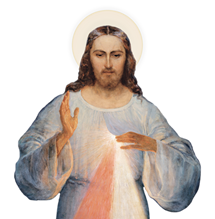
Father Michael Sopocko managed to obtain the imprimatur in 1937 on a small booklet with the chaplet, novena, and litany, as well as some introductory words about devotion to Divine Mercy. Since St. Faustina was still alive at the time, he did not mention the origin of the prayers or promises attached to them. He also received permission for the public exposition and veneration of the image of Divine Mercy that year. Thus, there was some spread of the message, but it was still quite small.
After the death of St. Faustina and the invasion of Poland by Germany and Russia, there was further spread, in particular from Vilnius, where Fr. Sopocko received permission to reveal the source of the Divine Mercy image, which was hanging in the Church of St. Michael. People went to the image and pleaded with Jesus for protection and in thanksgiving for favors received. The mercy prayers were secretly printed or mimeographed to supply the great demand for them. Medals and badges of the Divine Mercy image were made, and people began to recite the prayers together, openly and in secret. Poles in prison camps promoted the message, as well as those who were dispersed to other countries.
At a camp not far from Vilkomierz, Lithuanians opened a camp for evacuated Polish police and soldiers. Father Joseph Jarzebowski visited this camp in 1940, and was introduced to the message by Fr. Nikodem Dubravka and Fr. Antony Manturzyk. Both of these priests had been pupils of Fr. Sopocko. Father Jarzebowski looked at the novena, but he was not very enthused. However, others would also try to convince him of the importance of the devotion and message. He decided to pray the prayers and entrust his attempt to reach the Marians in the United States to The Divine Mercy. He made it to the U.S. and the rest is history.
After the death of St. Faustina and the invasion of Poland by Germany and Russia, there was further spread, in particular from Vilnius, where Fr. Sopocko received permission to reveal the source of the Divine Mercy image, which was hanging in the Church of St. Michael. People went to the image and pleaded with Jesus for protection and in thanksgiving for favors received. The mercy prayers were secretly printed or mimeographed to supply the great demand for them. Medals and badges of the Divine Mercy image were made, and people began to recite the prayers together, openly and in secret. Poles in prison camps promoted the message, as well as those who were dispersed to other countries.
At a camp not far from Vilkomierz, Lithuanians opened a camp for evacuated Polish police and soldiers. Father Joseph Jarzebowski visited this camp in 1940, and was introduced to the message by Fr. Nikodem Dubravka and Fr. Antony Manturzyk. Both of these priests had been pupils of Fr. Sopocko. Father Jarzebowski looked at the novena, but he was not very enthused. However, others would also try to convince him of the importance of the devotion and message. He decided to pray the prayers and entrust his attempt to reach the Marians in the United States to The Divine Mercy. He made it to the U.S. and the rest is history.
