
















Sunday, July 5, Fourteenth Sunday in Ordinary Time
•Zec 9:9-10
•Ps 145:1-2, 8-9, 10-11, 13-14
•Rom 8:9, 11-13
•Mt 11:25-30
By Marc Massery
Are you exhausted lately? There are so many problems in our country and in our world, it’s easy to get frustrated by the way things are and pessimistic about the future.
Thankfully, in the Gospel reading this Sunday, we hear some much-needed words of consolation. In fact, they’re some of the most consoling verses in all of Scripture. Jesus says:
Come to me, all you who labor and are burdened, and I will give you rest. Take my yoke upon you and learn from me, for I am meek and humble of heart; and you will find rest for yourselves. For my yoke is easy, and my burden light (Mt 11:28-30).
These words put all of life’s struggles into perspective. By this statement, Jesus acknowledges a central truth that no one can deny: We live in a broken world. No amount of affluence or even holiness exempts one from the burdens of being human. Thankfully, Jesus doesn’t leave us in this burdened state. He offers us a way forward, a way to peace, a way that when followed makes life worth living. He calls this way of life "taking up his yoke.”
Scripture scholar William Barclay talks about an old legend that says Jesus of Nazareth constructed the best oxen yokes in all of Galilee:
From all over the country, men came to him to buy the best yokes that skill could make … it has been suggested that the sign above the door of the carpenter’s shop in Nazareth may well have been: ‘My yokes fit well.’ It may well be that Jesus is here using a picture from the carpenter’s shop in Nazareth.
A yoke for an ox can either fit poorly around the neck, making his load harder to bear. Or a yoke can fit perfectly. A well-fitting yoke doesn’t take the burden away. It does, however, make the burden much easier to carry.
This is what Jesus offers us. He didn’t come to take away all our pain. He came to teach us how to carry well the burdens we’re given.
Being yoked to Christ means taking to heart an essential truth: that God the Father loves each of us intimately. When we see our burdens as something an all-loving, all-knowing God allowed, we can trust that the trials He leads us through will yield good fruit.
When Jesus came, His people were yoked by the rigorous moralism of the Jewish elite. Few if any truly understood God as a loving Father. Instead, many were led to believe in a ruthless God whose chief concern was strict adherence to endless rules. Believing in a such a harsh, unloving God made their lives far more difficult than they needed to be. Jesus said of the Pharisees, “They tie up heavy burdens [hard to carry] and lay them on people’s shoulders, but they will not lift a finger to move them” (Mt 23:4). This is why God’s people so desperately needed to hear Christ’s message.
Today’s social elite promote a Gospel different than the one the religious elite espoused in Jesus’ day. Many of the Pharisees of our time and place preach a Gospel of worldliness. They more or less believe that science has disproved God’s existence. Their Gospel says to make the most of life by chasing money, status, and power. But as many unhappy celebrities and billionaires have discovered, these do not truly satisfy. On the other hand, yoking oneself to Christ, following His will as best one can, brings far more satisfaction than the world could ever give.
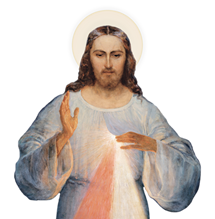
Some of the most consoling lines in all of St. Faustina’s Diary speak to this truth. These words written by St. Faustina form the closing prayer of the Divine Mercy Chaplet:
Eternal God, in whom mercy is endless and the treasury of compassion inexhaustible, look kindly upon us and increase Your mercy in us, that in difficult moments we might not despair nor become despondent, but with great confidence submit ourselves to Your holy will, which is Love and Mercy itself (950).
God’s will, the burdens He allows us to bear, come out of a place of love for us. Our trials are God’s mercy. Sometimes, this can be hard to understand, especially amidst the pain of our struggles. But the more we come to believe this, the lighter our burdens will seem.
{shopmercy-ad}
Photo: C Watts at Flickr
