












It’s always interesting to argue for the pro-life position on social media.
You get a close up view of the world in which we live, and it’s not a pretty picture.
You could call it “The Adventure of the Missing Children.” The pro-choice view depends on sliding your gaze as rapidly as possible from the person being aborted to the person bearing the child, and then resolutely and continually refusing to ever look at the fact that every single successful abortion involves a fatality, that a person is dead after every abortion.
The advances of modern biology and technology make it increasingly impossible to honestly say that we don’t know when human life begins, or to claim that somehow personhood comes into play separately from humanity. After all, many of the great evils of the 20th century depended on somehow dehumanizing or depersonalizing a group of our brethren. And yet the Church is dogmatic about our common ancestry, about the unity and dignity of the entire human race, not some mythical separation of superior and inferior races or classes of people. The whole human race is beloved by God; the whole human race is welcomed into membership in the Church; the whole human race is intended to be members of the Body of Christ, sharing His Body and Blood, one Lord, one faith, one Baptism (see Eph 4:5-6).
The whole human race has a right to life. Even the largely non-Catholic (and occasionally non-Christian, or non-orthodox Christian) Founding Fathers of our country recognized that:
We hold these truths to be self-evident, that all men are created equal, that they are endowed by their Creator with certain unalienable Rights, that among these are Life, Liberty and the pursuit of Happiness.
For all that the founding generation accepted slavery, they also drafted a Declaration of Independence that had abolition implicit within it. That was proven by the court case brought by Elizabeth “Mumbet” Freeman, an enslaved black woman who was living and serving in the region of Stockbridge, Massachusetts, when she heard the Declaration read and realized the implications of that great text. She knew it meant that by rights, she was free.
And so she sued for her freedom and won. The case helped end slavery in Massachusetts in the late 1700s, long before many of the other states had abolished slavery.
That same Declaration has within it the seeds of the end of legal abortion in this country. Indeed, had we been true to the essential principles on which our nation was founded, we would never have seen a host of evils in our nation’s history. We would have seen the equality of the Native Americans recognized and defended consistently. We would have seen slavery prevented from the first moments of our nation’s conception, and we would have seen the right to life protected consistently from the founding to the present day.
But our principles have been better than we are ever since 1776, and so we await the full realization of the essential truths recorded in the Declaration of Independence, truths consistent with our Catholic faith’s assertion that natural reason leads us to natural law and natural theology (see Catechism, 1954-1960).
Now that the end of Roe is in sight, hopefully our laws will become more just, more consistent with the principle that “that all men are created equal, that they are endowed by their Creator with certain unalienable Rights, that among these are Life, Liberty and the pursuit of Happiness.”
But it won’t be enough to merely overturn Roe. Indeed, the Church calls on us all to pursue the New Evangelization in order to establish a Culture of Life that will lead to the advent of a Civilization of Love. The former Supreme Knight of the Knights of Columbus, Carl Anderson, explored what that might mean in his book A Civilization of Love: What Every Catholic Can Do to Transform the World. We get magisterial guidance in papal encyclicals like St. John Paul II’s Evangelium Vitae (The Gospel of Life) and Pope Benedict XVI’s Caritas in Veritate (Charity in Truth). We are to bring about in the world a society that supports and encourages the family, that normalizes a family wage, for example, and focuses our civilization on living in love and truth, not merely on productivity, consumption, materialism, or efficiency.
We are called, in short, to mirror on earth the justice and mercy of God, as Dr. Robert Stackpole explains. That means ending legal abortion and supporting and defending families, mothers, children. That means being more concerned with following the social teaching of the Church than the platforms of the major parties. That means drinking deep of the wisdom of St. Augustine and St. Thomas Aquinas, distilled by the Rev. Dr. Martin Luther King, Jr., in his Letter from a Birmingham Jail.
We are called to be strangers and sojourners, prophets in a land far from our heavenly homeland, serving God and neighbor out of love, knowing them to be family. We are called to be better than we are, always moving closer to Jesus, always keeping our eyes, our hopes, our expectations fixed on Him, allowing us to walk through whatever storms and trials the world, the flesh, and the devil may throw our way. We are called to be good citizens on earth even as we know we are meant to be citizens of Heaven.
Part of that, as Scripture teaches us, is our duty of prayer: “First of all, then, I ask that supplications, prayers, petitions, and thanksgivings be offered for everyone, for kings and for all in authority, that we may lead a quiet and tranquil life in all devotion and dignity” (1 Tim 2:1-2). That obligation binds us all the more if we don’t like, don’t trust, or don’t respect those in authority! We are to pray for our enemies, after all, even our persecutors, as much or more than we pray for our friends, family, or loved ones (see Mt 5:43-48).
Saint Faustina is our model in this regard, pouring herself out in intercession for poor sinners and for her homeland, Poland (see Diary of Saint Maria Faustina Kowalska, 325, 714, 1251). She prayed most fervently for those most in need of God’s mercy — that is, for the cruel, the cowardly, the sinners and enemies of Christ and His Church, as well as for those who are far from Christ but are better than many of us Catholics are; for those who are well-intentioned but mistaken, or those who made terrible choices such as abortion through fear, dire need, or trusting the consensus of society. When we hear “The greater the sinner, the greater his right to God’s mercy” (Diary, 423), we need to remind ourselves that that includes those most fervently opposed to Christ and His Church for whatever reason. Those whose opposition we face today, those well-meaning, courteous, or charitable as well as those most cruel, most hateful, or most indifferent to us, are all those to whom God has promised the greatest mercy, and the ones for whom we most need to pray and fast. Those who argue with us may be our betters even as they defend the indefensible. What happier outcome, what more complete triumph over our enemies could we have than that they become our friends and brethren?
So as we enter a new season of the struggle with the culture of death, let us take up our Chaplets and other devotions, and commit to praying for the abortionists as well as the unborn, for the folks most vociferously in favor of legal abortion as well as the end of the culture of death. Let us recommit ourselves to praying for those with whom we have the least in common, for those who treat us the worst, and for those most in need of God’s mercy. There but for the grace of God go all of us.
Pray for me, that I may practice what I preach. I’ll pray for you.
Chris Sparks serves as senior book editor for the Marian Fathers. He is the author of the Marian Press book How Can You Still Be Catholic? 50 Answers to a Good Question.
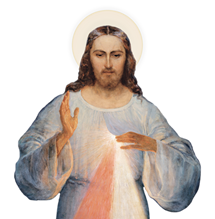
Image by Adobe Stock.
{shopmercy-ad}
