














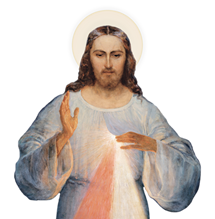


“More Brilliant than the Sun," a weekly series by Robert Stackpole, STD, Director of the John Paul II Institute of Divine Mercy
The series so far:
PART 1: The Plan of the Heart of Jesus to Drive Back the World's Darkness
PART 2: What Do We Really Mean By “The Heart of Jesus”?
PART 3: Devotion to the Heart of Jesus and its Roots in Holy Scripture
PART 4: The Heart of the Savior in the New Testament
PART 5: The Heart of Jesus Manifest in His Tender Affections and Compassionate Love
PART 6: The Heart of Jesus in the Garden and on the Cross
PART 7: From Easter Onward: The Heart of Jesus Lives in His Church
PART 8: The Flowering of Love for the Heart of Jesus in the Middle Ages
PART 9: Saint Gertrude the Great on Bringing Comfort and Joy to the Heavenly Christ
PART 10: Saint Margaret Mary Alacoque and Reparation to the Sacred Heart
PART 11: On Consoling the Heart of Jesus
PART 12: Saints and Servants of Consoling Reparation to the Heart of Jesus
PART 13: The Twelve Promises — and the Great Promise — of the Sacred Heart
PART 14: Holiness from the Heart of Jesus: St. Charles De Foucauld
PART 15: Holiness from the Heart of Jesus: Blessed Dina Bélanger
PART 16: The Social Reign of the Sacred Heart
PART 17: The Reign of the Heart of Jesus in Families
PART 18: Jesus Unveils the Great Mercy of His Heart
PART 19: Popes, Saints, and Visionaries on the Merciful Heart of Jesus
Saint Faustina certainly was not the first saint in the history of the Church to be led to appreciate the central importance of merciful love in the Heart of our Savior. Saint John Eudes (1601-1680), for example, is known as the pioneer of the liturgical worship of the Sacred Heart. But in his “Meditations for the Feast of the Sacred Heart,” we find the following, very revealing passage, titled “The Divine Mercy should be the Object of our Very Special Devotion”:
Of all the divine perfections mirrored in the Sacred Heart of our Savior we should have a very special devotion to divine mercy and we should endeavor to engrave its image on our heart (The Sacred Heart of Jesus [Albany: Preserving Christian Publications, 1997], p. 115).
Have confidence and never doubt
Consider also the visions and locutions reportedly received by the Servant of God Sr. Josefa Menendez in the 1920s, recorded for us in the volume titled The Way of Divine Love. The whole book is a tender expression of devotion to the Sacred Heart. However, Jesus also explained to her that the message of the merciful love of His Heart must be proclaimed to all people. She recorded the words of our Lord to her as follows (The Way of Divine Love. Rockford, Ill: TAN, 1972, p. 213 and 349):
How often in the course of the ages have I, in one way or another, made known my love for men: I have shown them how ardently I desire their salvation. I have revealed My Heart to them. This devotion has been as light cast over the whole earth, and today is a powerful means of gaining souls, and so of extending My kingdom.
Now I want something more, for if I long for love in response to My own, this is not the only return I desire from souls: I want them all to have confidence in My mercy, to expect all from My clemency, and never to doubt My readiness to forgive.
This is what I wish all to know. I will teach sinners that the mercy of My Heart is inexhaustible. Let the callous and indifferent know that My Heart is a fire which will enkindle them, because I love them ... above all that they should trust Me, and never doubt My mercy. It is so easy to trust completely in My Heart ... !
My Heart is not only an abyss of love; it is also an abyss of mercy.
Sister Josefa received this prophetic revelation from our Lord in 1923, less than a decade before He began unveiling His Merciful Heart to St. Faustina!
Popes and Mercy
In addition to the saints and prophetic visionaries who have seen the Sacred Heart of Jesus as the fountain of His Divine Mercy, several of the popes of the 20th century explicitly taught the same thing. For example, in his encyclical on the Sacred Heart, Haurietis Aquas (On Devotion to the Sacred Heart, 1956), section 97, Pope Ven. Pius XII wrote:
Christ our Lord, exposing His Sacred Heart, wished in a quite extraordinary way to invite the minds of men to a contemplation of, and devotion to, the mystery of God’s merciful love for the human race. In this special manifestation Christ pointed to His Heart, with definite and repeated words, as the symbol by which men should be attracted to a knowledge and recognition of His love; and at the same time He established it as a sign or pledge of mercy and grace for the needs of the Church and our times.
A similar teaching can be found in the encyclical Dives in Misericordia (Rich in Mercy, 1980), section 13, of St. John Paul II. He tells us of the centrality of the Heart of Jesus in revealing God’s mercy:
The Church seems in a special way to profess the mercy of God and to venerate it when she directs herself to the Heart of Christ. In fact, it is precisely this drawing close to Christ in the mystery of His Heart which enables us to dwell on ... the merciful love of the Father, which constituted the central content of the messianic mission of the Son of Man.
In short, according to saints, visionaries, and popes, we need to be devoted to the Sacred Heart of Jesus and, at the same time, to have a special devotion to His Divine Mercy that flows to us from His Heart. This is the new and vital focus of Heart-spirituality given by our Lord to the Catholic Church in our time.
This also means that devotion to the Divine Mercy and devotion to the Sacred Heart are complementary; they both imply and complete each other. The reason is simple enough: Jesus has only one Heart! His Sacred Heart is His Merciful Heart — they are one and the same. The Sacred Heart overflows with Merciful Love for us, and that is why, in principle at least, these two devotions are inseparable.
Mercy and compassion
Long ago, St. Catherine of Siena (1347-1380), the great Dominican mystic and spiritual writer, taught that God’s love always crosses a bridge of mercy to reach us. In other words, the Sacred Heart of Jesus is all love, but the form that love takes when He reaches out to human beings is “misericordia,” merciful love. For mercy is compassionate love; in other words, mercy is love reaching out to help meet the needs of others, and to overcome their miseries.
Saint Thomas Aquinas, for example, defined “mercy” as “the compassion in our hearts for another person’s misery, a compassion which drives us to do what we can to help him” (ST II-II. 30.1). Mercy, therefore, is the form that our Lord’s love for us takes when He reaches out to us in our need and our brokenness, through no merit or deserving of our own. Whatever the name of our misery may be — sin, guilt, suffering, or death — the Heart of Jesus is always ready to pour out His merciful, compassionate love for us, to help in time of need. As I wrote in my book, Jesus, Mercy Incarnate (Marian Press, 2000, p. 112):
In fact, God’s love for His creatures always takes the form of merciful love. As we read in the Psalms (24:10, Douai-Rheims Version), “all the ways of the Lord are mercy and truth;” and again (144:9, DRV), “His tender mercies are over all His works.”
When He created the world “ex nihilo,” therefore, and holds it in being at every moment, it is an act of merciful love: His merciful love overcoming the potential nothingness, the possible non-existence of all things.
When the divine Son became incarnate and dwelt among us, that was an act of merciful love too: His merciful love in sharing our lot, showing us the way to the Father, and making the perfect offering for our sins.
When He sends His Holy Spirit into our hearts to refresh and sanctify us, that too is His merciful love: His merciful love pouring into our hearts the power to grow in faith, hope, and love, and to serve Him with joy.
Psalm 135 (DRV) says it best; while celebrating all the works of the Lord in creation and redemption, the psalm bears the constant refrain: “for His mercy endureth forever.”
Centrality of Mercy
Similarly, St. Catherine of Siena pointed out the centrality of the merciful love of God manifest in all His works in the world. In her book, The Dialogue (New York: Paulist Press edition, 1980, no. 30, p. 71-72), she addressed God the Father with these words:
By your mercy we were created. And by your mercy we were created anew in your Son’s blood. It is your mercy that preserves us ...
Your mercy is life-giving. It is the light in which both the upright and sinners discover your goodness. Your mercy shines forth in your saints in the height of heaven. And if I turn to the earth, your mercy is everywhere. Even in the darkness of hell your mercy shines, for you do not punish the damned as much as they deserve.
You temper your justice with mercy. In mercy you cleansed us in the blood; in mercy you kept company with your creatures. O mad lover! It was not enough for you to take on our humanity: You had to die as well! Nor was death enough: You descended to the depths to summon our holy ancestors and fulfill your truth and mercy in them ...
I see your mercy pressing you to give us even more when you leave yourself with us as food to strengthen our weakness ... Every day you give us this food, showing us yourself in the sacrament of the altar within the mystic body of holy Church. And what has done this? Your mercy.
O mercy! My heart is engulfed with the thought of you! For wherever I turn my thoughts I find nothing but mercy![1]
As we saw in parts 2 and 3 of this web series, the Sacred Heart of Jesus is perfect in love — divine, human, and affective love — and therefore all lovable. But whenever the love of His Heart reaches out to humanity — to our nothingness, our brokenness, and our need — that love always takes the form of merciful, compassionate love. Therefore, at the center of our devotional life (our “first love”) should be the Sacred and Merciful Heart of Jesus.
The Sacred Heart overflows with mercy and compassion for us, and that is what makes devotion to the Heart of Jesus and devotion to His Divine Mercy the two great lights that our Lord has given to His Church to drive back the world’s darkness in our time.
This series continues next week with Part 20: "To Console the Merciful Savior."
Previous article
{shopmercy-ad}
