













When we practice our faith, live in the state of grace, and do works of mercy, we show the face of Jesus, the face of the Father’s mercy, to the world. We heal the wounds, bind up the injuries, help set the world to rights.
By Chris Sparks
One of the challenges of the Christian life is that, in God’s providence, it need not be challenging at all.
We only need Hope, the theme of this Jubilee Year.
Take these passages from the Diary of St. Faustina, for instance:
June 23, [1937]. As I was praying before the Most Blessed Sacrament, my physical sufferings ceased suddenly, and I heard this voice in my soul: You see, I can give you everything in one moment. I am not constrained by any law.
June 24. After Holy Communion, I heard these words: Know, My daughter, that in one moment I can give you everything that is needed for the fulfillment of this task. After these words, an extraordinary light remained in my soul, and all God’s demands seemed to me to be so simple that even a little child could carry them out (Diary of Saint Maria Faustina Kowalska, 1153).
Now, these can be read in two ways.
First, encouragement
On the one hand, it can be enormously encouraging. No earthly challenge is greater than God’s strength, wisdom, or ability to affect an outcome. None.
That means that when we face hard times, when we suffer illness, unexpected disaster, or other sufferings, we can rest in the confidence that our God is greater. Think of the famous Psalm 23:
The Lord is my shepherd;
there is nothing I lack.
In green pastures he makes me lie down;
to still waters he leads me;
he restores my soul.
He guides me along right paths
for the sake of his name.
Even though I walk through the valley of the shadow of death,
I will fear no evil, for you are with me;
your rod and your staff comfort me.
You set a table before me
in front of my enemies;
You anoint my head with oil;
my cup overflows.
Indeed, goodness and mercy will pursue me
all the days of my life;
I will dwell in the house of the Lord
for endless days.
And yet...
And then the moment arrives when, suddenly and unexpectedly, disaster strikes. Think of the enormous crisis in California, where the wildfires are still raging, many have died, and thousands of innocent people have lost everything. And there are smaller but no less upsetting calamities closer to home, when it feels like the sky is literally falling and the warnings of Chicken Little ring true.
All these beg the perennial question, “So if God can lift our sufferings, make all our challenges easy, and lighten our loads as St. Faustina describes — well, for Heaven’s sake, why doesn’t He?”
And that question resonates in all times and in all places. That question is at the heart of the Book of Job, answered in full only at the end, when God Himself comes before Job and by His presence, answers Job’s questions.
Let me say that again: The only good answer to the problem of suffering is God Himself. The only useful word in response to the problem of evil and suffering is the Word of God, is Jesus Himself, crucified. The science of the Cross, which St. Edith Stein studied so closely, and as a martyr, lived out — that is the answer.
We can make it a little less mysterious, of course. We can talk about how the purpose of creation was to give rise to sons and daughters of God, living in a home, a cosmos, made for us. We can talk about how free will is absolutely necessary in order for us to be true sons and daughters of God, free persons freely choosing to love God and neighbor, to love God and what He loves as He loves it.
We can talk about how the choices of such adopted children of God have life or death consequences as a matter of course, because we are meant to be children of God, not powerless people or puppets. And we can talk about how the generations and their choices between the time of Adam and Eve and our present day means a lot of good and evil consequences; how the choices of those long ago often impact our daily lives today.
Be merciful
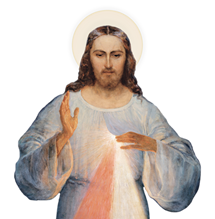
But for people in the middle of suffering, often, all that is just a lot of talk. What’s called for is Divine Mercy, works of mercy. The answer to the evil and suffering of the world today is Jesus, the face of the Father’s mercy. When we practice our faith, live in the state of grace, and do works of mercy, we show the face of Jesus, the face of the Father’s mercy, to the world. We heal the wounds, bind up the injuries, help set the world to rights. We can do reparation for the sins of our brethren, our forebears. We can help heal old hurts, pursue justice both socially and individually, and in all ways, allow the Light of the World to brighten a very dark time.
As our Marian Renovator, Bl. George Matulaitis (feast day: Jan. 27), taught us, we can “Overcome evil with good.” And by doing that, we will do our part to make this Jubilee of Hope live up to its name. So let us turn to God with trust and set to work, knowing that to love God means to love what and whom He loves, as He loves.
Pray for me, that I may practice what I preach. I’ll pray for you.
Photo by Dayne Topkin on Unsplash.
{shopmercy-ad}
