











To register for the Conference, click here.
To download the Conference schedule, click here.
To become a Healthcare Professional for Divine Mercy, click here.
The 20th Annual Divine Mercy Medicine, Bioethics, and Spirituality Conference
"Current Challenges for Healthcare Professionals"
Day 1: June 4, 2025
Days 2 & 3: June 5 & 6, 2025, follow below
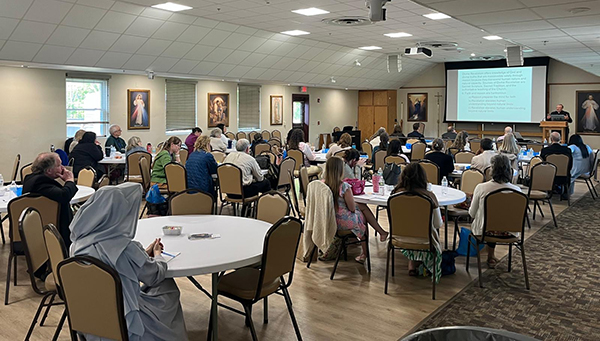
Nearly 90 participants attended this year's Conference, many in person and many by livestream. Drawing participants from as far away as Ontario, Canada; Washington state and California, and as close to home as New York and the New England States, the Conference celebrates 20 years by showing its value to such a geographically diverse audience.
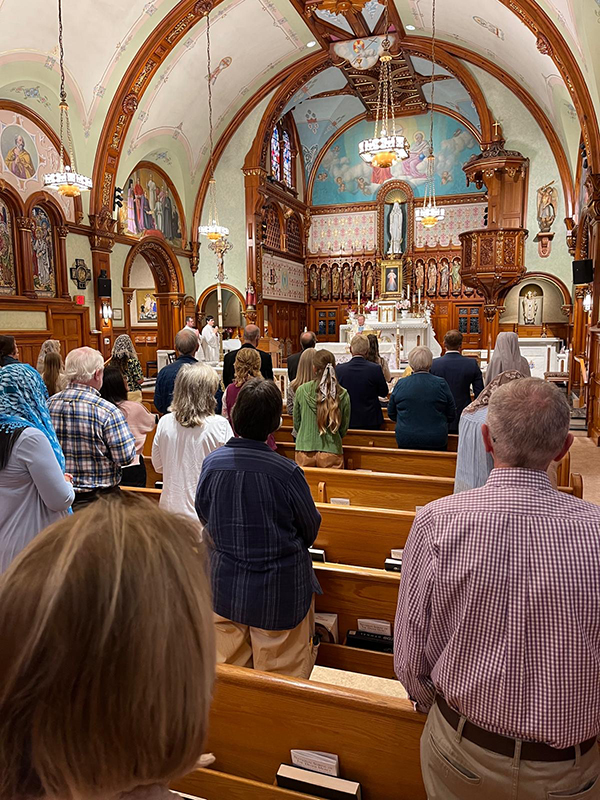
The Opening Mass at the National Shrine of The Divine Mercy. Twenty years of the Healthcare Professonals Conference. Who’d have ever imagined? Father Kaz Chwalek, MIC, spiritual director to the Healthcare Professionals for Divine Mercy apostolate, is the main celebrant.
In his homily, Fr. Kaz shared his “beautiful memories of our gathering these last 20 years.” He spoke of the great speakers and witnesses of Divine Mercy shared over two decades, and of the gift God had given to the healthcare professionals of both their professional training, but also of their faith.
The conference falls within the nine days of the Pentecost Novena, the Church’s most ancient, original nine days of prayer between the Ascension of the Lord and the Descent of the Holy Spirit at Pentecost (see Acts 1:13-14). Father Kaz also led everyone in the novena of the Marian Martyrs of Rosica.
In the St. Faustina Center, Fr. Kaz opened the conference with prayer, announcements, and times for Confession, then turned everything over to the emcee, Dr. Kathleen Scoble, a member of the planning committee for the conference and dean emerita, Elms College School of Nursing.
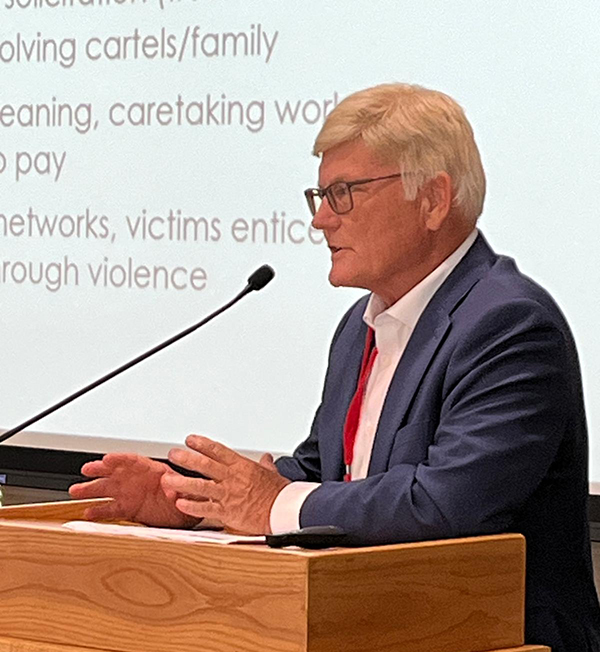
Bryan Thatcher, MD, International Director, Doctors for Divine Mercy; Founder, Eucharistic Apostles of The Divine Mercy, spoke on "Human Trafficking and Healthcare: Incidence, Identification and Action."
Dr. Thatcher spoke briefly to introduce the subject, examined the severity of the scourge of human trafficking, and then stepped down to allow an interview with Judge Robert A. Bauman, a circuit court judge from Tampa, Florida, to play. Judge Bauman shared a great deal of statistics, anecdotes, and professional insight into the dynamics at work between the trafficked individuals and those trafficking them. He shared that popular culture in movies, for instance, at times offers a rosy or romanticized view of human trafficking. Judge Bauman examined how the COVID lockdown expanded human trafficking, and the extent of the problem in Florida, spotlighting that Tampa was #12 in the nation for trafficking victims self reporting to a hotline. He also made frequent reference to the infamous case of Jeffrey Epstein and Ghislaine Maxwell, and their criminal enterprise in Florida, New York, and elsewhere.
Judge Bauman concluded that the biggest thing to do was to continue to educate. Healthcare professionals needed to know what to do should trafficking victims pass through their practice.
For more on this scourge and what Catholics can do, watch "Living Divine Mercy" Episode 137: "Human Trafficking."

“Jesus Christ is the Gospel of Life Himself,” he explained, and we are called to confront the culture of death with Jesus. Bishop McManus explored the principles and teaching in Pope St. John Paul II’s landmark pro-life encyclical, Evangelium Vitae, which remains a touchstone for Catholic bioethics, morality, and pursuit of social justice.
Bishop McManus has repeatedly made headlines across his episcopal ministry for being a courageous and outspoken witness to the full scope of Church teaching on human dignity, human rights, and the Gospel of Life. Long the host of the Healthcare Professionals conference at College of the Holy Cross in the diocese of Worcester, Bishop McManus has been a true Marian Helper across the years.
Father Chris discussed caring for his elderly parents, and drew lessons from that experience for healthcare professionals and those in roles of pastoral care. Drawing from the USCCB’s “Ethical and Religious Directives for Catholic Health Care Services,” he discussed in turn care for the body and care for the soul. He dealt with some of the controversial end of life questions on which the Church had clear teaching, such as providing food, water, and ordinary medical treatment.
Father Alar warned against the use of living wills, saying it put life or death power in the hands of an unknown physician. Pro-life organizations usually recommend a durable power of attorney for health care, giving that decision making power to a trusted family member or friend who will make authentically Catholic, ethical decisions, should you be incapacitated.
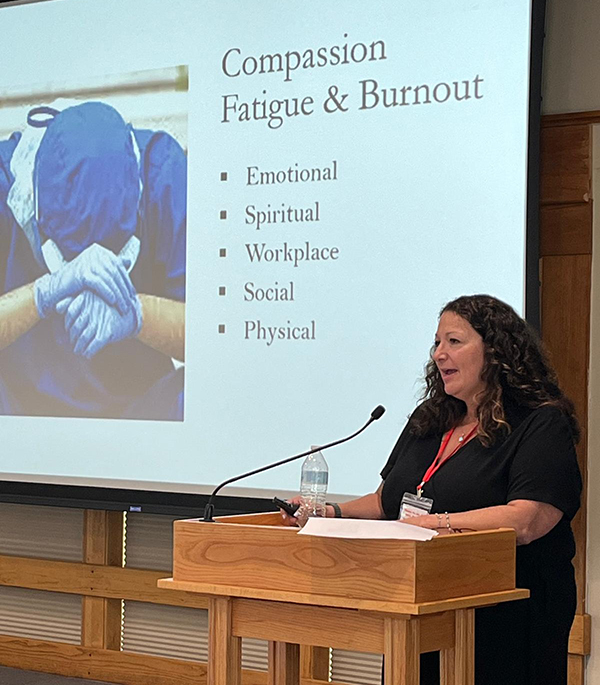
Deana Nunes, EdD, MSN, RN, CWCN, Assistant Professor at Elms College, spoke on "Strengthening Resilience with a Focus on Joy."
She spoke of the costs of compassion fatigue to both healthcare professionals and healthcare institutions, identifying the pandemic as a significant source of compassion fatigue in the profession even to the present day.
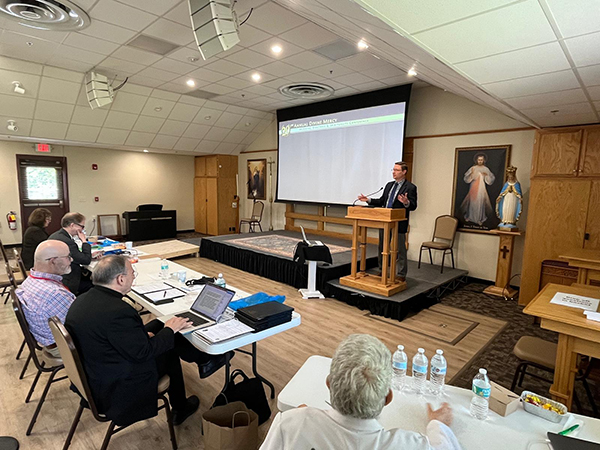
Christopher Klofft, Ph.D., Associate Professor of Theology, Assumption University, spoke on "Enhancing the Dignity of Patients in an Era of Medical Technologies."
Dr. Klofft addressed AI, speaking to what it is and what it is not. One of the last major documents of Pope Francis’ pontificate had been the Dicastery for the Doctrine of the Faith’s Antiqua et Nova, “Note on the Relationship Between Artificial Intelligence and Human Intelligence.” One of the main reasons why Pope Leo XIV took the papal name he did was to signal he would be responding to the rise of AI in a manner following in the footsteps of Pope Leo XIII, whose landmark social encyclical Rerum Novarum addressed the Industrial Revolution. Now, Pope Leo XIV believes the Church must similarly address the AI revolution.
Dr. Klofft surveyed a number of pop culture depictions of AI, noting how storytelling had explored many of the possible positive and negative consequences of AI. He discussed how AI would impact patient care, and the requirements human dignity would impose on such medical use of AI.
“Personhood is grounded in the image of God,” Dr. Klofft explained, the font of human dignity.
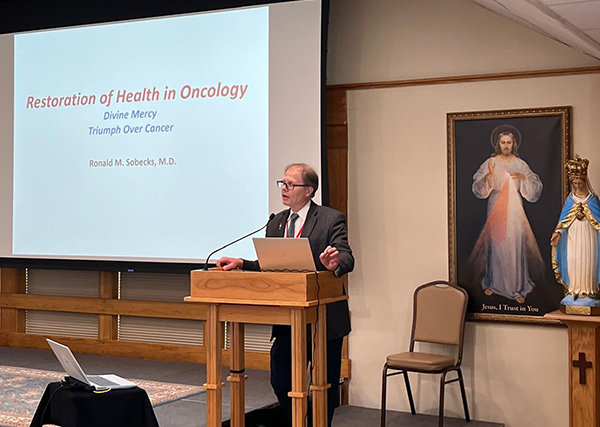
After a pause for the Divine Mercy Chaplet during the 3 pm Hour of Great Mercy, Ron Sobecks, MD, Professor, Department of Hematology and Medical Oncology at Taussig Cancer Institute, Cleveland Clinic, spoke on "Restoration of Health in Oncology."
With his usual deep grasp of both Divine Mercy theology and medical science, Dr. Sobecks explored how sin is like cancer, and how the remedies for sin resemble oncology’s remedies for cancer. Author of Divine Mercy, Triumph Over Cancer, Dr. Sobecks has long been a member of Healthcare Professionals for Divine Mercy and a faithful presenter at the annual conference.
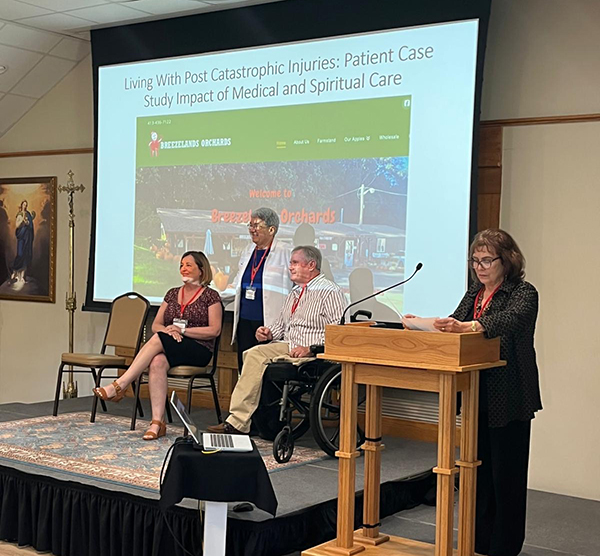
Marie Romagnano, MSN, RN, CCM-R; Founder of Healthcare Professionals for Divine Mercy; Assistant Clinical Professor, College of Our Lady of the Elms, School of Nursing; Director, Medical and Humanitarian Case Management Operations for Ukraine Relief, spoke on "Living With Post Catastrophic Injuries: Patient Case Study – Impact of Medical and Spiritual Care."
Nurse Marie introduced Mark and Gloria Tuttle of Warren, Massachusetts. Mark is featured on the back cover of “Nursing with the Hands of Jesus,” the booklet that offers guidance to members of Healthcare Professionals for the Divine Mercy on living the spirituality of Divine Mercy in the healthcare field. He was the victim of a tragic accident in 1997 while working in his family’s orchard, leaving him trapped for hours and ultimately taking one of his legs. Nurse Marie was called in to be an advocate for his care, serving as case manager.
The Tuttles bore witness to the huge role faith can play in helping patients and families deal with such traumatic, life changing injuries. Mark shared what happened the day of the accident. Gloria said they’d not talked about the injury for some years, so it’s a little difficult to go back to the time of the accident. He talked about the many burdens and blessings of his recovery and life since the accident, the setbacks and reversals as he was trying to heal, but also the many small graces and kindnesses done for him by those he encounters at the grocery store, or in a parking lot.
At the end of the Tuttles presentation with Nurse Marie, Fr. Kaz offered them words of gratitude for their witness and a special blessing.
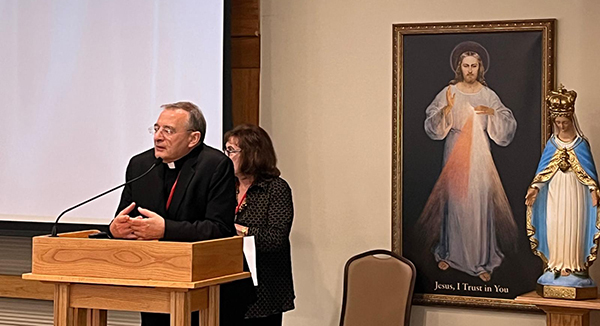
In the last talk of the day, Father Kazimierz Chwalek, MIC, BA, STB, STL (Cand.), Director of the John Paul II Institute of Divine Mercy; Religious Director of Healthcare Professionals for Divine Mercy, spoke on "The Role of Sacraments in Healing and End-of-Life Care: Reconciliation, Eucharist, and Anointing of the Sick."
Father Kaz spoke of the necessary combination of both faith and reason, and the importance of faith seeking understanding. He offered the Sacraments as a true aid in healing, a true path to human integrity of body, mind, and spirit. Delving deep into the foundations of modern academia, he spoke of Aristotle’s role in giving us the divisions of subjects and sciences, still relevant even today.
Day 2: June 5, 2025
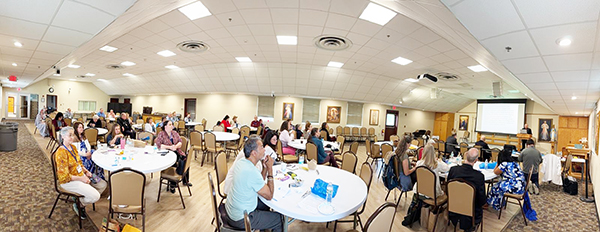
"This is my third time coming" to the Healthcare Professionals conference, said Dr. Gina Rondinelli, a licensed psychologist and a parishioner at St. Simon and Jude in Huntington Beach, California. "I just learned about it on the website because I come here a lot, I visit here a lot. So I try to keep up on what they’re offering and when I saw this, I thought, 'I’ll give it a try.'”
Divine Mercy "made a huge difference in my life, and I mean, I think my faith journey just grew exponentially once I started to follow this order," said Dr. Rondinelli. "I believe this order has catechized me because I was born a Catholic, raised by a Catholic family, then didn’t go to Church, didn’t have any faith in my life until I started growing it on my own. This order is primarily responsible for my growth. And for me personally, I just feel like it has cracked open my heart, that the whole God’s mercy and being merciful as your heavenly Father is merciful, I feel like it has just cracked my heart open in so many ways. My heart was very wounded and it’s opening up now. It’s opened up my heart to my clients more, made me more compassionate, more patient, more forgiving — not forgiving, just more compassionate. So I think about mercy all day, every day, being merciful myself, receiving God’s mercy, being merciful with others. It’s really helped me a lot."
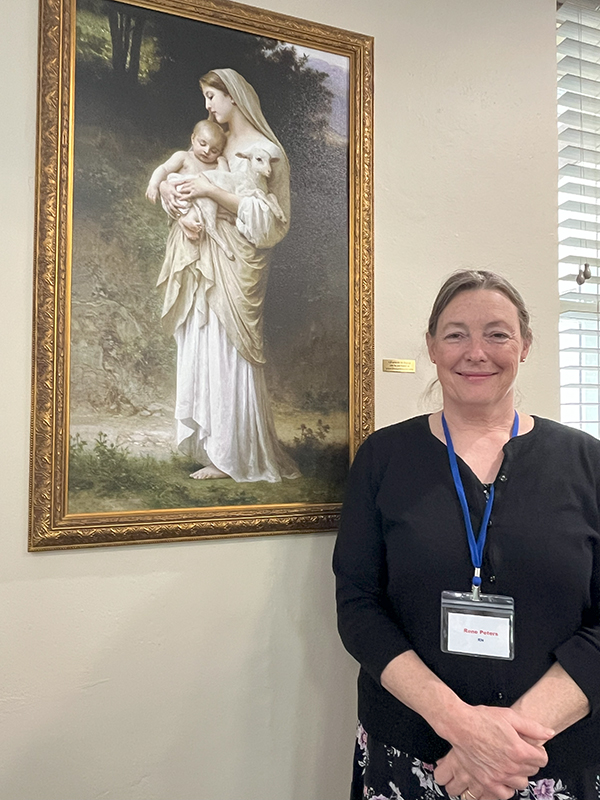
Rene Peters, RN (above) is a member of St. Patrick Parish in Louisville, Kentucky, and a frequent pilgrim to the Shrine of St. Martin of Tours in Louisville. "I consecrated myself to Divine Mercy probably about seven years ago, so a friend introduced me to Divine Mercy, a priest introduced me to Divine Mercy, of this, it’s very special. I’ve been following the Marian Fathers for a while," Nurse Peters shared, "and I’ve known about the conference for at least three, four years, and then this year I was finally just able to come to it.
When asked what she would say to someone who's never heard of the Divine Mercy message and devotion, Nurse Peters said, "The joy that they will receive, knowing that even though you may not like yourself, you’re unworthy, knowing about God’s grace and mercy will change your life."
She also shared that Divine Mercy makes her a better nurse. "Taking care of patients that are very angry because of their suffering, because of their diagnosis, it helps me to not be angry back when they’re angry with me, it helps me to know, to share God’s grace and mercy with them through their struggles."
She hopes to benefit both professionally and personally from this conference: "Professionally, better words to help my patients, and then personally, how to accept certain things in my own professional life right now."
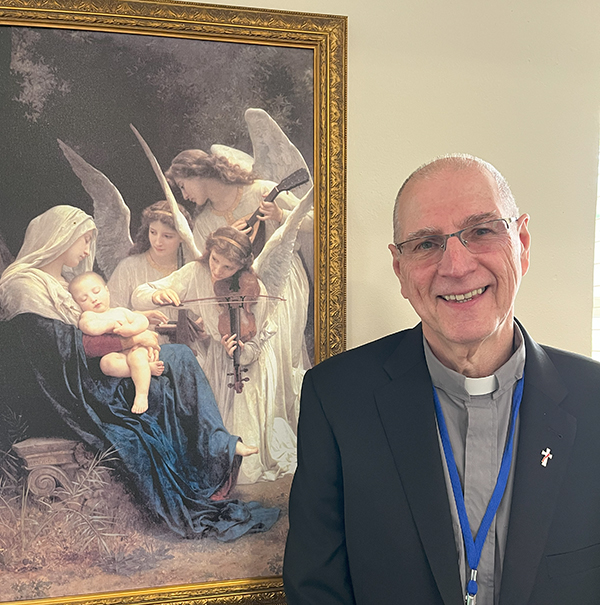
When asked what kept him returning to the National Shrine of The Divine Mercy, Dr. John E. Hoey of Manahawkin, New Jersey, said, "The sense of spirituality, the sense of community, and the sense of service." Dr. Hoey is a physician, board certified in internal medicine; a deacon for the Archdiocese of New York; and is certified in Catholic Bioethics from the National Catholic Bioethics Center. He came to the Healthcare Professionals conference for the first time this year, having heard about it by reading Marian Helper magazine, looking to go deeper in Divine Mercy.

The second day of the conference opened with Mass at the National Shrine for the feast of St. Boniface, apostle to the Germans. Father Kaz shared the story of St. Boniface’s ministry, including the famous confrontation with the paganism of the people when St. Boniface took an ax and chopped down the supposedly sacred oak tree, proving the falsity of idolatry. He urged rhe Massgoers to identify their own sacred oaks, the idols that distract us from true love of God and neighbor, and imitate St. Boniface by chopping them down.
Father Kaz also examined the readings, looking to the example of St. Paul bearing witness to the Gospel before the Sanhedrin, proving the truth of the promise of Jesus that we’d be given help when we are brought to trial for Jesus’ name’s sake.he said similar help would come to us even when we are having to proclaim the Gospel in our ordinary lives, including at work.
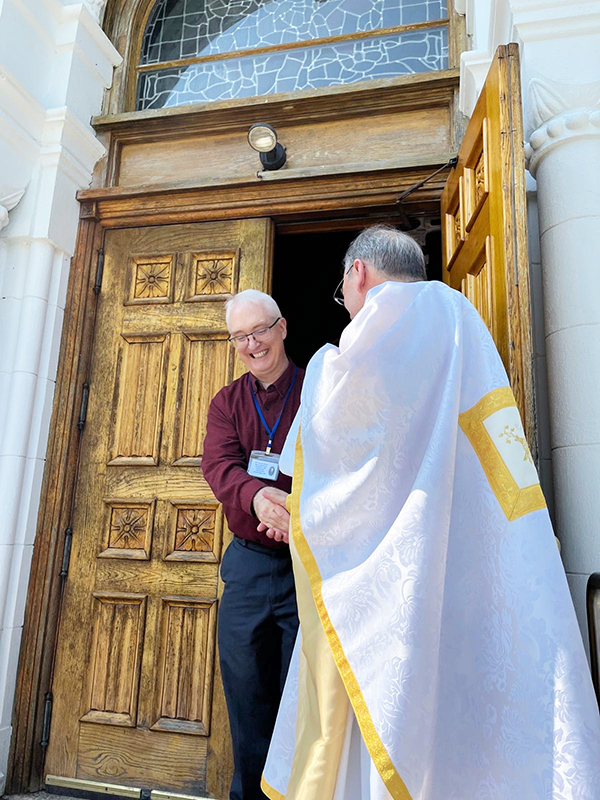
As worshippers were leaving the National Shrine, they were offered a copy of the summer issue of Marian Helper magazine, hot off the presses! Watch for your copy in the mail!
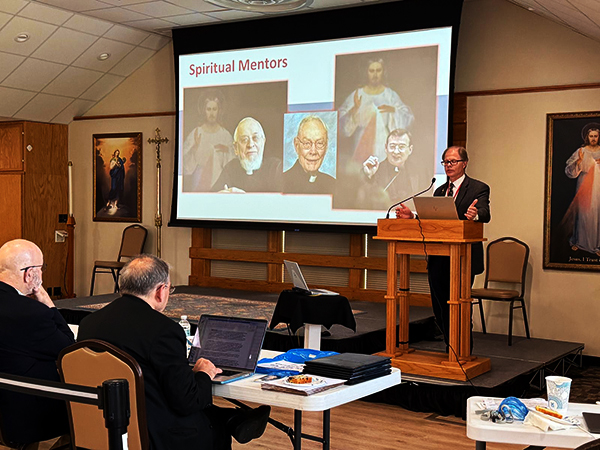
After an opening prayer by Fr. Kaz, Ron Sobecks, MD, Professor, Department of Hematology and Medical Oncology at Taussig Cancer Institute, Cleveland Clinic, offered the first talk: "Discernment and Formative Processes to Enhance Healthcare Outcomes."
He acknowledged the rapid pace of change in modern healthcare, in the culture affecting how patients and families approach bioethical questions, and in treatments and research. This all means, Dr. Sobecks said, that healthcare professionals taking the necessary time to discern and be properly prepared to discern are more important than ever.He spotlighted perennial practices like being rooted in Scripture and the teachings of the Church, silence and contemplation and more as still vital, still relevant practices today.
Towards the end of his talk, Dr. Sobecks paid tribute to his spiritual mentors, including Fr. Kaz and the late, great teacher of Divine Mercy, Fr. Seraphim Michalenko, MIC. It was through their efforts that the Healthcare Professionals for Divine Mercy became an official apostolate of the Marian Fathers, and both oversaw the development of the Nursing with the Hands of Jesus booklet and the spiritual side of the formation presented at the annual conferences across the years.
Following Dr. Sobecks was a presentation of the documentary Green Lava, directed and produced by Lia Beltrami and created in collaboration with the Vatican’s Dicastery for Communication.
The documentary tells the story of Giacomo Mattivi, a 21-year-old Italian man who lives with Duchenne muscular dystrophy. After it was screened at the Augustinian Patristic Pontifical Institute on January 25, Vatican News said of the documentary, “Pope Francis … emphasized that journalistic work ‘builds society and builds the Church, provided it is truthful.’ Green Lava merits this praise as it delves into the life of Giacomo …piecing together the ‘puzzle’ that, as Giacomo himself notes, forms the soul of a person when connected."
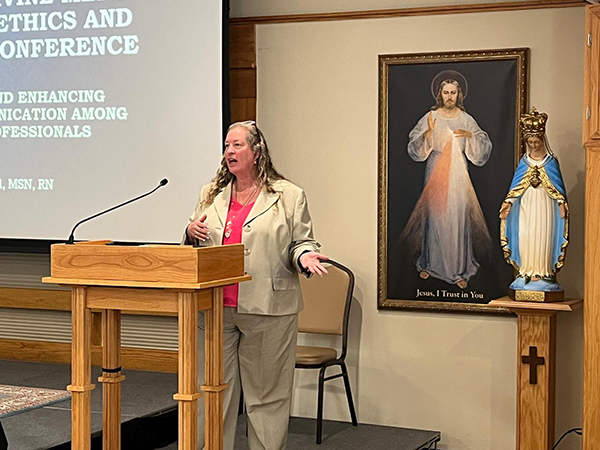
After lunch, Andrea Bertheaud, MSN, RN-BC, Clinical Assistant Professor at College of Our Lady of the Elms, School of Nursing, Coordinator for Mental Health and Population Health Nursing Courses, spoke on "Understanding and Enhancing Therapeutic Communication Among Healthcare Professionals."
Dr. Bertheaud spoke from experience as well as study about the vital role of clear, sound communication in therapeutic care. Drawing from her experience of working with adducts, the mentally ill, and other vulnerable populations, Dr. Bertheaud drew out lessons from some demanding cases that can be applied to all cases. She shared some personal, family stories to indicate how these communication skills transfer well from work to home, to all situations in life—indeed, how necessary these skills are for Christians more broadly as we seek to live our faith according to the law of love of God and neighbor.
Dr. Bertheaud emphasized the importance of beginning with listening, not judgment.
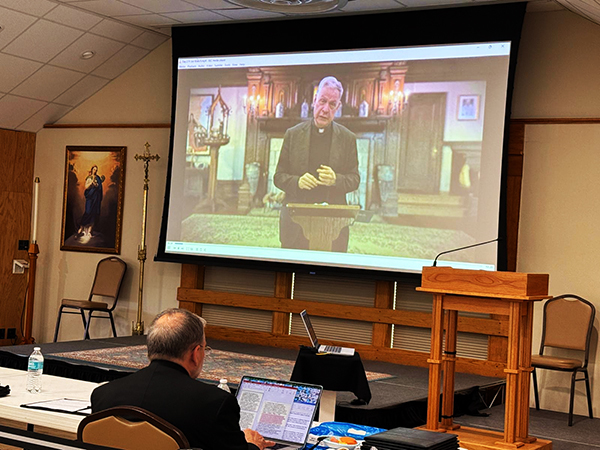
In a video address, the Most Rev. Joseph Roesch, MIC, MA, STL, Superior General of the worldwide Congregation of Marian Fathers of the Immaculate Conception of the Most Blessed Virgin Mary, talked about "The Infinite Dignity of Every Human Being." He focused on the Dicastery for the Doctrine of the Faith’s Declaration Dignitas Infinita on Human Dignity.
Father Joe spoke of the many facets of the consequences of human dignity, including the right to religious liberty, freedom from coercion, and more, drawing on the teachings of the popes. Father Joe reminisced about some of his experiences serving in Rome, including being present for several papal elections, and following the expansion of the papal magisterium on human dignity, and therefore, of human rights.
He applied this body of teaching on human dignity to bioethics, healthcare, and the work of the conference attendees. He discussed some of the severe violations of human dignity prevalent today, including sexual abuse, violence against women, and others.
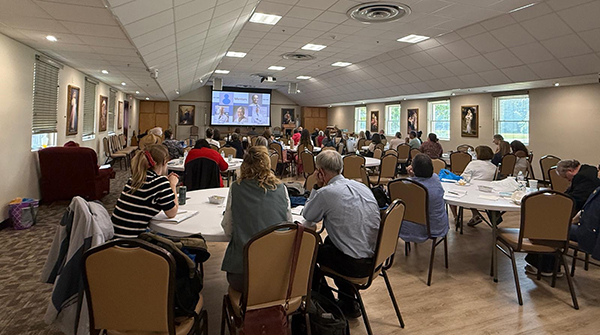
Next, Christopher Klofft, Ph.D., Associate Professor of Theology, Assumption University, spoke on "Emergent Medical Technologies and Their Effects on the Relationships Between Healthcare Professionals and Patients."
“When a human being is separated from human relationships, their humanity is impacted,” said Dr. Klofft. We are made to be in community, he explained, not to be alone or to be mainly interacting with non-human machines. He discussed some of the cutting edge technologies currently expanding into our lives, such as virtual reality and robots.
Specifically, he discussed companion robots, which are increasingly being used as social companions. “You will allow yourself to forget you are talking to a person,” he warned. He also explored how a number of the technologies we take for granted today, such as embedded video, became widespread in part due to the efforts of the pornography industry.
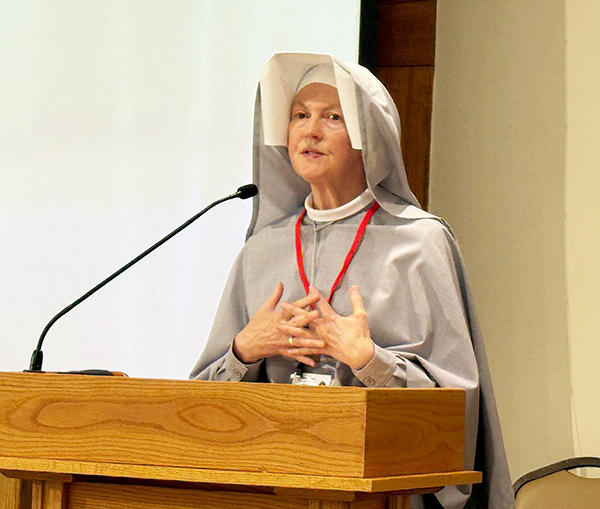
Following the Divine Mercy Chaplet, Sr. Catarina Esselin, OLM, spoke on "The Open Heart of God – Source of Blessing, Hope and Healing for Patients and Healthcare Professionals." A member of St. Faustina’s order, she shared a meditation on the graces available to healthcare professionals by such simple devotions as pilgrimages to sacred sites in the Jubilee Year of Hope.
“What can I do to remind myself to ask for these graces?” Sister said, encouraging her listeners to take time out in the midst of their busy days to turn to God so as to better live their faith and serve their patients.
“We need to bathe in God’s mercy and absorb God’s mercy, and that takes a little bit of time, being with the Lord, uniting ourself with His Heart. Your being united with Jesus makes a difference to your patients.”
Nurse Marie shared that Sr. Catarina was the very first OLM sister to speak at the very first Healthcare Professionals Conference 20 years ago!
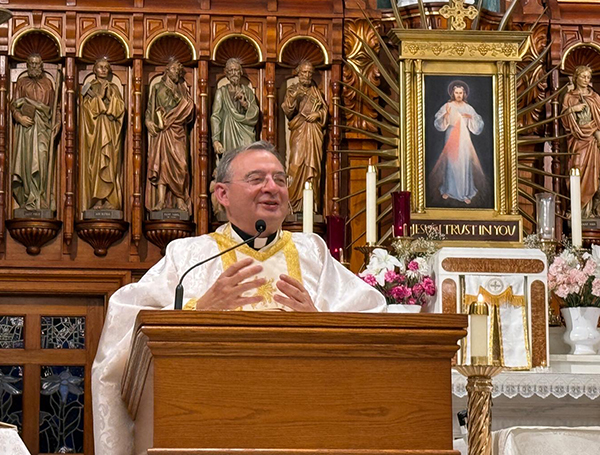
In the penultimate talk of the second day, Father Kaz (shown above preaching the homily at today's Mass) returned to discuss “Despair vs Hope and Confidence: Emotions that Impede or Enhance the Healing Process and Patient Well-Being.”
Father Kaz surveyed the strengths of the formation offered by the Healthcare Professionals for Divine Mercy. He explored some of the rich content of the formation materials, presenting the deep wisdom of the Catholic faith on suffering, care for neighbor, and the grace of God in seemingly impossible circumstances.
He also delved into some of the spiritual maladies often experienced by patients, including spiritual pain and alienation. He testified to his own experience as a priest and confessor, hearing these sorts of problems expressed by those to whom he had rendered pastoral care.

The final talk of the Conference was a team talk on "Growing Incidence of Medical/Chemical Abortion: Challenges Facing Health Professionals and Pastoral Care."
Kathleen Brooks Scoble, EdD, MEd, MA, RN, Dean Emeritus, College of Our Lady of the Elms School of Nursing and Professor of Nursing, spoke first, She gave an overview of the prevalence of abortion today in the United States, and then spotlighted the methods by which women self-induce abortions today. “The majority of abortions now involve pills, according to both the CDC and Guttmacher,“ Dr. Scoble explained. And worse news: Abortions are increasing, driven by the rise in telehealth consultations. She then turned her attention to the sorta of ethical care healthcare professionals can and should offer in good conscience to those impacted by such immoral procedures.
Dr. Scoble also surveyed many of the very real dangers of complications and side effects from medication abortion, then turned her attention to the state laws in Massachusetts permitting such potentially dangerous procedures.
Next up was Allison LeDoux. MA (Theology/Bioethics), the director of the Respect Life office for the diocese of Worcester, Massachusetts. She gave an overview of Church teaching on the life issues, exploring the teaching of the popes especially as well as that of the Second Vatican Council.
She then began to delve into the science, laying out for her listeners what precisely is happening when women take abortifacient drugs. She spotlighted some of the difficulties women face with their fertility after use of hormonal contraceptives, for instance, and the side effects and contraindications of many supposedly "safe" forms of contraception or birth control.
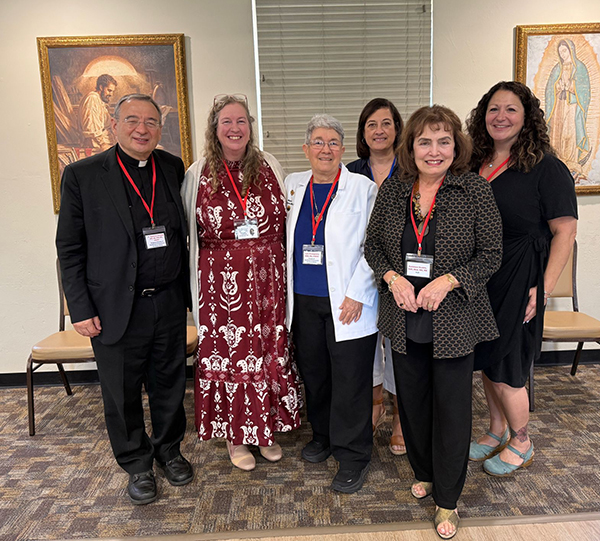
Lastly, Nurse Marie Romagnano and Father Kaz spoke.
Nurse Marie led off with a frank conversation about the cultural shifts in our pharmacies and public spaces relating to how we see marketing for birth control and related products. Abortifacient drugs are readily available, she made plain, and often over the counter. The challenge of confronting the culture of death continues, sadly, even after the end of Roe v. Wade.
“People don’t understand that they are killing an embryo,” said Nurse Marie. She surveyed a number of online providers as well as more traditional brick and mortar ways to obtain Plan B and, incredibly, Plan C forms of abortifacient drugs. Then she introduced the topic of abortion pill reveraal and the work of Dr. George Delgado, a past speaker at the Healthcare Professionals Conference.
Father Kaz summarized and encapsulated the contributions of the speakers before him, spotlighting the unknown side effects and problems that arise from some of the abortifacient birth control methods so commonly recommended today.
These are kind of shocking things, he said, but we can’t blame people. We need to provide information, and to help others.
To conclude the conference, Fr. Kaz led the participants in praying the prayer of consecration to the Divine Mercy for healthcare professionals at the very end of the Nursing with the Hands of Jesus booklet, a devotion composed in part by Fr. Seraphim Michalenko, MIC.
Day 3: June 6, 2025
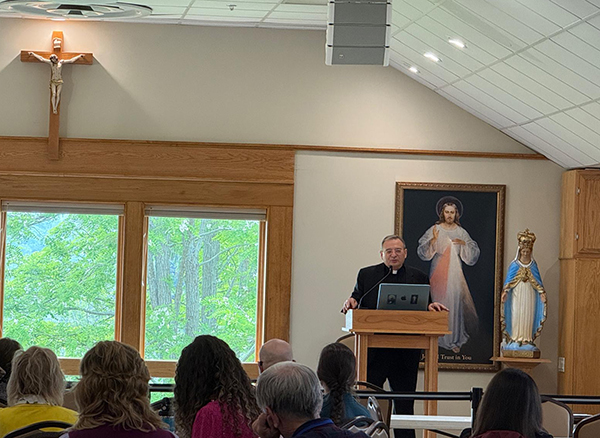
Today is an optional spiritual retreat day, offered by Father Kaz.
That's a wrap for our 20th annual Conference! Many thanks to all who attended, and the many who helped to organize and prepare. See you next year!
Stories by Chris Sparks. Photos by Chris Sparks and Nurse Marie Romagnano.
{shopmercy-ad}
