












Pope Leo XIV closes the Holy Door in St. Peter's Basilica on Jan. 6 (Vatican Media).
So to prepare for the last judgment, we must obtain mercy before we go to be judged. Great. But how? What are the "doors of His mercy"?
By Chris Sparks
As we leave the Jubilee Year of Hope behind us (Pope Leo XIV performed the final act, the closing of the Holy Door in St. Peter's Basilica, on the Epiphany, Jan. 6) and look ahead to the blessings and burdens of a more ordinary time, it’s worth reminding ourselves how deeply informed the Divine Mercy message and devotion is by the Church’s practice of Jubilee Years.
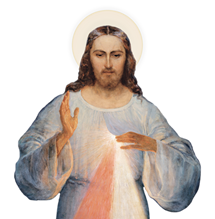
First, let’s look at two specific, repeated images from the Diary of Saint Maria Faustina Kowalska. Our Lord made abundantly clear to St. Faustina a number of times that He was coming to her with the message and devotion of Divine Mercy to prepare the world for His final coming, also known as His Second Coming. For instance, “You will prepare the world for My final coming” (Diary, 429).
The other image is the “doors of His mercy.” For instance, Jesus told St. Faustina: “Before I come as a just Judge, I first open wide the doors of My mercy. He who refuses to pass through the doors of My mercy must pass through the doors of My justice ...” (Diary, 1146).
In the door
Okay. So to prepare for the last judgment, we must obtain mercy before we go to be judged. Great.
But how?
What are the "doors of His mercy"?
The practice of the Jubilee Year tells us that. Jesus is speaking of our present age as a great Jubilee of Mercy, a time of grace and forgiveness when we may approach Him as a Merciful Savior before we must face Him as the Just Judge. And the way you receive the special grace of the Jubilee is by going through the Holy Door.
The Holy See explains:
In crossing the threshold of the Holy Door, the pilgrim is reminded of the passage from chapter 10 of St John’s gospel: “I am the door. If anyone enters by me, he will be saved and will go in and out and find pasture.”
Passing through the Holy Door expresses the decision to follow and be guided by Jesus, who is the Good Shepherd. The door is a passageway that ushers the pilgrim into the interior of a church.
For the Christian community, a church is not only a sacred space, to be approached with respect, with appropriate behavior and dress code, but it is a symbol of the communion that binds every believer to Christ: it is a place of encounter and dialogue, of reconciliation and peace which awaits every pilgrim, the Church is essentially the place of the community of the faithful.
That is the meaning of Jesus’ description of the present age, the age of the Church, from the time of His first coming through the Incarnation 2,000 years ago straight through to the unknown, but promised time of His Second Coming, when time and eternity are married, the dead all rise to judgment, and life in the world to come begins.
To-Do List:
- Pass through the "doors of His mercy."
- Receive the Sacraments according to the law of the Church, at a minimum.
- Practice regular prayer, especially the prayer of the Church and those devotions in her treasury to which special promises have been attached, such as the Divine Mercy devotions.
- Do regular spiritual reading, especially of the Gospels.
- Do regular works of mercy, one or more, as the duties of your state in life, your time, talent, and treasure permit.
- Live Divine Mercy, and you will receive mercy (see Mt 5:7; Jas 2:13).
Happy New Year!
{shopmercy-ad}
