














Divine Mercy is not simply God’s answer to sin. It is the love that called us into being, sustains us at every moment, and invites us into eternal communion with Him.
By Gene Zannetti
Many Catholics first encountered the theology of Divine Mercy through the late Fr. Seraphim Michalenko, MIC (above left). A tireless promoter of the Divine Mercy message entrusted to St. Faustina, Fr. Seraphim often shared a remarkable historical connection that occurred in 1933.
That year, the Catholic Church celebrated a Jubilee Year commemorating the 1,900th anniversary of Redemption. On May 1, the Holy Year was inaugurated in Rome. Later that same month, St. Faustina Kowalska professed her perpetual vows and entered a decisive stage of her mission as the Apostle of Divine Mercy.
At the same time, a 29-year-old Dominican priest named Fr. Mario Luigi Ciappi (1909-1996, above right) completed his doctoral dissertation, De Divina Misericordia Ut Prima Causa Operum Dei (Divine Mercy as the First Cause of God’s Works).
Father Ciappi would later be named a Cardinal, and be appointed by Ven. Pope Pius XII to the position traditionally called “Master of the Sacred Palace,” a title given to the principal Dominican theological advisor of the Pope. In fact, he would serve in this role as theologian to five successive popes, but it was his early work that especially captivated Fr. Seraphim.
Why? Because it explored a profound question: What is Divine Mercy at its deepest level?
Misery and heart
Long before the Divine Mercy devotion spread throughout the world, Fr. Ciappi dedicated his doctoral research to the theology of Divine Mercy, grounding it firmly in Sacred Scripture, St. Augustine, and St. Thomas Aquinas. In this work, he argued that Divine Mercy is not merely one of God’s attributes but shines forth throughout all of His works.
Most of us instinctively think of mercy as forgiveness. We think of God’s mercy when He pardons sins, welcomes back prodigal sons, and reconciles sinners to Himself. While all of this is true, Fr. Ciappi, drawing upon St. Augustine and St. Thomas Aquinas, invites us to look even deeper.
The Latin word for mercy, misericordia, joins together two words: misery and heart. Mercy, therefore, is love reaching out to misery in order to alleviate it or remove it.
But what is the greatest misery?
According to St. Thomas, the most fundamental misery is non-being itself. Before we could suffer, sin, or experience any lack, we first had to exist.
Before creation, we did not exist. We possessed nothing because we were nothing. Yet God freely chose to call us into existence. Out of sheer goodness and love, He brought creation forth from nothingness.
This led Fr. Seraphim to a striking conclusion drawn from Ciappi’s work: the first act of Divine Mercy was creation itself.
Before mercy forgave sinners, mercy created them.
Every decision we make
This insight helps us see Divine Mercy in a much broader light. Mercy is not simply God’s reaction to human failure. Mercy is already present in His loving decision to create. Every breath we take, every moment of existence, and every good gift we receive ultimately traces its origin back to God’s merciful love.
For Fr. Ciappi, Divine Mercy was not confined to the forgiveness of sins. It was visible in creation, providence, redemption, and God’s entire plan for leading His creatures back to Himself. Mercy shines throughout the whole order of God’s works.
Yet creation is only the beginning.
If creation reveals God’s mercy reaching into the “misery” of non-being, redemption reveals an even greater manifestation of that mercy. God not only brought His creatures into existence; He sought them out after they had turned away from Him.
As Fr. Seraphim loved to explain, God loved the “unlovable” when He created from nothing. He pardoned the “unpardonable” when He forgave sinners through Jesus Christ.
In the Divine Mercy message entrusted to St. Faustina, we see this mystery brought to its fullest expression. The Lord did not merely reveal His willingness to forgive. He revealed the depths of a love that has been pouring itself out from the very beginning of creation.
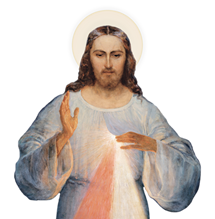
The rays streaming from the Heart of Christ in the Divine Mercy Image remind us that God’s mercy is not an occasional act. It is the continual outpouring of His life and love into the world.
Behind every gift
This perspective also sheds light on Divine Mercy Sunday. We approach the Sacraments seeking forgiveness, healing, and grace. Yet behind every gift stands the same merciful God who first called us into existence. The mercy we encounter in Confession and the Eucharist is the same mercy that created us, sustains us, and desires to bring us to eternal life.
Through Fr. Seraphim’s preaching and teaching, this profound theological insight reached countless ordinary Catholics. Nearly a century after that remarkable year of 1933, the message entrusted to St. Faustina and the theological vision explored by Fr. Ciappi continue to proclaim the same truth.
Divine Mercy is not simply God’s answer to sin.
It is the love that called us into being, sustains us at every moment, and invites us into eternal communion with Him.
Before mercy forgave us, mercy created us. Before mercy healed us, mercy gave us existence. And that same mercy now invites us into eternal communion with the God whose Heart never ceases to reach out to our misery with love.
Gene Zannetti, M.S., M.A., is a Marian Helper, school psychologist, and owner of Z-Winning Mindset.
{shopmercy-ad}
