














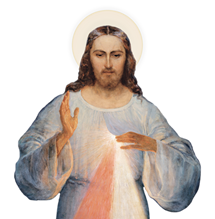


Jesus had a “preferential love” for the poor — a special compassion and concern for their plight, not because they are necessarily better than other people, but simply because they often suffer the most, as He once suffered: penniless, with no place of his own to lay His head; despised, treated as an outcast; and ultimately suffering grievous injustice, and persecuted to the point of death.
Part 20: Jesus the Social Prophet
By Robert Stackpole, STD
In this weekly web series, Dr. Robert Stackpole, emeritus director of the John Paul II Institute of Divine Mercy, leads us step-by-step through the life of the Founder of Christianity, from Bethlehem to Galilee to Jerusalem. Along the way, we pause to consider in-depth the historical debate over the gospel stories of the virginal conception and nativity of Jesus, his message of the Kingdom, his embrace of persecution and death on the Cross, and his glorious bodily resurrection from the dead. Finally, we plunge into the great mystery of the Incarnation, and show how it actually shines through the whole gospel story from beginning to end. Read the series from the beginning.
At the same time, we must not go to the opposite extreme from the position put forward by Reza Aslan, summarized in the previous article in this series. As we have seen, Aslan insisted that Jesus was a revolutionary who intended the violent overthrow of the Roman occupation and the Jewish Temple establishment. The historical evidence certainly does not back up such a scenario.
But some Christians go too far in the other direction: they picture Jesus as someone who cared nothing about social injustice — someone who told His followers only to be concerned about getting to Heaven, and always to suffer injustice passively, without offering any resistance or taking any remedial action whatsoever.
No mere "doormat"
The Jesus who drove the money changers from the Temple, however, was no mere “doormat”! The mission that Christ proclaimed to set God’s people free (Lk 4:16-21) meant not only to set their souls free from sin and guilt, from Satan and the danger of eternal loss, but also to deliver them as much as possible from the consequences of the sins of others in this life: from exploitation, poverty, tyranny and oppression. If Jesus Christ was truly the Son of God — and if we mean by that the Son of the God of Israel — then He must have been as concerned for that kind of human liberation as Israel’s God ever was:
Is this not the fast that I choose: to loose the bonds of wickedness, to undo the thongs of the yoke, to let the oppressed go free, and to break every yoke? Is it not to share your bread with the hungry, and bring the homeless poor into your house; when you see the naked to cover him, and not to hide yourself from your own flesh? Then shall your light break forth like the dawn, and your healing shall spring up speedily; your righteousness shall go before you, the glory of the Lord shall be your rear guard. Then you shall call, and the Lord will answer; you shall cry, and he will say, Here I am. (Is 58: 6-9)
Give the king thy justice, O God,
and thy righteousness to the royal son!
May he judge thy people with righteousness,
and thy poor with justice! …
May he defend the cause of the poor of the people,
give deliverance to the needy and crush the oppressor! …
May all kings fall down before him,
and all nations serve him!
For he delivers the needy when he calls,
the poor and him who has no helper.
He has pity on the weak and the needy,
and saves the lives of the needy.
From oppression and violence he redeems their life;
and precious is their blood in his sight. (Ps 72: 1-2, 4, 11-14)
Social implications
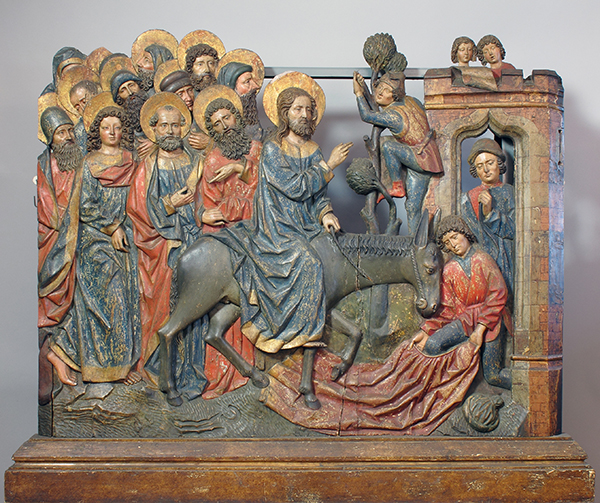
In short, there are indeed social implications in the gospel of the Kingdom of God preached by Jesus — and also in the gospel message about Jesus proclaimed by the apostles and His earliest followers, as recorded in the New Testament.
Anglican Bishop Desmond Tutu of South Africa, for example, a recipient of the Nobel Peace Prize, focused his ministry on this whole aspect of Christian discipleship. Bishop Tutu non-violently challenged the oppressive, racist policies of the government of South Africa of his day, and called the churches to task as well for their frequent watering-down of the moral demands of the gospel of Christ.
First, he assailed the attitude so prevalent in his country that “You must not mix religion with politics.” For a Christian, this division of life into closed compartments, “secular” and “sacred,” is simply an impossibility:
If we are to say that religion cannot be concerned with politics then we are really saying that there is a substantial part of human life in which God’s writ does not run. If it is not God’s, whose is it? Who is in charge? … Christianity knows nothing about pie-in-the-sky when you die, or a concern for man’s soul only. That would be a travesty of the religion of Jesus of Nazareth, who healed the sick, fed the hungry, etc. … If it must needs be so for the Son of God, it could not be otherwise for his church. [1]
Second, Bishop Tutu warns us that we must be on our guard when people proclaim this false attitude. The very timing of it often betrays its true intention:
If the church demonstrates a concern for the victims of some neglect or exploitation, or denounces the widening gap in the country between the very few who are rich and the vast majority who are poor … then the church will be accused of meddling in affairs it knows very little about. This kind of criticism will reach crescendo proportions if the church not merely provides an ameliorative ambulance service, but aims to expose the root causes …. [T]hen it will arouse the wrath of those who benefit from the particular, inequitable status quo … that is when you hear the cry, “Don’t mix religion with politics!” [2]
God is not neutral
Bishop Tutu shows us that in social situations of oppression or exploitation, neglect or injustice, God is not neutral. Rather, He actively takes the side of the downtrodden, and strives to set them free. This theme occurs often in the Bible; for example, in the story of the exodus of the Israelites from Egypt, in which God ultimately liberated the Israelite slaves from their Egyptian taskmasters. Bishop Tutu complains that all too often, Christians forget ...
... that its Lord and Master was born in a stable, that the message of the angels about his birth was announced first not to the high and mighty, but to simple rustic shepherds. The church forgets that his solidarity was with the poor, the downtrodden, the sinners, the despised ones, the outcasts, the prostitutes, the very scum of society. [3]
In short, in a phrase used by the Catechism of the Catholic Church, entry 2448, Jesus had a “preferential love” for the poor — a special compassion and concern for their plight, not because they are necessarily better than other people, but simply because they often suffer the most, as He once suffered: penniless, with no place of his own to lay His head; despised, treated as an outcast; and ultimately suffering grievous injustice, and persecuted to the point of death. And by “the poor” the Church here includes not only those who are socially and materially poor, and those who are the most helpless and vulnerable, but also those who are spiritually destitute, trapped in sin and guilt, atheism or skepticism, and in real danger of everlasting loss.
Whenever Christians forget any of this, they fail to live as true disciples of the real, historical Jesus Christ that we read about in the gospels.
Next: Part 21: Jesus was the Kind of Messiah that No One Expected
Previous article.
Notes
[1] Desmond Tutu, Hope and Suffering (London: Font, 1983), p. 170 and 85.
[2] Ibid., p. 37.
[3] Ibid., p. 85.
{shopmercy-ad}
