
















It's not likely that the Gospel writers invented their incredulity. Putting the apostles in such a bad light — indeed, making them look completely “clueless” — is not the kind of thing that any early Christian writer would be likely to do in a church led by those same apostles. More likely, the evangelists had no other choice than to report the embarrassing facts about the behavior of the apostles, just because it all really happened.
Part 29: Easter Wishful Thinking and Hallucinations?
By Robert Stackpole, STD
In this weekly web series, Dr. Robert Stackpole, emeritus director of the John Paul II Institute of Divine Mercy, leads us step-by-step through the life of the Founder of Christianity, from Bethlehem to Galilee to Jerusalem. Along the way, we pause to consider in-depth the historical debate over the gospel stories of the virginal conception and nativity of Jesus, his message of the Kingdom, his embrace of persecution and death on the Cross, and his glorious bodily resurrection from the dead. Finally, we plunge into the great mystery of the Incarnation, and show how it actually shines through the whole gospel story from beginning to end. Read the series from the beginning.
And here is yet another skeptical theory about the first Easter that one sometimes finds in historical literature about the gospels …
5) The sightings of the Risen Jesus were nothing more than wishful thinking, resulting in collective hallucinations by his followers, delusions brought on by their extreme grief and sorrow at the death of their Master.
Problems with this theory abound. First, the hallucinations theory on its own cannot explain why the tomb of Jesus was found empty on Easter morning (more on the empty tomb in future articles in this series).
Second, the theory cannot explain the appearances of the risen Jesus to radical skeptics such as Saul of Tarsus (St. Paul) and James, the Lord’s brother or cousin. These people could not be the victims of grief-inspired delusions and the wishful thinking of “true-believers,” because they did not come to believe that Jesus was the promised Messiah, or become His followers in any sense at all, until after they had seen him risen from the grave.
Third, hallucinations don’t eat.
Fourth, hallucinations are not shared by multiple persons in detail any more than dreams are shared in that way. A group of people may experience hallucinations at the same time — but not exactly the same hallucinations.
Fifth, collective hallucinations (if they even occur at all, which some experts doubt) occur in response to intense wishes and expectations, most especially the appearance of something or someone at a specified time and place, with the “true believers” eager for a particular event to happen. But the disciples were hardly disposed in this direction after what had happened on Calvary, and in several instances the appearances of the risen Jesus are sudden and unexpected, and occur at different times and places — which hardly fits the pattern of (alleged) collective hallucinations.
No clue
Some have argued that the disciples were indeed in a state of intense expectation of seeing their Lord risen from the grave. On the road to Jerusalem, Jesus had predicted three times that he would rise again on the third day. But the gospels tell us that the disciples did not have a clue what he meant by this (Mk 8:31-33; 9:31-32; 14:27- 31; Lk 24: 13-24). Many of the ancient Jews held that there would be a general resurrection from the dead at the end of time, but no one expected that any individual, not even the Messiah, would anticipate this with a solo resurrection of his own.
This was the thought-world occupied by the disciples of Jesus’ in his day. Thus, it is no wonder that they were simply bewildered by His statements about rising again on some cryptic or symbolic “third day.”
Nor is it likely that the Gospel writers invented their incredulity. Putting the apostles in such a bad light — indeed, making them look completely “clueless” — is not the kind of thing that any early Christian writer would be likely to do in a church led by those same apostles. More likely, the evangelists had no other choice than to report the embarrassing facts about the behavior of the apostles, just because it all really happened.
Missing factors
For a summary statement of the improbabilities piled up against this theory, we can turn to a masterful treatment of this subject by the Evangelical author John Stott:
Hallucinations have been known to occur in quite ordinary and normal people, and in such cases two characteristics may usually be discerned. First, they happen as the climax to a period of exaggerated wishful thinking. Second, the circumstances of time, place and mood are favorable. There must be a strong inward desire and the predisposing outward setting.
When we turn to the Gospel narratives of the resurrection, however, both of these factors are missing. When the women first found the tomb empty, they fled in ‘trembling and astonishment’ and were ‘afraid.’ When Mary Magdalene and the other women reported that Jesus was alive, the apostles “would not believe it,’ and their words ‘seemed to them an idle tale.’ When Jesus himself came and stood in their midst ‘they were startled and frightened and supposed they saw a spirit,’ so that Jesus ‘upbraided them for their hardness of heart.’ Thomas was adamant in his refusal to believe unless he could actually see and feel the nail-wounds. When later Christ met the eleven and others by appointment on a mountain in Galilee, ‘they worshipped him, but some doubted.’ Here was no wishful thinking, no naïve credulity, no blind acceptance. The disciples were not gullible, but rather cautious, skeptical and ‘slow of heart to believe.’ They were not susceptible to hallucinations. Nor would strange visions have satisfied them. Their faith was grounded upon the hard facts of verifiable experience.
Not only so, but the outwardly favorable circumstances were missing too. If the appearances had all taken place in one or two particularly sacred places, which had been hallowed by memories of Jesus, and their mood had been expectant, our suspicions might well be aroused. If we had only the story of the appearances in the upper room, we should have cause to doubt and question. If the eleven had been gathered in that special place where Jesus had spent with them some of his last earthly hours, and they had kept his place vacant, and were sentimentalizing over the magic days of the past, and had remembered his promises to return, and had begun to wonder if he might return and to hope that he would, until the ardor of their expectation was consummated by his sudden appearance, we might indeed fear that they had been mocked by a cruel delusion.
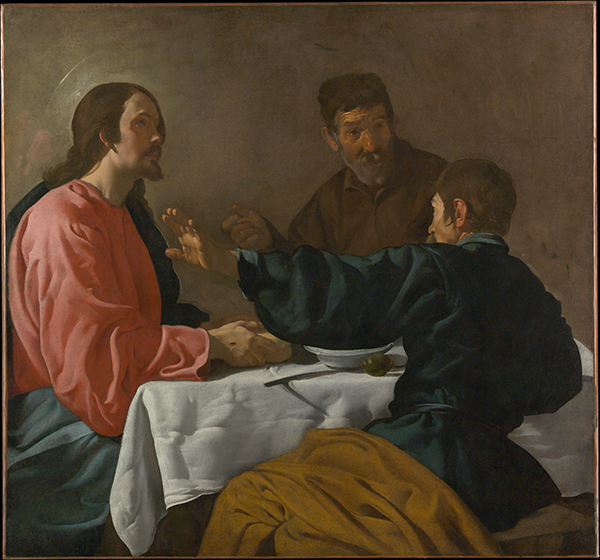
But this was not the case. Indeed, an investigation of the ten appearances [of the risen Jesus] reveals an almost studied variety in the circumstances of person, place and mood in which they occurred. He was seen by individuals alone (Mary Magdalene, Peter and James), by small groups and by more than five hundred people together. He appeared in the garden of the tomb, near Jerusalem, in the upper room, on the road to Emmaus, by the lake of Galilee, on a Galilean mountain and on the Mount of Olives.
If there was variety of person and place, there was a variety of mood also. Mary Magdalene was weeping; the women were afraid and astonished; Peter was full of remorse; and Thomas of incredulity. The Emmaus pair were distracted by the events of the week, and the disciples in Galilee by their fishing. Yet through their doubts and fears, through their unbelief and preoccupation, the risen Lord made himself known to them. [1]
Next: Part 30: The Witness of St. Paul to the Risen Lord.
Previous article.
Note
[1] John Stott, Basic Christianity (Downer’s Grove: IVP, 2006 edition), p. 69-71.
{shopmercy-ad}
