













We must begin with prayer, and persist in prayer. By persist, I truly mean settle in for the long haul, especially when we're talking about issues of civilizations, of continents.
By Chris Sparks
For our struggle is not with flesh and blood but with the principalities, with the powers, with the world rulers of this present darkness, with the evil spirits in the heavens (Eph 6:12).
I had a conversation today with a colleague about the recent anti-immigration riots in the United Kingdom. He was detailing for me the difficulties and dangers accumulating in Europe from the immigration of millions of folks from Islamic lands who were not integrating into the free countries of Europe, dangers of which then-Cardinal Ratzinger spoke a number of times.
And yet our response as Catholics is not to be fearful, or attacking those newly-arrived in formerly Catholic lands. Engaging in peaceful marches and protests to raise awareness about an issue, and to call upon lawmakers to take action can also be helpful at times, but rioting and creating a climate of fear is never justified, and only causes deeper social divisions, and breeds yet more fear and violence.
Our response, the Catholic response, first and foremost, must be prayer.
True power
Prayer leads the way, as Fr. Donald Calloway, MIC, makes clear in his great works on the Rosary. The Rosary has wrought miracles of conversion, changing hearts, minds, and lives ever since Our Lady handed this great devotion off to St. Dominic.
The Rosary has been especially efficacious in Catholic defense against Islamic invasions. Given the promises Our Lady has attached to the Rosary, there is no reason to suppose that our faithful, fervent prayer of the Rosary (especially the daily Rosary for peace in the world) will not be equally efficacious in assisting the integration of our Islamic brethren into non-Muslim societies, and even open the door to the conversion of some number of our Islamic brethren.
After all, all the children of Adam and Eve are in the image of God, as sons and daughters are in the image of their parents (see Gen 1:26-27, 5:1-3), and even estranged children are on some level children. Heaven wishes to draw all of humanity to God through His Church.
Prayer is more powerful than differences in doctrine or understandings of God, and Our Lady is the person and place where the deepest of differences are reconciled, for in her, divinity and humanity were united in Jesus Christ. As Ven. Fulton Sheen said, Our Lady, especially under the title of Our Lady of Fatima, seems incredibly well-placed to bring Muslims to Jesus, and bring Jesus to Muslims. And the other major title of Our Lady at Fatima was Our Lady of the Rosary.
Our courage can be kindled. Our awareness of the problems confronting Europe and the rise of new martyrs like Fr. Jacques Hamel in France should lead us to take action like Catholics who truly believe in the supernatural realities of our faith, and the supernatural solutions to the problems confronting us today.
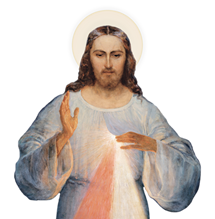
As Jesus told St. Faustina, “Mankind will not have peace until it turns with trust to My mercy” (Diary of Saint Maria Faustina Kowalska, 300).
Steps in the right direction
First and foremost, remember: "The Bible tells us to love our neighbors, and also to love our enemies; probably because generally they are the same people," as G. K. Chesterton said. What does that look like? This.
We must begin with love of God and neighbor. The ordinary Christian life is unspeakably powerful —regularly receiving the Sacraments according to the laws of the Church; regular prayer; regular spiritual reading of Scripture, the lives and writings of the saints, or the teachings of popes and councils; regular practice of the works of mercy; observe the precepts of the Church; study the Catechism; etc.
We must begin with prayer, and persist in prayer. By persist, I truly mean settle in for the long haul, especially when we're talking about issues of civilizations, of continents. Begin devotions to the patron saints of Europe, of England. There are many martyrs and great saints to turn to, beginning with Our Lady of Walsingham. Have you made your Marian consecration?
Then, look to the books on the Rosary by Fr. Donald Calloway, MIC, especially 10 Wonders of the Rosary. The Rosary has been associated with some of the Church's greatest triumphs of evangelization and protection from the assaults of Islamic jihad. It's easier to sustain long time habits of prayer with a couple of friends. Persist in praying the Rosary for peace in the world, as Our Lady asked at Fatima; persist in praying for the conversion of Europe and all her inhabitants, of whatever ethnicity, current state of belief or non-belief, or lifestyle, to Jesus Christ and His Church.
One powerful thing that we don't do often enough is have Masses said for our enemies, including enrolling them in spiritual benefit societies like the Association of Marian Helpers.
In all this, hold on to the virtues. Hold on to prudence, temperance, justice, fortitude, faith, hope, and love. Do not despair. Many of our Christian brethren across the world have faced persecution for a long time with courage and charity, as described by John Allen in The Global War on Christians.
The Little Flower
Saint Thérèse of Lisieux, patroness of missionaries, did not herself go on mission in person. Rather, she prayed and united her sufferings and the duties of her state in life to the Cross, asking for the grace of conversion and every need of the missionaries for whom she interceded.
Prayer is powerful. Not in the way of science, and not in the way that superstition holds magic to be powerful. Rather, prayer is as powerful as God’s love for His people, and His people’s love of God. Persistent, trusting prayer is as mighty as water wearing away rock, or the wind, building from nothing to the weight of a hurricane. “Therefore, confess your sins to one another and pray for one another, that you may be healed. The fervent prayer of a righteous person is very powerful” (Jas 5:16).
Catholic social teaching
The present situation is as complicated, in many ways, as it has ever been, and also as simple. In these days, Heaven has given us the devotions to the Sacred Heart and Immaculate Heart and to the Divine Mercy. Heaven gives us through the prophetic, priestly, and royal ministry of the Holy Fathers the social doctrine of the Catholic Church.
As prayer undergirds all our efforts, we also have this-worldly efforts to pursue. Where law and order break down, there we can and should consider a vocation to law enforcement. Where our country needs defense, there we can consider service in the military, in civil service, or even in politics. But all of us, citizens of Heaven first but also good citizens of our earthly homelands, have something to do.
The wise words of St. Paul VI can help inspire us: “If you want peace, work for justice.”
We have the wisdom of Scripture, Tradition, and Magisterium from all ages of Christian history summed up and applied to the problems of the present day in the social encyclicals of the popes, in the post-synodal apostolic exhortations as the Church has considered the situation on each continent at the turn of the millennium, and in the response from the local churches to the persecution they’ve suffered under Islamic regimes, as well as those times when the Holy See worked in cooperation with Islamic governments around the world in standing against the culture of death on the world stage, fighting for a culture of life.
Welcome the stranger
We are summoned to the new evangelization, building a culture of life, leading to a civilization of love, all done for love of God and neighbor; all done orienting ourselves on the Eucharistic Lord with His Sacred Heart and on the Immaculate Conception, the Mother of Mercy, with her Immaculate Heart. With Christian courage, in imitation of our great forebears like St. Francis of Assisi, we need to welcome the stranger, serving as radiant witnesses to the Gospel and doing the works of mercy for all.
Pray for me, that I may practice what I preach. I’ll pray for you.
Photo by Noah Holm on Unsplash.
{shopmercy-ad}
