















Sunday, July 12, 2020, Fifteenth Sunday in Ordinary Time
•Is 55:10-11
•Ps 65:10, 11, 12-13, 14
•2 Rom 8:18-23
•Mt 13:1-23 or 13:1-9
By Marc Massery
We all remember the parable told in this Sunday's Gospel. A sower goes out into the field and spreads his seeds. The seeds that fall along the path get eaten by birds; the seeds that fall on the rocky earth become scorched by the sun; the seeds that fall beneath the thorns get choked in the thickets; and finally, some seeds fall on rich soil and produce “a hundred or sixty or thirtyfold” (Mt 13:23).
The Path
This is one of the few parables Jesus explains line by line.
First, He says, “The seed sown on the path is the one who hears the word of the kingdom without understanding it, and the evil one comes and steals away what was sown in his heart” (Mt 13:19). Now, it’s no secret that we live in an increasingly secularized culture. A 2019 survey revealed that those who have “no religion” now make up about 23.1 percent of the population in the United States, up from 21.6 percent in 2016. Many who profess "no religion" come from families who used to profess Christianity. As Jesus says, many who reject the faith do so because they don't truly understand it. Venerable Fulton Sheen said, “There are not over a hundred people in the United States who hate the Catholic Church. There are millions, however, who hate what they wrongly believe to be the Catholic Church.”
Though many reject the Church out of a misunderstanding, Satan is all too happy to take advantage of the confusion in order to drive people away from Christ.
The Rocky Ground
Next, Jesus says, “The seed sown on rocky ground is the one who hears the word and receives it at once with joy. But he has no root and lasts only for a time. When some tribulation or persecution comes because of the word” (Mt 13:20-21).
All generations of the Catholic faithful face persecution and tribulation, but this is particularly true for this generation of Catholics. In his book Evangelical Catholicism, the biographer of Pope St. John Paul II, George Weigel, talks about how decades ago, Catholicism in America was more easily passed from one generation to the next. “The cultural Catholicism of the past was comfortable because it fit neatly within the ambient public culture, causing little chafing between one’s life ‘in the Church’ and one’s life ‘in the world,” he said.
Today, on the other hand, it is counter-cultural to live as a committed Catholic. As a result, Catholic families are no longer passing on the faith as seemlessly as they once did. “To profess the truths of the Creed as true — and not just as ‘true for me,’ but as the truth of the world, revealed as such by the Son of God who became man — is to risk being thought an imbecile,” Weigel said. Fewer Catholics than ever are attending weekly Mass. Some people who fall away blame the scandals and others blame the Church's traditional teachings. Whatever the reason, Satan is all too happy to use the trials and tribulations the Church faces as stumbling blocks to keep people away.
The Thorns
Jesus said, “The seed sown among thorns is the one who hears the word, but then worldly anxiety and the lure of riches choke the word and it bears no fruit” (Mt 13:22). As we all know, there have been many Catholic leaders over the years who professed the faith publicly, but wound up getting caught living a double life. Clearly, even committed, Mass-going Catholics are not exempt from falling away. We are all at risk of betraying our faith and giving in to the ways of the world. Satan, however, increases his attacks on Church leaders. We, therefore, must pray for our Catholic brothers and sisters, especially our leaders in faith, that we stay true to Christ and reject the alluring but ultimately empty promises the world offers.
The Fertile Soil
Finally, we arrive at Jesus’ final explanation, “But the seed sown on rich soil is the one who hears the word and understands it, who indeed bears fruit and yields a hundred or sixty or thirtyfold” (Mt 13:23). Even in this secular culture, even in a persecuted Church, which has been led astray by leaders in the past, we can all persevere in our faith and yield fruit. The Church may be smaller today than it was years ago, but we have plenty of reasons to have hope.
Consider this popular quote from Pope Benedict XVI, which comes from a radio talk he gave as a professor in 1969 called, “What Will the Future Church Look Like?” He said:
From the crisis of today a new Church of tomorrow will emerge — a Church that has lost much. She will become small and will have to start afresh more or less from the beginning. … As the number of her adherents diminishes, so she will lose many of her social privileges. In contrast to an earlier age, she will be seen much more as a voluntary society, entered only by free decision . . . But in all [this] . . . the Church will find her essence afresh and with full conviction in that which was always at her center: faith in the triune God, in Jesus Christ, the son of God made man, in the presence of the Spirit until the end of the world.
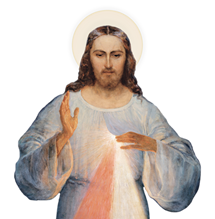
Though the Church continues to decline in numbers in this country, we don’t need to worry. As Pope Benedict XVi said, the Church will ultimately “find her essence afresh” and eventually usher the Church into a new era, full of conviction. In the meantime, we ought to heed what Jesus commanded to St. Faustina: "Pray for souls that they be not afraid to approach the tribunal of My mercy. Do not grow weary of praying for sinners" (Diary of Saint Maria Faustina Kowalska, 975).
{shopmercy-ad}
