

















Jesus did not heal by “magic touch”: in some places He could accomplish very little because of people’s lack of faith in Him. Many were healed, however, because they trusted Him in the midst of their afflictions. Jesus often said to them: “Your faith has made you well.”
Part 12: Misunderstandings about Christ’s Kingdom Message
By Robert Stackpole, STD
In this weekly web series, Dr. Robert Stackpole, emeritus director of the John Paul II Institute of Divine Mercy, leads us step-by-step through the life of the Founder of Christianity, from Bethlehem to Galilee to Jerusalem. Along the way, we pause to consider in-depth the historical debate over the gospel stories of the virginal conception and nativity of Jesus, his message of the Kingdom, his embrace of persecution and death on the Cross, and his glorious bodily resurrection from the dead. Finally, we plunge into the great mystery of the Incarnation, and show how it actually shines through the whole gospel story from beginning to end. Read the series from the beginning.
The preaching of Jesus about the ethics of the Kingdom has sometimes been misunderstood. Reza Aslan, for example, claimed that because Jesus’ command to “love your neighbor as yourself” was taken from an Old Testament passage that definitely had one’s Jewish neighbors in mind (Lev 19:18), [1] Jesus did not intend to promote any universal, cross-cultural benevolence here.
But Aslan forgets that immediately after Jesus delivered His teaching on the Two Great Commandments, He explained what He meant by telling the Parable of the Good Samaritan. In this parable, the last person that His Jewish listeners would have expected — a Samaritan (in other words, a heretical, sectarian half-breed!) — turns out to be the one who practices true love of neighbor by crossing over social barriers, and showing compassion on a wounded Israelite (Lk 10:29-37). Samaritans and Jews had as little to do with each other as possible in those days (Jn 4:9).
Table-fellowship
Another aspect of the ministry of Jesus that often leads to misunderstanding is His “table-fellowship” with tax collectors and sinners. This is sometimes held to be Christ’s endorsement of post-modern “inclusivity”: in other words, that everyone is welcome and accepted just as they are in the fellowship of His disciples.
But Jesus was not a post-modern moral relativist. He clearly stated why he ate with tax collectors and sinners, when challenged by the hard-hearted Pharisees for doing so: “Those who are well have no need of a physician, but those who are sick; I have not come to call the righteous, but sinners to repentance” (Lk 5:29-31). In other words, Jesus did not condone or turn a blind eye to sin: He simply stretched the boundaries of the outreach of God’s Kingdom to include everyone in need of mercy, even the worst sinners (cf. Lk 18:9-14, the Parable of the Pharisee and the Tax Collector).
Historian John Dickson in his book Jesus: A Short Life explains what our Lord meant by his table-fellowship with the lost and the broken:
Why did Jesus eat with the immoral and the irreligious? Why did he leave himself open to the charge of being ‘a glutton and a drunkard’ and the ‘friend of sinners’? The first thing to say was that Jesus was not approving of the behaviour of sinners. It is quite clear that he called everyone [including the self-righteous Pharisees] to the life of radical renewal defined by his teaching. All were to love God with all their heart and their neighbors as themselves. Sinners, by definition, were not fulfilling this twofold imperative. Jesus did not confine his warnings to the spiritual elite. A passage … makes plain that even the ordinary folk living in the towns and villages of Galilee were destined, if they failed to heed Jesus’ call, to be condemned when God’s kingdom is revealed in the world … (Mt 11:21-24; Lk 10;12-15). …
By deliberately seeking opportunities to dine with sinners, Jesus was embodying the friendship with sinners that he believed God wanted to achieve. There was a message of love here, but it was not a love that left the beloved unchanged. It was a transformative love. Jesus apparently thought that purity — his purity — was a more powerful contagion (if that is the right word) than sin. When Jesus invited sinners to dine with him, he was confident that the welcoming grace of God would overwhelm, and therefore transform, those who ate at his table. He believed in a kind of "contagious holiness." [2]
Healing ministry
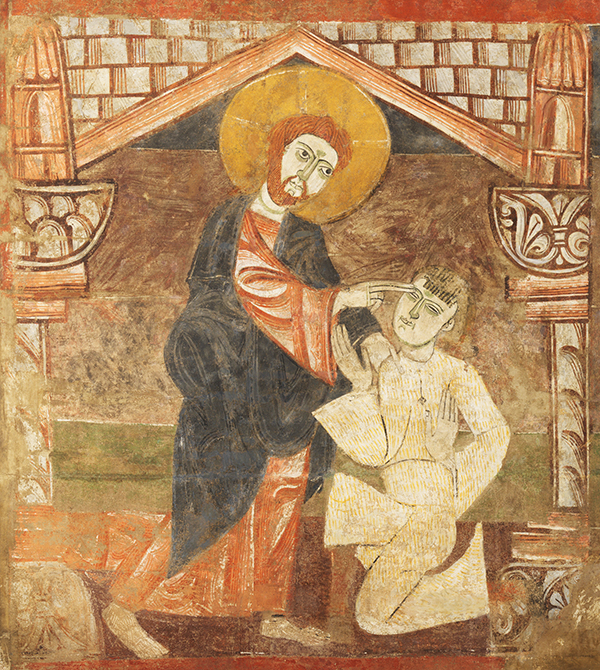
The healing ministry of Jesus powerfully manifested the merciful love of God, and the dawning of the Kingdom. For example, a leper met Jesus along the roadside and said to Him: “Lord, if you will, you can make me clean.” Then Jesus stretched out His hand and touched him, saying “I will” (which could be translated as “Indeed I will” or “Of course I will”); be clean.” And immediately the leprosy left him (Lk 5:12-13).
Wherever Jesus went, He channeled the Father’s healing power to people who were sick. In His day Jewish society saw many illnesses as punishments from God for sin (whether for the sins of the sick individuals themselves, or for the sins of their ancestors). Some chronically ill individuals — especially those with exceptionally grotesque or contagious diseases — were cast out from the community altogether.
By befriending lepers, Jesus offered them not only a source of bodily healing, but a newly awakened faith in a God of compassion, and a re-union with the community of God’s people, Israel.
No "magic touch"
Jesus did not heal by “magic touch”: in some places He could accomplish very little because of people’s lack of faith in Him. Many were healed, however, because they trusted Him in the midst of their afflictions. Jesus often said to them: “Your faith has made you well.”
What Jesus meant was that by offering Him their whole condition with complete surrender and unconditional trust, they left themselves open to the healing power of the Spirit of God that flowed through Him. Their faith did not actually cause them to be healed; it simply removed obstacles so that the healing love of Christ could flow freely into their hearts and lives.
As we shall see next time, most historians now recognize that Jesus is portrayed as a miracle-worker in the very earliest strands of the New Testament material, as far back as they can trace. This means that the miracle stories were not legends which came to embellish the Jesus story over the course of time (say, over several generations) in order to heighten His significance.
Rather, they were an integral part of the story of Jesus from the beginning, and they illustrated perfectly the central message that He proclaimed: that the Kingdom of God is dawning upon the world through the person and ministry of Jesus Himself. He came precisely to proclaim that message, and to perform signs that show that it is true. But the heart of it was His invitation to the sin-sick, the suffering, and the care-worn to put all their trust in His merciful Love:
Come to me, all who labor and are heavy laden, and I will give you rest. Take my yoke upon you and learn from me; for I am gentle and lowly of heart, and you will find rest for your souls. For my yoke is easy, and my burden is light. (Mt 11:28-30)
Next: Part 13: Did Jesus Really Perform Miracles?
Previous article.
Notes
[1] Reza Aslan, Zealot (New York: Random House, 2014), p. 121-122.
[2] John Dickson, Jesus: A Short Life (London: Lion Books, 2012) p. 73-74.
{shopmercy-ad}
