














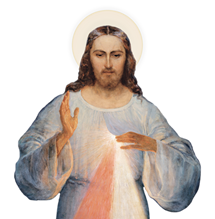


As Jesus began His last journey to Jerusalem with His disciples, He started to speak of Himself in words and phrases that clearly recall the figure of “The Servant of the Lord” from Isaiah, chapters 40-55.
Part 23: The Suffering Servant of the Lord
By Robert Stackpole, STD
In this weekly web series, Dr. Robert Stackpole, emeritus director of the John Paul II Institute of Divine Mercy, leads us step-by-step through the life of the Founder of Christianity, from Bethlehem to Galilee to Jerusalem. Along the way, we pause to consider in-depth the historical debate over the gospel stories of the virginal conception and nativity of Jesus, his message of the Kingdom, his embrace of persecution and death on the Cross, and his glorious bodily resurrection from the dead. Finally, we plunge into the great mystery of the Incarnation, and show how it actually shines through the whole gospel story from beginning to end. Read the series from the beginning.
As Jesus began His last journey to Jerusalem with His disciples, He started to speak of Himself in words and phrases that clearly recall the figure of “The Servant of the Lord” from Isaiah, chapters 40-55, and especially chapter 53 (verses 3-7 and 10-12):
He was despised and rejected by men; a man of sorrows and acquainted with grief; and as one from whom men hide their faces he was despised, and we esteemed him not.
Surely he has borne our griefs and carried our sorrows, yet we esteemed him stricken by God, and afflicted.
But he was wounded for our transgressions, he was bruised for our iniquities; upon him was the chastisement that made us whole, and with his stripes we are healed.
All we like sheep have gone astray; we have turned every one to his own way; and the Lord has laid on him the iniquity of us all.
He was oppressed, and he was afflicted, yet he opened not his mouth; like a lamb that is led to the slaughter, and like a sheep that before its shearers is dumb, so he opened not his mouth. …
Yet it was the will of the Lord to bruise him; he was put to grief; when he makes himself an offering for sin, he shall see his offspring, he shall prolong his days; the will of the Lord shall prosper in his hand.
He shall see the fruit of the travail of his soul and be satisfied; by his knowledge shall the righteous one, my servant, make many to be accounted righteous; and he shall bear their iniquities.
Therefore I will divide him a portion with the great, and he shall divide the spoil with the strong; because he poured out his soul to death, and was numbered with the transgressors; yet he bore the sin of many, and made intercession for the transgressors. [Emphasis added]
This passage from Isaiah shows us one reason why Jesus claimed that his sufferings were foreshadowed in the Hebrew Scriptures (Mk 9:12; Lk 18:31).
Moreover, His interpretation of His impending death as a “ransom for many” (Mk 10:45) and of His “blood shed for many for the forgiveness of sins” (Mt 26:28), as well as His claim that the Scriptures predicted that He would be “reckoned with the transgressors” (Lk 22:37), clearly identify Him as the Servant of the Lord of Isaiah 53.

Unexpected
Most of the Jews of his day, however, did not see the Servant of the Lord in Isaiah as a Messianic figure; it seems that almost no one expected a suffering and dying Messiah — especially since Isaiah 40-55 can be read on many levels. New Testament historian N.T. Wright tells us:
It is clear that from one point of view, the servant is “Israel, in whom I will be glorified” (49:3)—the people of God through whom God’s justice will spread to the nations (42:1) and his light shine to the ends of the earth (49:6). But throughout the larger poem it is equally clear that the nation as a whole is not up to this task, indeed has failed dismally in it. At the same time, those who remain faithful are described as those who “obey the voice of the servant” (50:10), so that the servant cannot simply be identified with the faithful remnant. Somehow, the servant is a kind of true Israel figure, doing Israel’s job on behalf of the Israel that has failed. And doing God’s job on behalf of God himself. [1]
The most plausible explanation for the Christian interpretation of the Servant figure of Isaiah 40-55 as the suffering Messiah is that this interpretation originated with Jesus Himself, and came to be fully understood by His disciples only after His death.
In the story of the risen Lord at Emmaus, for example, Jesus says to two of His followers: “O foolish men and slow of heart to believe all that the prophets have spoken: was it not necessary that Christ should suffer these things, and enter into his glory?” (Lk 24:26). The “prophets” (plural) mentioned here probably included Isaiah, Ezekiel and Daniel, and perhaps the author of Psalm 22 as well.
Catholic scholar Roch Kereszty, O.Cist., writes: “How could the early Church discover so quickly that Jesus “died for our sins in accordance with the scriptures” (I Cor 15:3), in an environment that knew nothing of a Messiah offering his life for the forgiveness of sins, if the disciples did not receive any directions from Jesus himself?” [2]
[NB: some scholars now believe that the idea of a suffering Messiah was not completely unknown to the Jews of Jesus’ day. The isolated, desert community called the Essenes seems to have expected such a figure, and around the year 2000 a stone tablet dating back to the first century AD was discovered near the Jordan River which describes in Hebrew an angel named Gabriel who speaks of a messiah who would suffer and die. Now called “The Gabriel Revelation,” the text on this tablet is disputed because crucial words are faint or smudged. On the one hand, some scholars now believe that it confirms that belief that the Messiah must suffer and die was not completely unknown to the Jews at the time of Christ. On the other hand, the idea seems to have made little impression on the main Jewish groups (such as the Pharisees and the Sadducees) or on the masses of the people, and there is no evidence that anyone expected the Messiah to give his life as an atoning sacrifice for the sins of the world.]
Uprising fear
For four days Jesus taught His people in the Great Temple of Jerusalem about the Father and His Kingdom. He even cast out the corrupt money-changers from the court of the Gentiles, an area that was supposed to have been kept as a place of prayer for them. But those who were socially successful at worshipping other “gods” than the Father of Jesus Christ could not put up with this for very long. They worshipped their own power and wealth more than the truth about the God of Israel.
The high priests and temple officials in particular feared a popular, Messianic uprising that might provoke the Romans into stripping them of all of their privileges. They even feared that the iron fist of the Romans might descend upon the whole city. So, they issued a warrant for the arrest of Jesus, although they knew full well that He was innocent of wrongdoing (Jn 11:45-53):
[T]he chief priests and the Pharisees gathered the council and said, “What are we to do? For this man performs many signs. If we let him go on thus, every one will believe in him, and the Romans will come and destroy both our holy place and our nation.” But one of them, Caiaphas, who was high priest that year, said to them, “You know nothing at all; you do not understand that it is expedient for you that one man should die for the people, and that the whole nation should not perish.” … So from that day on they took counsel how to put him to death.
Next: Part 24: The Agony and Passion of Our Savior.
Previous article.
Notes
[1] N.T. Wright, Simply Jesus: A New Vision of Who He Was, What He Did, and Why He Matters (New York: HarperOne, 2011), p. 154.
[2] Roch Kereszty, O.Cist., Fundamentals of Christology (New York: St. Paul’s Books and Media, 2002 edition), p. 127.
{shopmercy-ad}
