













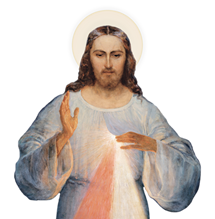


As I have endeavored to show in this 43-part series, the overwhelming balance of the historical evidence shows that this Galilean carpenter and crucified teacher was not merely an inspired Jewish prophet, nor even the long-expected human Messiah. He was all of these things, but also much more. He was (and is) the divine Son of God, dwelling among us in human form.
Epilogue: The Mystery of the Incarnation
By Robert Stackpole, STD
In this weekly web series, now concluding, Dr. Robert Stackpole, emeritus director of the John Paul II Institute of Divine Mercy, leads us step-by-step through the life of the Founder of Christianity, from Bethlehem to Galilee to Jerusalem. Along the way, we pause to consider in-depth the historical debate over the gospel stories of the virginal conception and Nativity of Jesus, His message of the Kingdom, His embrace of persecution and death on the Cross, and His glorious bodily Resurrection from the dead. Finally, we plunge into the great mystery of the Incarnation, and show how it actually shines through the whole gospel story from beginning to end. Read the series from the beginning.
As we come to the end of this web series about the search for the historical truth about Jesus of Nazareth, we are finally equipped to gaze into the depths of the mystery of the most amazing Person who ever lived.
As I have endeavored to show, the overwhelming balance of the historical evidence shows that this Galilean carpenter and crucified teacher was not merely an inspired Jewish prophet, nor even the long-expected human Messiah. He was all of these things, but also much more. He was (and is) the divine Son of God, dwelling among us in human form.
Superman?
In the last two articles of this series, therefore, we spoke about the New Testament claim (in my chosen words, but implicitly those of the New Testament) that Jesus had a “divine identity.” Unfortunately, if you asked Christians from many centuries past, roughly from the 4th to the 19th century — and, indeed, many Christians even today — what they mean by their faith that Jesus is a “divine person,” or that he has a “divine identity,” or that he is “the divine Son of God,” they would probably tell you, in so many words, that Jesus is much like the comic book hero “Superman.” In other words, he is a guy from another world who came to earth incognito, pretending to be human, but he actually had a hidden power-pack of super-human capabilities which he could pull out and use, as needed, to defeat the forces of evil.
If they have some theological education, they might be able to quote the classical theological formula: Jesus is fully divine and fully human at one and the same time, God and man, the God-Man. What they tend to mean by this is that he has a fully human body and human feelings, so that he can be born of of a woman and even die on the Cross for us, but he also has an infinite, omniscient mind and the ability to wield amazing, supernatural power.
In other words, He is very like the Centaur of ancient Greek mythology: half-horse and half-man. In effect, Jesus is half-God and half-human, hovering somewhere in between the two.
Caricatures and heresies
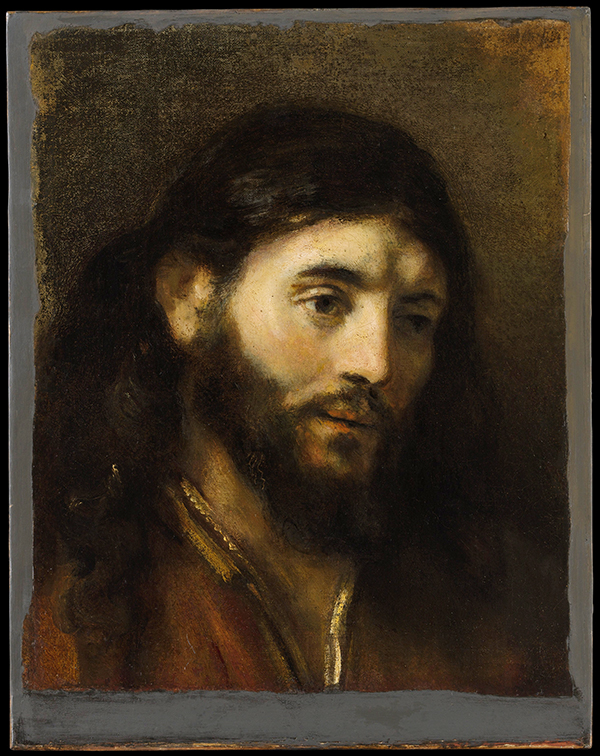
Of course, these are caricatures of the classical Christian faith. In fact, they actually represent heresies condemned by the ancient Church (the first called Docetism, and the second Apollinarianism). But it is astonishing how these misunderstandings still linger among the faithful. It is not because most Christians are unintelligent or superstitious. It is merely because they have never been taught to contemplate in-depth the mystery of who Jesus is.
Nevertheless, through Holy Scripture and Sacred Tradition they are continually exposed to the deep mystery of the Incarnation, and this often keeps them from straying too far from the truth.
In the Scriptures we read (and hear read every year at Christmastime):
“In the beginning was the Word, and the Word was with God, and the Word was God [or, perhaps, more faithful to the original Greek: “What God (the Father) was, the Word was.”]
... And the Word became flesh and dwelt among us, full of grace and truth [literally, in the Greek: “the Word became human, and pitched His tent among us”];
... we have beheld his glory, glory as of the only-begotten Son from the Father” (Jn 1:1, 14). In other words, this fully divine Word and only-begotten Son came forth from the infinite mystery of God and shared our human condition.
Great statement of faith
Then in the Nicene Creed we recite on Sundays, the great statement of faith of the ancient and universal Church, many Christians confess:
"I believe in ... one Lord Jesus Christ, the only-begotten Son of God, begotten of His Father before all worlds, God of God, Light of Light, Very God of Very God, begotten not made, being of one substance with the Father ... Who for us men and for our salvation came down from heaven, and was incarnate by the Holy Ghost of the Virgin Mary, and was made man” (from an older, and more literal English language translation of the Creed).
Faithful Christians who recite such words may not be able to articulate all the nuances of the theological terms in the Creed like “only-begotten,” but they certainly get the central message expressed here: that for the sake of our salvation the divine Son of God came down from heaven and shared our lot, to begin with by becoming a little child in the womb, and then cradled in the loving arms of the Blessed Virgin Mary.
Anglican tradition
Although a Catholic myself, I have spent many years researching the tremendous depth and beauty of the Anglican tradition of reflection on the doctrine of the Incarnation (from the late 19th century onward) — a tradition that does not contradict official Catholic teaching, but only helps bring out some of its implications. So, to enrich our prayerful mediations on the Incarnation, I will let the words of some of these Anglican theologians usher us deeper into the mystery.
First, Brian Hebblethwaite:
What does it mean to say that with Jesus Christ we have to do not simply with a supremely great teacher, prophet, and exemplar, but with God made man? It means that for Christian understanding, the whole life and work of Jesus Christ were lived out from a centre in God. God, in person, is believed to have come to share our human lot, thereby showing us, in action and passion, the depths and extent of his love for humankind, and enabling men and women to be drawn, for ever, into the all-embracing life and love of the divine. ...
[W]e believe that this mysterious and ineffable God, out of pure love for mankind, has made himself known to us in the most direct and comprehensible way possible, by coming amongst us as one of us, and sharing our life, its heights and depths, its joys and sorrows. …
By this act, God overcomes the vagueness and dread that limit the experience of God which elsewhere and otherwise men can and do enjoy. If Jesus is God in person, then our knowledge of God has an intelligible, personal, human focus. In Jesus’ character and acts we see the character and acts of God himself in terms we can readily understand. At the same time God does not overwhelm us in his self-revelation. Instead he invites and wins our personal response. ...
There can be no doubt that the doctrine of the Incarnation has been taken during the bulk of Christian history to constitute the very heart of Christianity. Hammered out over five centuries of passionate debate, enshrined in the classical Christian creeds, explored and articulated in the great systematic theologies, the doctrine expresses, as far as human words permit, the central belief of Christians that God himself, without ceasing to be God, has come amongst us, not just in but as a particular man, at a particular time and place. The human life lived, and the death died have been held quite literally to be the human life and death of God himself, in one of the modes of his own eternal being. [1]
Next, Austin Farrer:
We cannot understand Jesus simply as the God-who-was-man. We have left out an essential factor, the sonship. Jesus is not simply God manifest as man, he is the divine Son coming into manhood. What was expressed in human terms here below was not bare deity; it was divine sonship. God cannot live an identically godlike life in eternity and in a human story. But the divine Son can make an identical response to his Father, whether in the love of the blessed Trinity, or in the fulfilment of an earthly ministry. All the conditions of action are different on the two levels; the filial response is one. Above, the response is cooperation in sovereignty and an interchange of eternal joys. The Son gives back to the Father all that the Father is. Below, in the incarnate life, the appropriate response is obedience to inspiration, a waiting for direction, an acceptance of suffering, a rectitude of choice, a resistance to temptation, a willingness to die. For such things are the stuff of our existence and it was in this very stuff that Christ worked out the theme of heavenly sonship, proving himself on earth the very thing he [is] in heaven; that is, a perfect act of filial love. ...
This was how God’s love was shown as utterly divine — in accepting every circumstance of our manhood. He spared himself nothing. He was not a copy book man-in-general, he was a Galilean carpenter, a free-lance rabbi; and he wove up his life, as each of us must, out of materials that were to hand. ...
We see him as a Galilean villager of the first century. The tools of his thinking came from the local stock; only he made a divinely perfect use of them. The Jewish ideas he inherited, broken and reshaped in the course of his life, served him for mental coinage, in the traffic of his unique sonship to his Father, and his assertion of God’s kingdom over mankind. He had what he needed, to be the Son of God; as for defining the divine sonship, that was a task for other hands, using other tools; the Apostles began a theology of his person, and the Fathers continued it. [2]
Next, Charles Gore:
The divine Son in becoming man must, we conclude, have accepted, voluntarily and deliberately, the limitations involved in really living as a man — even as a sinless and perfect man — in feeling as a man, thinking as a man, striving as a man, being anxious and tried as a man. ... [T]he divine person in the Gospels is certainly presented to us as growing in wisdom, as being tempted, as asking questions, apparently for information, as praying, as overwhelmed with anxiety, as asking upon the Cross the great question of the perplexed and dismayed the world over, and finally, as at least in one respect, asserting His ignorance [Mk 13:32]. ... [The Incarnation means that] one who existed in the nature of God consented to abandon this to us inconceivable glory of life, in order to accept the conditions and limitations and sufferings of real manhood. [3]
Lastly, A. Michael Ramsey:
The divine Creator has humbled himself to take on himself the entire experience of existence as man, in all the conditions of humanity. That is what we call the Incarnation. That is the heart of Christian belief. … God’s answer to our need is to give himself utterly to us in the total self-donation of the Word-made-flesh. [4]
A thing most wonderful
Finally, since the simple words of traditional hymns often express things better than anything that we theologians can say, I close this web series with another resource for meditation — the verses of a traditional hymn that, in effect, sum up all I have been trying to say:
It is a thing most wonderful,
Almost to wonderful to be,
That God’s own Son should come from heaven,
And die to save a child like me.
And yet I know that it is true:
He came to this poor world below,
And wept and toiled, and mourned and died,
Only because He loved us so.
I cannot tell how He could love
A child so weak, so full of sin:
His love must be most wonderful,
If He could die my love to win.
I sometimes think about the cross,
And shut my eyes and try to see
The cruel nails and crown of thorns,
And Jesus crucified for me.
But even could I see Him die,
I could but see a little part
Of that great love, which like a fire
Is always burning in His Heart.
And yet I want to love Thee Lord:
O light the flame within my heart,
And I will love Thee more and more,
Until I see Thee as Thou art.
Notes
[1] Brian Hebblethwaite, The Incarnation, pp. 1-2
[2] Austin Farrer, Lord, I Believe, p. 101-102; A Celebration of Faith, p. 89; Saving Belief, p. 80
[3] Charles Gore, The Reconstruction of Belief, p. 521-522
[4] A. Michael Ramsey, Introducing the Christian Faith, pp. 42-43
{shopmercy-ad}
