















It is hard to believe that Paul would pass on a different tradition about the Resurrection than St. Luke, given that Luke was his friend and travel companion. But Luke’s account of Easter definitely speaks of an empirically verifiable, corporeal Resurrection of Jesus.
Part 31: Does St. Paul’s Witness to the Resurrection Stand Up Under Close Scrutiny?
By Robert Stackpole, STD
In this weekly web series, Dr. Robert Stackpole, emeritus director of the John Paul II Institute of Divine Mercy, leads us step-by-step through the life of the Founder of Christianity, from Bethlehem to Galilee to Jerusalem. Along the way, we pause to consider in-depth the historical debate over the gospel stories of the virginal conception and nativity of Jesus, his message of the Kingdom, his embrace of persecution and death on the Cross, and his glorious bodily resurrection from the dead. Finally, we plunge into the great mystery of the Incarnation, and show how it actually shines through the whole gospel story from beginning to end. Read the series from the beginning.
Some New Testament scholars have attempted to “poke holes” in St. Paul’s witness to the bodily Resurrection of Jesus in 1 Corinthians 15 (see the previous article in this series). For example, they claim that in this passage, curiously, St. Paul never mentions an empty tomb. Moreover, he counts the blinding vision by which he saw the risen Christ as an “appearance” of the Lord in the same manner as the appearances to Peter and the other apostles.
This has led to the theory that St. Paul did not believe in a bodily Resurrection of Jesus at all, and that in his mind all of the appearances of the risen Lord were just like his own experience on the road to Damascus: inner visions, rather than bodily, tangible apparitions.
On this theory, a couple of decades later, when the gospels according to Matthew, Luke, and John were penned, this original, purely “spiritual” experience became “mythologized” into the empty tomb and corporeal appearance tales.
Spiritual Experience Becomes Myth Theory
In short, some biblical scholars cobble together from all this what we can call the Spiritual Experience Becomes Myth theory. The alleged silence of Saint Paul regarding the empty tomb in I Corinthians 15 (the earliest written Easter testimony), coupled with the lack of any Resurrection appearance stories at the end of St. Mark’s Gospel as we have it (possibly the earliest gospel to be written), make it highly likely (so they say) that the original Easter experience was a purely spiritual and internal affair, and that this was later “mythologized” by Matthew, Luke and John into the Easter stories that we have in the gospels now.
Again, please see article #26 in this web series, where initial problems with any purely “spiritual” theory of the first Easter are thoroughly discussed. Above all, as I argued there: “The main problem with this theory is that it expressly contradicts all of the other historical sources we have concerning the Easter events. The other three Gospels and the book of Acts, for example, make it clear that the risen Jesus was tangibly present to his disciples, in a flesh-and-bones, corporeal way.”
Beyond that, the Spiritual Experience Becomes Myth view depends on acceptance of the claim that St. Mark’s Gospel was the first to be written (which some scholars do not accept), and that the original text of this Gospel is not missing Easter resurrection appearance stories (which is also debatable — see above in this article).
Distortion
Most of all, however, this theory distorts St. Paul’s view of the Resurrection in general, and his testimony in I Corinthians 15 in particular. He was not, in fact, totally silent about the empty tomb or a bodily Resurrection of Jesus, either in I Corinthians 15 or in the rest of his writings.
First of all, St. Paul states that Christ was raised on the third day “according to the scriptures” (I Cor 15:4). What scripture did he have in mind here? Clearly, the same one St. Peter mentions in Acts 2:31, and that Paul himself mentions in Acts 13: 34 and 37, namely: “Thou wilt not let thy holy one see corruption” (Ps 16:10).
By citing this scriptural passage, both Peter and Paul stress that the body of Jesus did not decay in the tomb as did the body of His forefather King David (Acts 13:37). Hence, in I Corinthians 15:4 St. Paul makes an implicit statement of belief in a corporeal Resurrection and an empty tomb right from the start. The body of the Messiah, Paul implies, did not decay in the tomb, just as the scriptures had predicted.
Second, elsewhere in his writings, St. Paul sees the bodily Resurrection of Jesus as a promise that “our lowly bodies” too will one day be changed “to be like his glorious body” (Phil 3:21; cf. Rom 8:11 and Col 2:9). Why would St. Paul contradict his own theology of Resurrection by implying in I Corinthians 15 that Jesus was not raised in a glorified, tangible body?
Third, St. Paul claims that his teaching on the Resurrection of Jesus was in full accord with the teaching of all the other apostles (I Cor 15:11), several of whom St. Paul knew personally (Gal 1:18-20, 2:1-9). Early apostolic preaching clearly states that Jesus was raised bodily from the dead (Acts 2:29-32 and 10:41).
Friendship with Luke
Fourth, it is hard to believe that Paul would pass on a different tradition about the Resurrection than St. Luke, given that Luke was his friend and travel companion (Col 4:4; Philemon 24; II Tim 4:11; Acts 16:28). But Luke’s account of Easter definitely speaks of an empirically verifiable, corporeal Resurrection of Jesus (Lk 24:39; Acts 1:3).
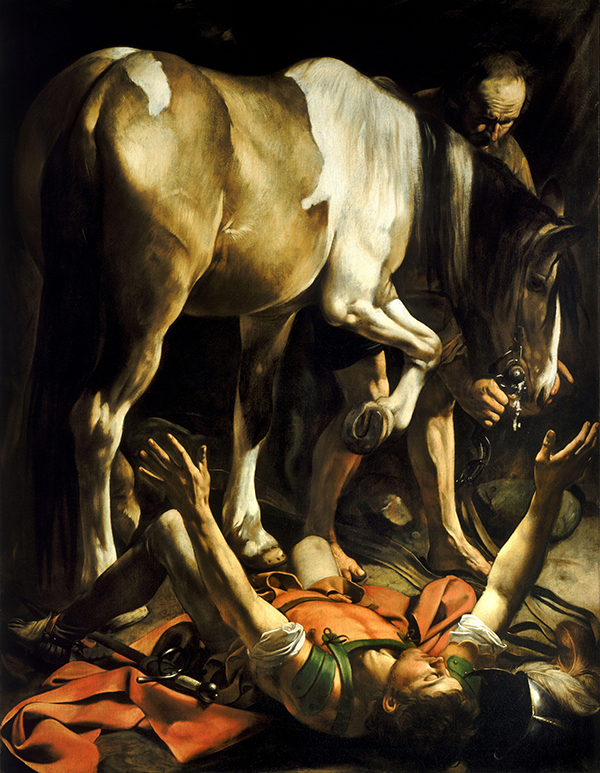
Fifth, St. Paul actually makes a distinction in I Corinthians 15 between his own experience of the risen Lord, and the appearances to the other apostles, and to the five hundred brethren at once. He writes: “Last of all, as to one untimely born, he appeared also to me” (I Cor 15:8). This indicates that he understood his own experience of the risen Christ as something additional and out of the ordinary (indeed, unlike the other Resurrection appearances of Jesus, according to St. Luke it was a post-Ascension encounter with Christ). One cannot legitimately argue, therefore, that St. Paul believed that all of the appearances of the risen Jesus were just blinding visions such as he had experienced on the Damascus road.
Finally, it hardly seems likely that Paul, a Jew from the Pharisaic tradition, could conceive of a “resurrection” at all, except in some kind of bodily, corporeal sense. Indeed, Paul makes it very clear in Acts that he continues to believe in the teaching of the Pharisees about bodily resurrection (Acts 23:6-10). For a Pharisaic Jew like Paul, therefore, to say that a man was “raised from the dead” certainly implied that he was raised in the fullness of his humanity, body and soul.
Earliest written record
To sum up: what we have in I Corinthians 15 is the earliest written record of the appearances of the risen Jesus in glorified flesh, a record that implies in several ways that Jesus’ body was no longer in the tomb. This record comes from St. Paul, a friend of eyewitnesses to the appearances of the risen Lord, who had experienced an extraordinary confirmation of their testimony himself.
Next: Part 32: A Closer Look at the Empty Tomb.
Previous article.
{shopmercy-ad}
