
















We need to remind ourselves that the Gospels are not “biographies” in the modern sense of the term; they do not intend to tell us everything about the life of Jesus that the authors know, nor everything about Easter. Rather, the Gospel writers selected from all that they knew only those episodes and events that highlighted the truths about Jesus that they wanted to emphasize for their readers.
Part 34: The Strength of the Evidence for Easter
By Robert Stackpole, STD
In this weekly web series, Dr. Robert Stackpole, emeritus director of the John Paul II Institute of Divine Mercy, leads us step-by-step through the life of the Founder of Christianity, from Bethlehem to Galilee to Jerusalem. Along the way, we pause to consider in-depth the historical debate over the gospel stories of the virginal conception and nativity of Jesus, his message of the Kingdom, his embrace of persecution and death on the Cross, and his glorious bodily resurrection from the dead. Finally, we plunge into the great mystery of the Incarnation, and show how it actually shines through the whole gospel story from beginning to end. Read the series from the beginning.
As we come to the end of the Jesus story, we need to consider four more ways in which many people have been ensnared by doubts when considering what happened on the first Easter.
To begin with, some scholars try to cobble together what we can call “combo theories” to try to explain away the claim that Jesus was raised to new life in a glorified body, as the Gospels claim. We have already considered one such theory (in article #31 in this series: the Spiritual Experience Becomes Myth option). This theory was a combination of two skeptical hypotheses about the Resurrection combined into one.
Trouble with Combos
A second, popular “combo theory” can be called the Empty Tomb Leads to Hallucinations theory. This is the notion that it was precisely the finding of an empty tomb by the disciples on Easter Sunday that led them to recall their Master’s cryptic predictions of rising again “on the third day.” Their resulting mental state of religious excitement and anticipation was maximally conducive to individual and collective hallucinations of the Lord they longed to see.
The trouble with combo theories is that they usually add together the pitfalls of each of their parts, rather than providing us with any really new options to consider.
For example, the Empty Tomb Leads to Hallucinations theory offers no plausible explanation of why the tomb was empty in the first place. Did the women and the disciples go to the wrong tomb on Easter morning? Did thieves steal the Body? Was the body never placed in an identifiable grave at all, but only thrown into a common pit with the bodies of other crucified criminals? We have already examined each of these alternative explanations for the missing Body of Jesus, and found them unconvincing.
Second, most of the problems with the “hallucination” theory that we discussed in article #15 in this series remain unaddressed. At best, this combo theory only removes one of those stated problems (that the apostles and the women were not in a psychological state of heightened expectancy when they began to encounter the risen Jesus). And even then, this theory is contradicted by all of the evidence we have from the Gospels about the state of mind of most of the disciples at the time. The theory simply states that the apostles must have entered a psychological state of heightened expectancy once they found the empty tomb — but that contradicts all the evidence from the gospels (see article #29 in this series): most of them were slow to believe, at least until the risen Lord was standing right in front of them, eating and drinking with them and showing them His wounded hands and side.
Saw and believed
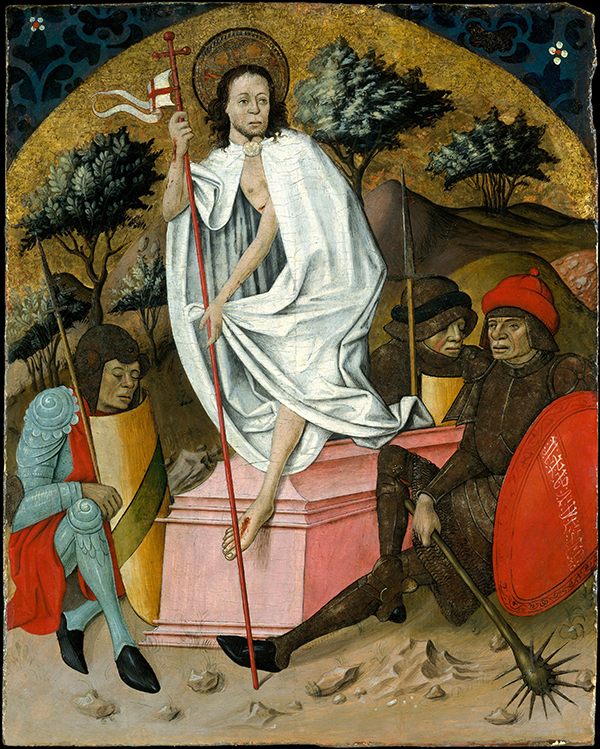
To be sure, St. John’s gospel tells us that the apostles Peter and John “saw and believed” as soon as they saw the empty tomb of Jesus, and the “discarded chrysalis” shape of the grave clothes (see article 33 in this series). But very soon thereafter, Peter had a corroborating appearance of the risen Jesus himself (Lk 24:34; 1 Cor 15:5), and on the same day Jesus appeared to all the apostles at once (except Thomas), as well as to two disciples on the road to Emmaus (Lk 24: 13-35).
The testimony of Thomas and these latter two disciples clearly shows that there was no unanimous, heightened expectancy among the disciples of Jesus, even after the discovery of the empty tomb, and certainly not in their own minds (Lk 24:19-24), much less in the mind of the apostle Thomas (who refused to believe until he saw and touched the risen Jesus himself a week later: Jn 20:28). Nor could the mere finding of an empty tomb have ignited any special expectancy of seeing a resurrected Jesus in the minds of St. Paul and St. James, both of whom were hardened unbelievers until after they had seen for themselves Jesus risen from the dead (1 Cor 15:7-8). An empty tomb all by itself would not have altered their skepticism in the least.
Other skeptical scholars try to pick holes in the small details of the Easter story. For example, W. G. Kummel in his book Theology of the New Testament (1974) claimed that there are several small improbabilities in the gospel accounts. For example, that the women went to the tomb in the early morning to anoint the Body of Jesus not knowing who would roll away the stone; that they waited until the third day after death to anoint the body, despite the hot, Palestinian climate; and that they anointed him with “spices,” which was not the normal Jewish custom.
Kummel’s nit-picking, however, does not stand up under close scrutiny. He forgets:
(1) that there was apparently a gardener of the tombs who might have helped roll away the stone (Jn 20:15), or perhaps they hoped that the Roman soldiers who had been left on guard would have come to their aid (Mt 27:62-66);
(2) that the women surely waited until the third day to anoint the body of Jesus because they had been unable to finish the proper burial preparations on Friday afternoon, since the Sabbath day (which began at sundown on Friday) was fast approaching;
(3) the women would have known that the corpse was being kept from rapid decay by the coolness of a sealed cave in the rock;
(4) the “spices” to which Mark and Luke refer were probably the aromatic oils and salves which the Jews commonly used to anoint the dead.
In short, none of the points raised by Kummel really holds water. But even if one or two of them did, what would that prove? That the gospel writers were not professional historians by modern standards, and just pulled together the bits and pieces of the story as best they could? How would that in any decisive way affect the historical evidence for the central claims that the evangelists were making: Namely, that the tomb was found inexplicably empty on Easter morning, and that Jesus subsequently appeared to his disciples, risen from the dead?
Geographic muddle?
Some scholars claim that there is a major discrepancy in the accounts of the appearances of the risen Lord. Matthew, and the longer ending of Mark, record that the risen Jesus appeared to his disciples only in Galilee, while Luke makes no mention of any appearances at all in Galilee: everything for him takes place in or near Jerusalem, right up until Jesus bids farewell to them from the Mount of Olives. Saint John, meanwhile, records appearances both in Jerusalem and in Galilee.
Is the geography of the Easter story, therefore, hopelessly muddled?
Not necessarily. See the outstanding book on this subject by Evangelical scholar John Wenham, titled Easter Enigma (2005). It seems likely that Jesus appeared to His disciples on Easter Sunday in Jerusalem because they had not at first believed the report of the women that they had seen Jesus alive, and that He had instructed that they should all go to Galilee to meet Him there (Mt 28:10; cf. Lk 24:11). After the initial round of Resurrection appearances in and around Jerusalem during Easter week, therefore, the disciples journeyed back to Galilee as the Lord had commanded — and several weeks after that, they returned to Jerusalem for the Ascension (Lk 24:50-53).
Not biographies
We need to remind ourselves here that the Gospels are not “biographies” in the modern sense of the term; they do not intend to tell us everything about the life of Jesus that the authors know, nor everything about Easter. Rather, the Gospel writers selected from all that they knew only those episodes and events that highlighted the truths about Jesus that they wanted to emphasize for their readers.
Saint Luke sees Jerusalem as an important theological symbol in salvation history: it is no wonder that the appearances of the risen Lord that he cared most to relate are the ones that happened there. But Matthew and John had other concerns, and their own reasons for the ones they chose to set down in writing.
In any case, that Jesus initially appeared to His disciples in Jerusalem seems likely just from St. Paul’s early summary of the Resurrection appearances in I Corinthians 15. Catholic theologian Karl Adam drove this point home in his classic work The Son of God (1960 edition):
[Paul] says that “according to the Scriptures” Christ “rose again the third day.” The point the Apostle accordingly has to prove in what follows is not that Jesus did appear at some time or other, but that he actually rose again “on the third day.” If his argument is not to break down at an important point, some at least of the appearances which he records must have taken place “on the third day.” This being so, they could not have occurred in Galilee, but only in Judea and Jerusalem; for it would have been impossible for the disciples to get to Galilee within the short time from Good Friday evening to [Easter] Sunday morning. Moreover, the message of the angel at the sepulchre [Mt 28:7; Mk 16:7], that the risen Lord would go before them into Galilee, presupposes that the disciples on Easter morning were still in Jerusalem. Therefore, if Paul wished to testify to appearances of Christ “on the third day,” he could only have had in mind appearances which took place in Jerusalem. [1]
Next: Part 35: Theological doubts about the Resurrection.
Previous article.
Note
[1] Karl Adam, The Son of God (New York: Image Books, 1960), p. 173.
{shopmercy-ad}
